First Civilian Casualty of the Hormuz Crisis
An Indian crew member has been killed in what is being described as the first civilian fatality of the escalating Strait of Hormuz crisis, after an unmanned drone boat packed with explosives struck the oil tanker MKD VYOM approximately 45 nautical miles southeast of Muscat, Oman. The attack, which occurred in the early hours of Monday morning local time, left an additional three crew members injured, two of them critically, and caused significant structural damage to the vessel's port side hull above the waterline.
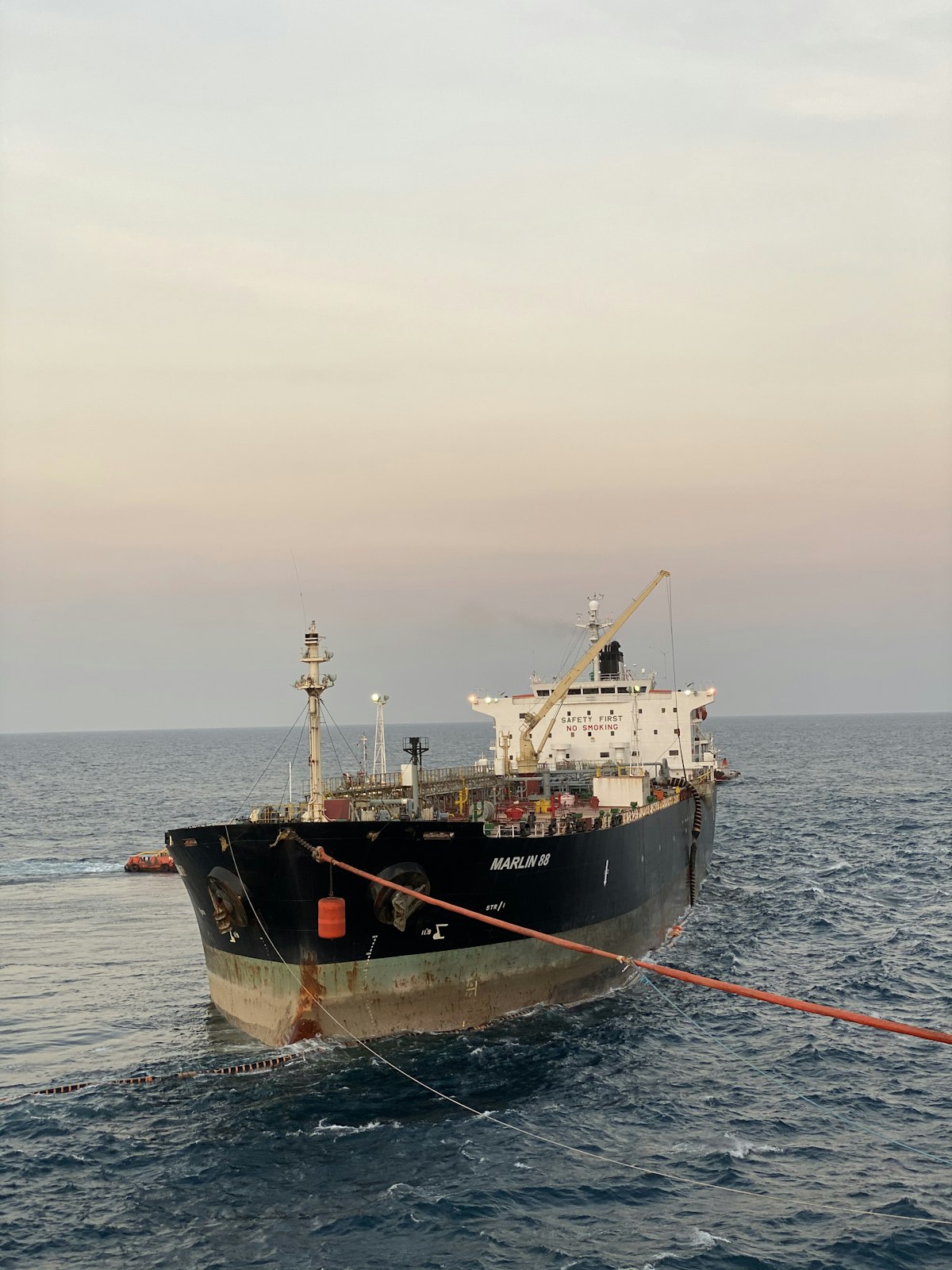
The MKD VYOM, a 115,000-deadweight-ton Aframax crude oil tanker sailing under the Marshall Islands flag, was transiting from the Fujairah anchorage area toward the Indian port of Mundra when the attack occurred. The vessel was carrying approximately 750,000 barrels of crude oil at the time of the strike. Maritime security sources report that the drone boat approached the tanker at high speed from the vessel's blind spot on the port quarter, evading detection until seconds before impact.
Indian Government Demands Investigation
India's Ministry of External Affairs issued a strongly worded statement condemning the attack and demanding a thorough international investigation into the circumstances surrounding the crew member's death. The deceased has been identified as a 34-year-old engineering officer from the Indian state of Gujarat, though his name has been withheld pending notification of family members. India is the world's largest source of commercial seafarers, with approximately 240,000 Indian nationals serving aboard international merchant vessels at any given time.
The Indian Navy has dispatched the guided-missile destroyer INS Kolkata and the frigate INS Tarkash to the Gulf of Oman to assist in evacuating injured crew members and providing security escort for Indian-flagged and Indian-crewed vessels attempting to leave the danger zone. The deployment represents one of the most significant Indian naval operations in the Middle East since the evacuation of Indian nationals from Yemen in 2015 during Operation Raahat.
The International Transport Workers' Federation, which represents approximately 700,000 seafarers worldwide, has called for an immediate cessation of all commercial shipping through the Strait of Hormuz until adequate security guarantees can be provided. The federation's general secretary described the attack as a "horrific escalation that puts the lives of innocent merchant mariners at direct risk" and called on flag states to prohibit their vessels from entering the danger zone.
Attack Methodology Raises Alarm
The use of an unmanned surface vessel—commonly referred to as a drone boat or waterborne improvised explosive device—represents a significant tactical concern for maritime security planners. Similar weapons have been employed by Yemen's Houthi forces in the Red Sea and by Ukrainian forces in the Black Sea, but their deployment in the Strait of Hormuz represents a new dimension to the threat picture in the region.
Naval intelligence analysts note that Iran's IRGC Navy has invested heavily in developing unmanned surface and subsurface vessels over the past decade, with capabilities ranging from surveillance to kinetic attack platforms capable of carrying warheads of up to 500 kilograms. The relatively low cost of these platforms—estimated at $10,000 to $50,000 per unit compared to millions for conventional naval weapons—makes them particularly dangerous in attritional warfare scenarios where large numbers can be deployed simultaneously.
The attack on the MKD VYOM also highlights the vulnerability of commercial tankers, which are not equipped with defensive systems and rely entirely on naval escorts or their own evasive maneuvers for protection. Unlike warships, which carry radar-guided close-in weapons systems and electronic countermeasures, merchant vessels have no means of detecting or neutralizing approaching threats beyond visual lookouts and basic radar.
Insurance and Operational Implications
The confirmed attack and fatality have had immediate consequences for the maritime insurance market. War risk underwriters have expanded the designated high-risk area to encompass the entire Gulf of Oman, effectively doubling the zone in which vessels must carry additional war risk coverage. Several Protection and Indemnity clubs have issued advisories warning that crew injury and death claims arising from transit through the expanded risk zone may face enhanced scrutiny under force majeure provisions.
Ship management companies with significant Indian crew contingents report that families are demanding the immediate repatriation of their relatives from vessels operating anywhere in the Middle East Gulf region. Manning agencies in Mumbai, Chennai, and Manila are fielding hundreds of calls daily from anxious families seeking information about their loved ones aboard vessels in or near the danger zone.
The International Maritime Organization has convened an emergency session of its Maritime Safety Committee to address the security situation. IMO Secretary General Arsenio Dominguez has issued a statement condemning attacks on commercial vessels and urging all parties to respect the safety of civilian mariners, though maritime industry leaders note that such statements have done little to deter attacks in the Red Sea over the preceding two years. The human cost of maritime conflict, long discussed in abstract terms, has now taken on a visceral and deeply personal dimension for the global seafaring community.