IRGC Broadcasts Unprecedented Threat on International Distress Frequency
Iran's Islamic Revolutionary Guard Corps has issued its most aggressive maritime threat in decades, broadcasting a chilling warning on VHF Channel 16—the international maritime distress and calling frequency monitored by every vessel at sea—declaring the Strait of Hormuz closed to all commercial shipping. The message, intercepted by multiple naval vessels and commercial ships operating in the region, stated unequivocally that any vessel attempting to transit the strait would be attacked and, in the IRGC's own words, "set ablaze."
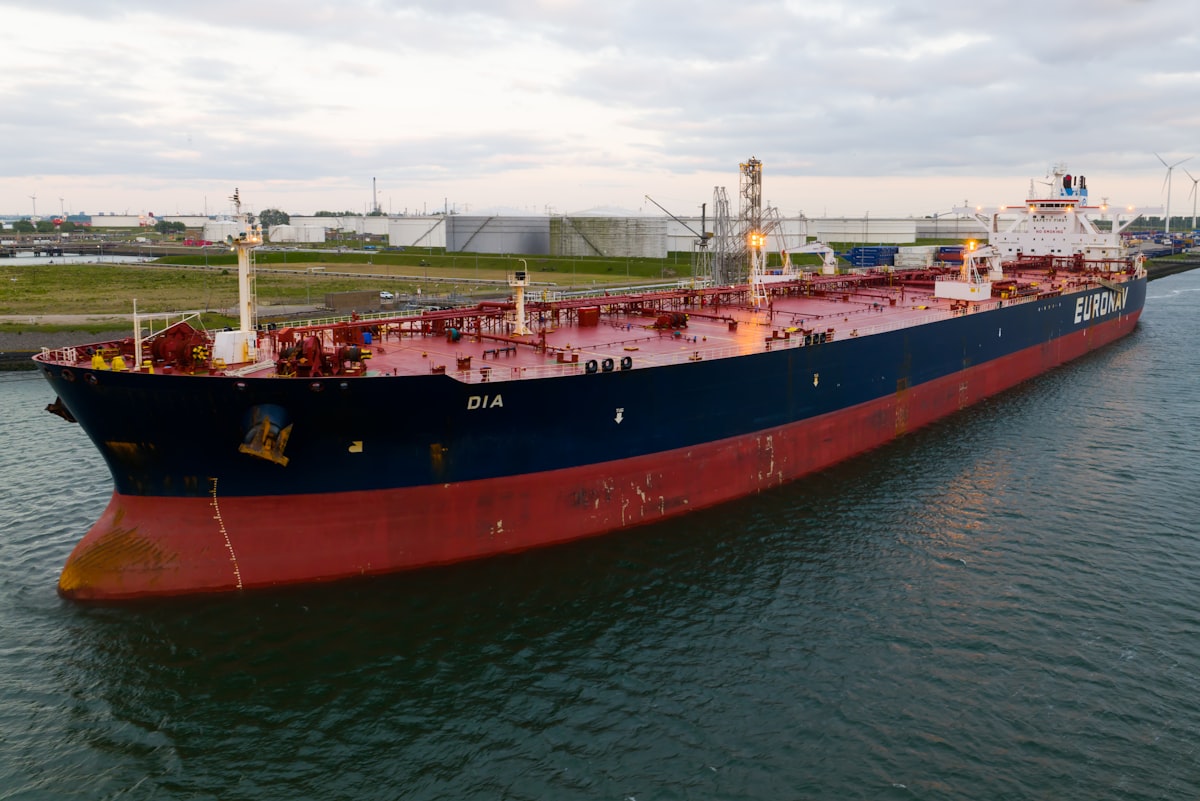
The threat represents a dramatic escalation in Iran's posture toward international shipping through the world's most critical maritime chokepoint. Approximately 21 million barrels of oil pass through the Strait of Hormuz daily, accounting for roughly 21 percent of global petroleum consumption. The strait, at its narrowest point just 21 nautical miles wide with shipping lanes only two miles across in each direction, has long been considered one of the most strategically vulnerable waterways on Earth. Every day, dozens of VLCCs, Suezmaxes, and Aframax tankers navigate these confined waters alongside LNG carriers, container vessels, and bulk carriers serving the Gulf economies.
Traffic Collapses as Shipping Companies Scramble
Maritime tracking data from Lloyd's List Intelligence and MarineTraffic shows that vessel traffic through the Strait of Hormuz has plummeted by approximately 80 percent since the IRGC broadcast. The dramatic decline reflects the near-total withdrawal of major commercial shipping operators from the region, with the four largest container shipping lines—MSC, Maersk, CMA CGM, and Hapag-Lloyd—all suspending transits within hours of the threat.
The speed and completeness of the commercial withdrawal is unprecedented in modern maritime history. During previous escalations, including the 2019 tanker attacks and the broader tensions of the so-called Tanker War of the 1980s, shipping companies typically maintained reduced operations through the strait. This time, the combination of the explicit threat broadcast, the confirmed drone attack on the MKD VYOM that killed an Indian crew member, and the rapid withdrawal of insurance coverage has created conditions that make commercial transit virtually impossible.
Port authorities across the Gulf have begun contingency planning as vessel queues build at anchorages. Fujairah, the world's second-largest bunkering hub located just outside the strait, reports record congestion with over 150 vessels waiting at anchor. Ports inside the Gulf, including Jebel Ali, Khalifa Port, and Ras Laffan, face the opposite problem—vessels that completed loading before the closure now cannot exit.
Naval Forces on High Alert Across the Region
The United States Fifth Fleet, headquartered in Bahrain, has elevated its force protection condition and repositioned naval assets in the region. The USS Dwight D. Eisenhower carrier strike group, already deployed to the Arabian Sea, has moved closer to the Gulf of Oman. Additional guided-missile destroyers have been dispatched to establish a continuous naval presence near the strait's approaches.
Coalition naval forces from the United Kingdom, France, and several Gulf Cooperation Council states have also increased their operational tempo. The Royal Navy has deployed additional mine countermeasure vessels to the region, reflecting concerns about Iran's extensive mine warfare capabilities. Military analysts note that Iran possesses thousands of naval mines and has previously demonstrated the capability and willingness to deploy them in the strait. The IRGC Navy also operates a substantial fleet of fast attack craft and armed speedboats capable of swarming larger vessels in the strait's confined waters.
Historical Context and Strategic Implications
Iran has threatened to close the Strait of Hormuz numerous times over the past four decades, typically in response to international sanctions or military tensions. However, maritime security analysts note several factors that distinguish the current crisis from previous episodes. The use of VHF Channel 16 for the threat broadcast—a frequency reserved for distress and safety communications—signals a deliberate intent to ensure every vessel in the region received the message simultaneously.
The combination of the verbal threat with actual kinetic action against the MKD VYOM represents a departure from Iran's previous pattern of issuing warnings without immediate follow-through. Security consultants at Ambrey Intelligence and Dryad Global have assessed the current threat level as the highest since the 1980s Tanker War, when hundreds of commercial vessels were attacked in the Persian Gulf. During that conflict, which lasted from 1984 to 1988, over 400 ships were attacked, 259 seamen were killed, and the global shipping industry was fundamentally transformed.
Economic Ripple Effects Already Materializing
Brent crude futures surged past $82 per barrel on the news, with analysts from UBP and Goldman Sachs warning that a prolonged closure could push prices well above $100. The impact extends far beyond oil markets. The Strait of Hormuz serves as the transit point for approximately 20 percent of global liquefied natural gas shipments, one-third of the world's seaborne fertilizer trade, and significant volumes of petrochemical products critical to manufacturing supply chains worldwide.
Shipping industry executives describe the situation as the most severe disruption to global maritime trade in modern memory. With the Red Sea already compromised by Houthi attacks and now the Strait of Hormuz effectively sealed, the world's two most critical maritime chokepoints are simultaneously inaccessible, forcing vessels onto dramatically longer routes around the Cape of Good Hope and fundamentally reshaping global trade flows in real time. Freight forwarders report that shippers are already panic-booking capacity on alternative routes, with some willing to pay premiums of 300 percent or more to secure space on vessels avoiding both conflict zones.