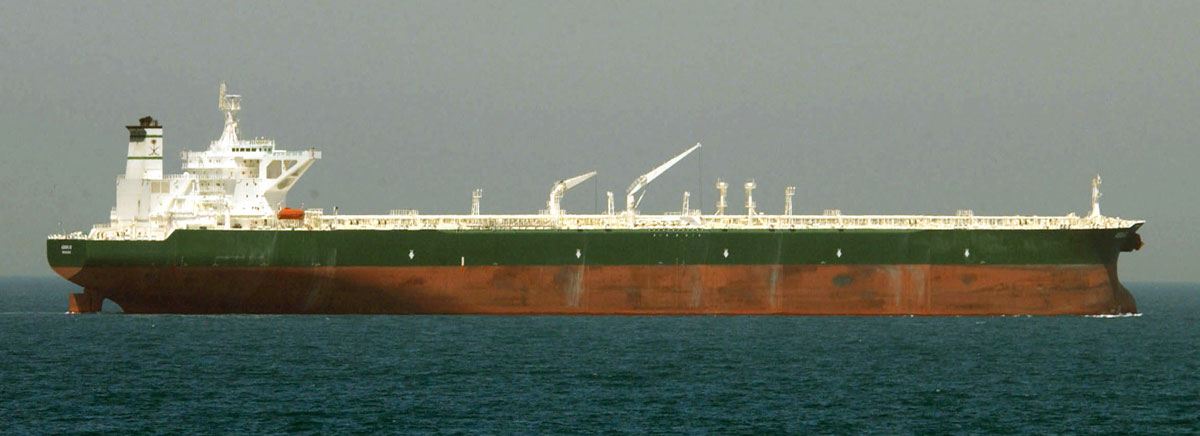
An Unprecedented Maritime Traffic Jam
More than two hundred commercial vessels now sit idle in the waters surrounding the Strait of Hormuz, creating what maritime analysts are calling the most significant shipping bottleneck since the 2021 Ever Given incident in the Suez Canal. Among the stranded fleet are approximately forty Very Large Crude Carriers, each capable of transporting up to two million barrels of crude oil, representing a combined cargo value estimated in the tens of billions of dollars. The queue stretches across the Gulf of Oman and into the southern Persian Gulf, with vessels anchored in holding patterns that grow longer by the hour as the security situation continues to deteriorate.
The bottleneck emerged rapidly over the past seventy-two hours as Iranian military forces began enforcing what amounts to a de facto blockade of the twenty-one-nautical-mile-wide strait. Vessel tracking data from MarineTraffic and Lloyd's List Intelligence confirms the extraordinary concentration of tonnage in the region, with automatic identification system signals painting a picture of near-total paralysis in what is ordinarily one of the busiest maritime corridors on earth. Under normal circumstances, approximately sixty to seventy tankers transit Hormuz daily, carrying roughly twenty-one million barrels of crude oil and condensate.
The Scale of Trapped Tonnage
The forty VLCCs represent only the most visible component of the stranded fleet. Dozens of Suezmax and Aframax tankers, liquefied natural gas carriers, product tankers, and dry bulk vessels are also caught in the gridlock. Maritime intelligence firm Kpler estimates that the stranded vessels collectively hold approximately eighty million barrels of crude oil either loaded or awaiting loading at Persian Gulf terminals. For context, this is roughly equivalent to the entire daily global oil consumption, valued at approximately six billion dollars at current Brent crude prices.
Container vessels serving the regional transshipment hub at Jebel Ali in Dubai are among the worst affected. Hapag-Lloyd, Mediterranean Shipping Company, and CMA CGM have all confirmed that their container ships in the region have been instructed to hold position rather than attempt passage through waters now classified as an active conflict zone. The container shipping disruption threatens to cascade through global supply chains, as Jebel Ali serves as a critical redistribution point for cargo moving between Asia, the Middle East, East Africa, and the Indian subcontinent.
Insurance Markets in Turmoil
The maritime insurance industry has responded to the crisis with extraordinary speed. War risk premiums for vessels operating in the Persian Gulf and Gulf of Oman have surged to levels not seen since the height of the Iran-Iraq Tanker War in the late nineteen-eighties. Lloyd's of London syndicates and their international reinsurers are now quoting war risk premiums of between one and two percent of vessel hull value for any transit through the Strait of Hormuz, up from a fraction of a percent just weeks ago. For a modern VLCC valued at approximately one hundred and twenty million dollars, this translates to insurance costs of over one million dollars for a single passage.
Several leading marine insurers have gone further, issuing advisories that they will not provide coverage for vessels that knowingly enter the strait while Iranian military forces maintain their blockade posture. This effectively creates an insurance-driven barrier to transit even for shipowners willing to accept the physical risk. Without valid war risk coverage, vessels cannot obtain the protection and indemnity insurance required by port states and cargo owners, creating a cascading chain of contractual impossibility that locks ships in place regardless of their owners' risk appetite.
Crew Welfare Concerns Mount
The human dimension of the crisis is drawing increasing attention from maritime welfare organizations. Thousands of seafarers aboard the stranded vessels face uncertainty about the duration of their forced anchorage, with provisions, fuel, and fresh water becoming operational concerns for vessels that had not provisioned for extended waiting periods. The International Transport Workers' Federation has issued a statement calling for immediate humanitarian corridors to allow crew changes and resupply operations for vessels trapped in the zone, regardless of the broader geopolitical situation.
Many of the affected seafarers are nationals of the Philippines, India, and Bangladesh, and their families at home are growing increasingly anxious about their safety. The ITF reports a surge in distress calls from crew members aboard vessels anchored within range of Iranian military installations, with some reporting that their ships have received explicit radio warnings from IRGC naval forces. Maritime psychologists warn that the combination of physical danger, isolation, and uncertainty creates severe mental health risks for crew members who had not signed on for service in an active conflict zone.
Strategic Petroleum Reserve Discussions Intensify
The scale of the disruption has prompted urgent discussions among consuming nations about coordinated releases from strategic petroleum reserves. The International Energy Agency, which coordinates emergency oil supplies among its thirty-one member countries, has convened an extraordinary session to assess the situation. Member nations collectively hold approximately 1.2 billion barrels of emergency crude reserves, though releasing these stocks would be a temporary measure that does nothing to address the underlying transit crisis.
Japan and South Korea, both critically dependent on Persian Gulf crude imports and with minimal pipeline alternatives, are reportedly the most vocal advocates for immediate coordinated reserve releases. Japan imports approximately ninety percent of its crude oil through the Strait of Hormuz, making it among the most exposed nations to a sustained closure. The Japanese government has activated its energy emergency response team and is in direct communication with the IEA regarding potential release volumes and timing.
Alternative Route Economics Transform Overnight
The crisis has transformed the economics of alternative shipping routes virtually overnight. Vessels that would normally transit through Hormuz to reach Asian markets from the Persian Gulf now face the prospect of routing around the African continent via the Cape of Good Hope, adding approximately twenty-one days and four thousand nautical miles to the voyage. This route extension dramatically increases voyage costs through additional fuel consumption, crew costs, and opportunity costs from extended vessel deployment on each rotation.
Shipping brokers report that freight rates for alternative routes have already begun surging in anticipation of sustained Hormuz disruptions. Tanker rates on routes from West Africa and the Americas to Asia have spiked as charterers scramble to secure non-Gulf supply sources. The ripple effects extend beyond tanker markets, with dry bulk and container shipping rates also rising as the global fleet repositions to accommodate the new routing reality. Maritime economists estimate that a sustained Hormuz closure would add between two and four dollars per barrel to global oil delivery costs, with even larger proportional impacts on LNG shipping economics.
Diplomatic Efforts and Uncertain Timeline
International diplomatic efforts to resolve the crisis remain in their early stages, with no clear timeline for the restoration of normal shipping operations through the strait. The United Nations Security Council has scheduled an emergency session to address the situation, though prospects for unified action remain uncertain given the deep divisions among permanent members regarding the underlying military conflict. Meanwhile, the United States Fifth Fleet, headquartered in Bahrain, has reportedly increased its naval presence in the region, though military officials have not publicly committed to providing convoy escorts for commercial shipping.
The shipping industry itself is preparing for what could be a protracted disruption. Major shipowners and operators are reviewing their contractual obligations, force majeure provisions, and charter party terms to understand their legal positions in the event of sustained inability to transit the strait. Legal experts at leading maritime law firms report an unprecedented volume of inquiries regarding war risk clauses, deviation provisions, and cargo liability under conditions of armed conflict affecting established shipping lanes.


