
20 Nations Just Signed a Joint Statement on Hormuz. Not One Committed a Warship.
20 nations declared "readiness to contribute." Zero committed a warship. The escort timeline just got longer.
The Story
On Thursday, the leaders of the United Kingdom, France, Germany, Italy, the Netherlands, and Japan published a joint statement condemning Iran’s “de facto closure of the Strait of Hormuz” and declaring their “readiness to contribute to appropriate efforts to ensure safe passage through the Strait.” By Friday, Canada, South Korea, New Zealand, Denmark, Latvia, Slovenia, Estonia, Norway, Sweden, Finland, Czechia, Romania, Bahrain, and Lithuania had signed on. Twenty nations total.
The statement, published on GOV.UK and Japan’s Ministry of Foreign Affairs, called on Iran to “cease immediately its threats, laying of mines, drone and missile attacks and other attempts to block the Strait to commercial shipping.” It referenced UN Security Council Resolution 2817. It welcomed the IEA’s 400-million-barrel strategic reserve release. It pledged to “take other steps to stabilise energy markets, including working with certain producing nations to increase output.”
What it did not include: a single commitment to deploy naval assets. No ship names. No task force designation. No timeline. No rules of engagement. No escort doctrine.
Italy’s Defense Minister Guido Crosetto moved quickly to clarify, stating the declaration should not be interpreted as a “war mission” and insisting there would be “no entry into Hormuz without a truce and a comprehensive multilateral initiative” under a UN legal framework. A UK defense official told reporters on Wednesday that “the level of threat is such that I don’t see many nations being willing to put warships into the middle of that threat right now.” The UK confirmed it has sent a “small number” of military planners to U.S. Central Command to help with “option development.”
Germany and Greece had already explicitly ruled out military involvement earlier in the week. Germany’s government spokesperson said: “As long as this war continues, there will be no participation, not even in any effort to keep the Strait of Hormuz open by military means.”
Why It Matters
For tanker operators and charterers waiting for clarity on whether commercial escorts will materialize, this statement is the clearest signal yet that they should not hold their breath.
The gap between the statement’s diplomatic language and the operational reality is enormous. “Readiness to contribute to appropriate efforts” is not a commitment. It is a placeholder. The 1987-88 Operation Earnest Will, the last major international tanker escort operation in the Gulf, required months of planning, dedicated U.S. Navy vessels, and flag-reflagging of Kuwaiti tankers to U.S. registry to justify the legal basis for protection. In 2019, after Iran seized the British-flagged tanker Stena Impero, the UK-led International Maritime Security Construct (IMSC) took weeks to stand up and never achieved the coalition scale needed for comprehensive escort operations. A multinational escort force for Hormuz in 2026 would face far greater challenges: active Iranian strikes on commercial vessels (at least 20 attacked since February 28), mine-laying, drone and missile threats from the Iranian coastline, and an operational environment that Naval News described as one where “any serious attempt to secure the strait would likely require more than naval escorts alone.”
The insurance dimension is where this hits tanker markets directly. War-risk underwriters are not going to reinstate Persian Gulf coverage based on a joint statement that contains no military commitments. P&I clubs are not going to lift exclusion zones because 20 nations expressed “readiness.” The threshold for restoring commercial viability to Hormuz transits is not diplomatic language. It is physical naval presence, demonstrated mine-clearance capability, and credible air defense. None of those exist in the statement.
What the statement does accomplish is political positioning. European leaders needed a response to Trump’s repeated public demands that allies “send ships” to help reopen Hormuz. His Truth Social post calling NATO members “cowards” forced a response. The joint statement threads the needle: it signals willingness without committing resources, buys time for diplomatic back-channels, and shifts the framing from “refusal” to “readiness.” For European domestic audiences facing surging gas prices (European natural gas up 60% since the war began), the optics of doing nothing were unsustainable.
Japan’s inclusion is the most strategically significant element. Tokyo gets 95% of its crude oil from the Gulf. Treasury Secretary Bessent noted before Thursday’s White House meeting with Japan’s Prime Minister that he “would expect” Japan would want to ensure its supply security. Japan has constitutional constraints on military deployment but has participated in Gulf maritime security operations before (the 2019 deployment to the Gulf of Oman). Any Japanese contribution, even non-combat support like intelligence sharing or logistics, would mark a notable policy shift.
What to Watch
The word “preparatory planning” in the statement is the operational tell. The signatories “welcome the commitment of nations who are engaging in preparatory planning.” That means planning is happening, but it is not yet at the commitment stage. Watch for reports of multinational planning conferences, CENTCOM coordination meetings, or task force designation announcements over the next two weeks. If planning converts to commitment, the first signal will be a named operation.
Bahrain’s inclusion among the signatories is notable. It is the only Gulf state on the list and hosts the U.S. Fifth Fleet. Bahrain’s participation could provide the basing and logistics framework for an escort operation. If other Gulf states (particularly Saudi Arabia, which “reserves the right to take military actions”) join the statement or announce parallel contributions, the coalition gains operational credibility.
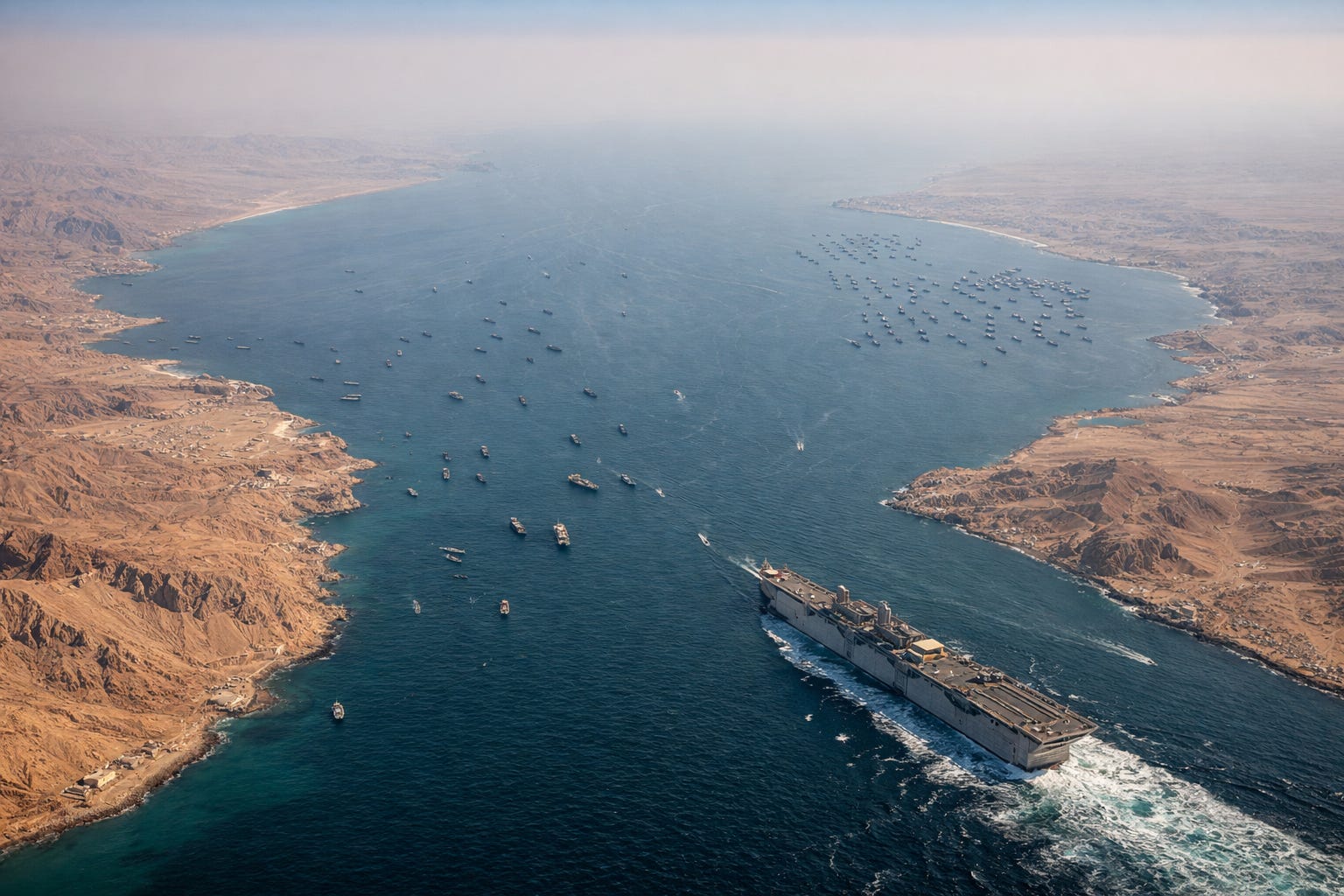
For now, the Strait remains closed, the statement changes nothing operationally, and tanker operators should plan accordingly. The 400 vessels stranded near Hormuz are not getting an escort this week. Possibly not this month. The 20 signatures are a diplomatic floor, not an operational ceiling. The gap between the two is where tanker rates, insurance premiums, and fleet deployment decisions will continue to be made.

