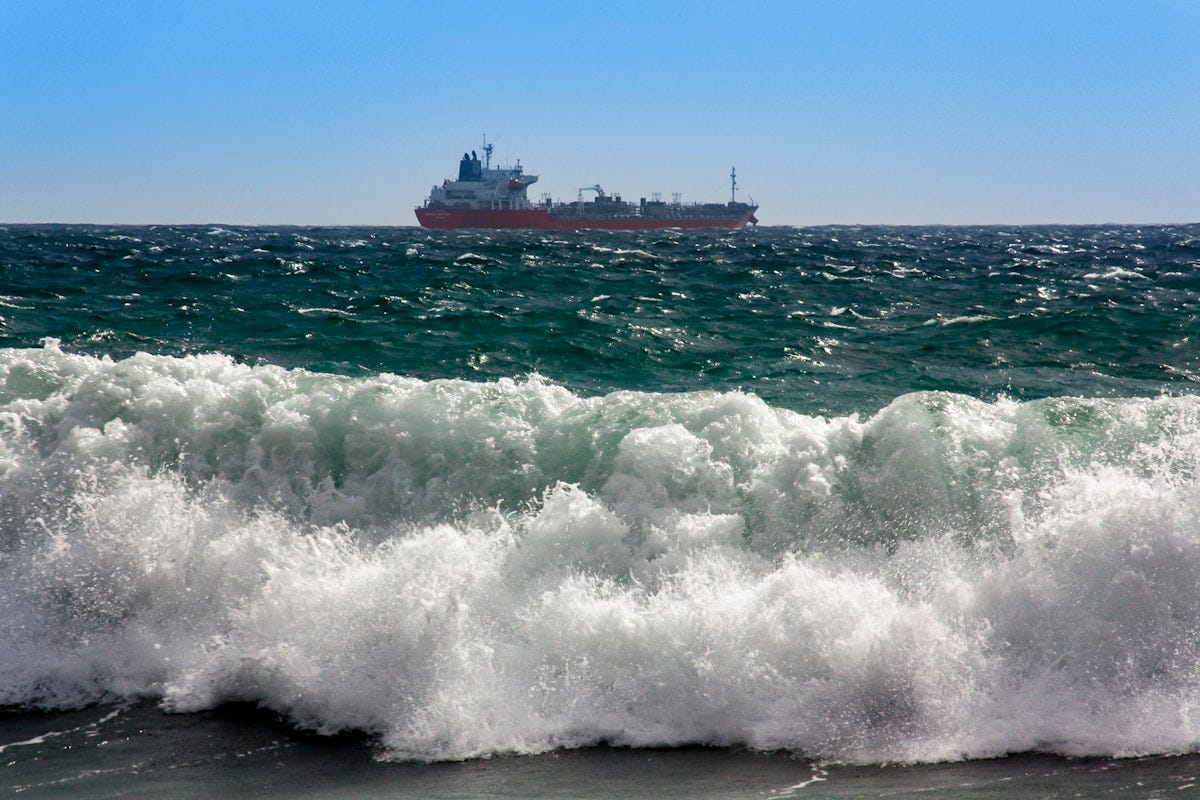
Brent Crude Surges Past $82 as Hormuz Crisis Enters Day Four
Oil Markets React to Worst Maritime Security Crisis in Decades
Brent crude oil futures surged past $82 per barrel on Monday as the Strait of Hormuz crisis entered its fourth day with no signs of de-escalation, marking the sharpest sustained increase in energy prices since the initial Houthi attacks on Red Sea shipping in late 2023. The benchmark crude contract settled at $82.47, up 4.3 percent on the day, while West Texas Intermediate climbed above $79 in sympathy trading as markets priced in the growing probability of a prolonged disruption to the world's most critical oil transit route.
The price surge accelerated after Iran's Islamic Revolutionary Guard Corps broadcast a threat on VHF Channel 16 declaring the strait closed and promising to attack any vessel that attempted passage. Maritime tracking data confirms that vessel traffic through the chokepoint has collapsed by approximately 80 percent, effectively removing 17 million barrels per day of crude oil transit capacity from global markets overnight.
Analysts Warn of $100+ Scenarios
Swiss wealth manager UBP has issued an advisory warning that Brent could reach $120 per barrel if the Hormuz closure persists beyond two weeks, a scenario that would send shockwaves through the global economy and potentially trigger recession fears in import-dependent nations. Goldman Sachs commodity analysts have revised their near-term price target to $95 under a "partial disruption" scenario and $110 to $130 under a "full closure" scenario lasting more than 30 days.
The concern extends well beyond the headline crude price. The Strait of Hormuz serves as the chokepoint for approximately 20 percent of the world's liquefied natural gas trade. Qatar, the world's largest LNG exporter, ships virtually all of its output through the strait. With European nations still rebuilding gas storage after weaning themselves off Russian pipeline supplies, any disruption to Qatari LNG flows could reignite the energy security crisis that gripped the continent in 2022.
Energy traders are also closely monitoring the impact on refined product markets. Approximately 30 percent of Europe's jet fuel supply transits the Strait of Hormuz, along with substantial volumes of diesel, naphtha, and fuel oil from Gulf refineries. Crack spreads—the margin between crude oil and refined products—have widened significantly, suggesting markets anticipate tightening product supplies even before crude shortages materialize.
Strategic Petroleum Reserve Discussions Intensify
The International Energy Agency convened an emergency session to discuss potential coordinated releases from strategic petroleum reserves held by member nations. The United States Strategic Petroleum Reserve currently holds approximately 370 million barrels following drawdowns during the 2022 energy crisis, providing a significant but finite buffer. Japan, South Korea, and European IEA members hold additional strategic reserves that could be deployed in a coordinated response.
However, energy policy experts caution that strategic reserve releases are designed to address temporary supply disruptions, not prolonged blockades. If the Hormuz closure extends beyond several weeks, reserve drawdowns would provide only a partial cushion against the supply deficit. Saudi Arabia's alternative pipeline capacity through the East-West Pipeline to Yanbu on the Red Sea coast could theoretically redirect approximately 5 million barrels per day, but this route faces its own security concerns given ongoing Houthi activity in the region.
Commodities Beyond Oil Under Pressure
The Hormuz crisis is sending ripple effects across commodity markets well beyond crude oil. Natural gas futures in both Europe and Asia have spiked on concerns about LNG supply disruptions. Fertilizer prices are climbing as traders digest the reality that roughly one-third of global seaborne fertilizer trade passes through the strait, with major export facilities in Saudi Arabia and the UAE now effectively landlocked.
Petrochemical feedstock prices have also surged, threatening to increase costs across manufacturing supply chains from plastics to pharmaceuticals. The Gulf region is home to some of the world's largest petrochemical complexes, and their output flows through the Strait of Hormuz to customers across Asia and Europe.
Market Volatility Expected to Persist
Options markets reflect extreme uncertainty about the crisis trajectory. Implied volatility on Brent crude options has spiked to levels last seen during the COVID-19 demand collapse and the Russian invasion of Ukraine. The skew toward call options—bets on higher prices—has reached historic extremes, indicating that traders are actively hedging against the possibility of a sustained closure pushing oil well above current levels.
Currency markets are also reacting, with the currencies of major oil-importing nations weakening against the dollar. The Indian rupee, Japanese yen, and Turkish lira have all come under pressure as traders price in higher energy import bills. Conversely, the Norwegian krone and Canadian dollar have strengthened on the prospect of higher oil revenues for these major producing nations.
The broader economic implications are stark. Every $10 increase in oil prices is estimated to reduce global GDP growth by approximately 0.2 percentage points. If the crisis pushes Brent sustainably above $100, central banks currently navigating the final stages of inflation normalization would face renewed upward pressure on consumer prices, potentially delaying interest rate cuts that markets had been anticipating throughout 2026.