


⚓ The Gosships Team
Gosships Intelligence Is Published At Gosships.com
For Sponsorship And Partnership Inquiries Contact intelligence@gosships.com
|⚓ About Us | 🛢️ Exclusive Report | 📋 SwiftAction Training |
🏅Black Gold Membership (*53 Slots Left)
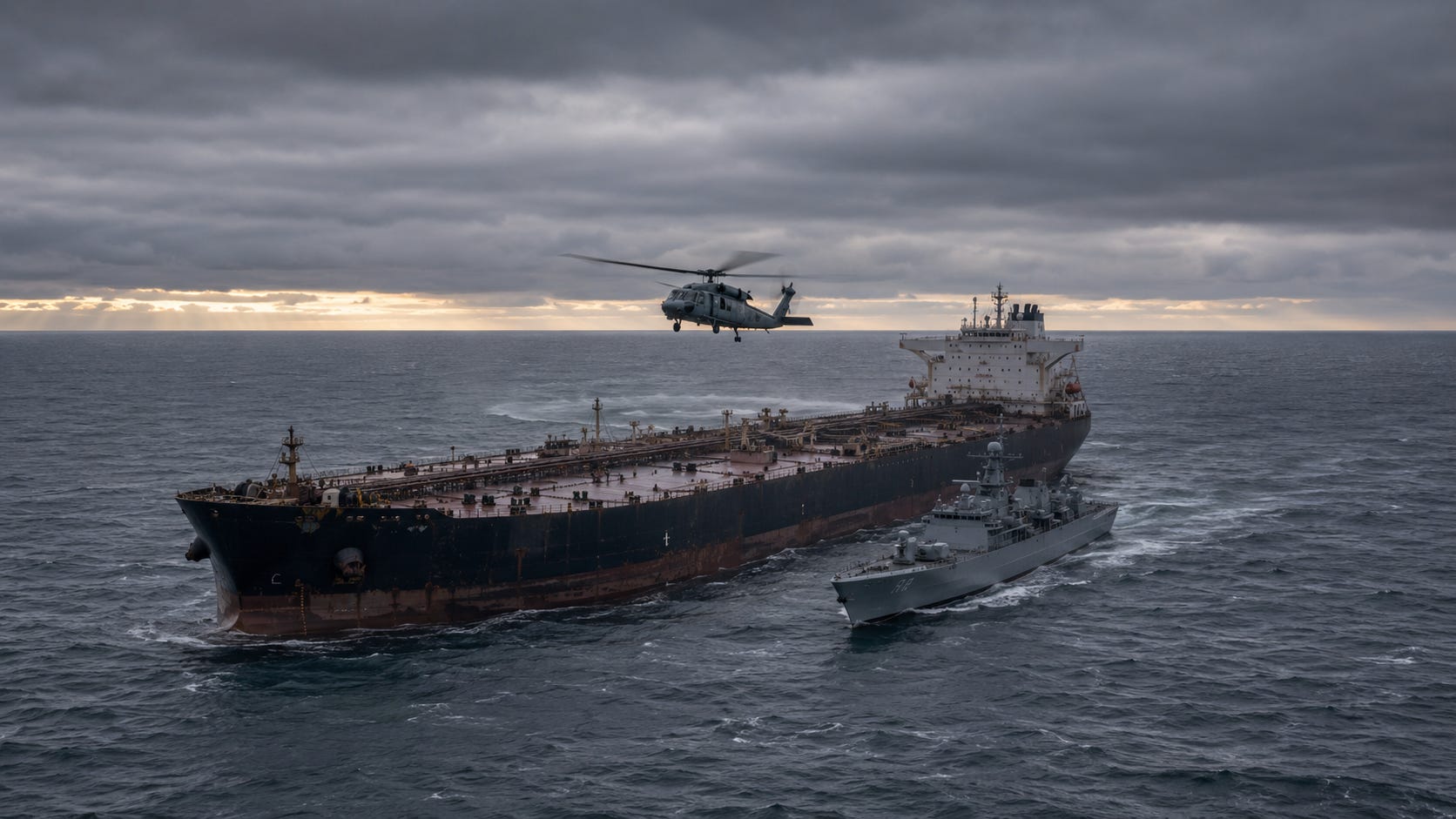
At first light on June 14, Royal Marines came over the side of a 244-metre oil tanker in the English Channel. The Smyrtos was flying a flag it no longer had any right to, its owner hidden behind shell companies, and about 600,000 barrels of sanctioned Russian crude in its tanks. For the first time, Britain decided that was reason enough to board it, and the way it did it changes the math for every shadow tanker that sails past Europe.
📋 In This Issue:
🛢️ The Story
📊 By The Numbers
🔍 Why It Matters
👀 What To Watch
🚨 Gosships Signal
🔔 Not Yet Subscribed? Gosships Intelligence Delivers Oil Shipping Intelligence. Subscribe Here!
📊 Order Our Exclusive Report
→ Global Tanker Market Outlook Q3 2026 Edition
📋 Competency-Based Maritime Training
→ SwiftAction
📌 Gosships Data Card
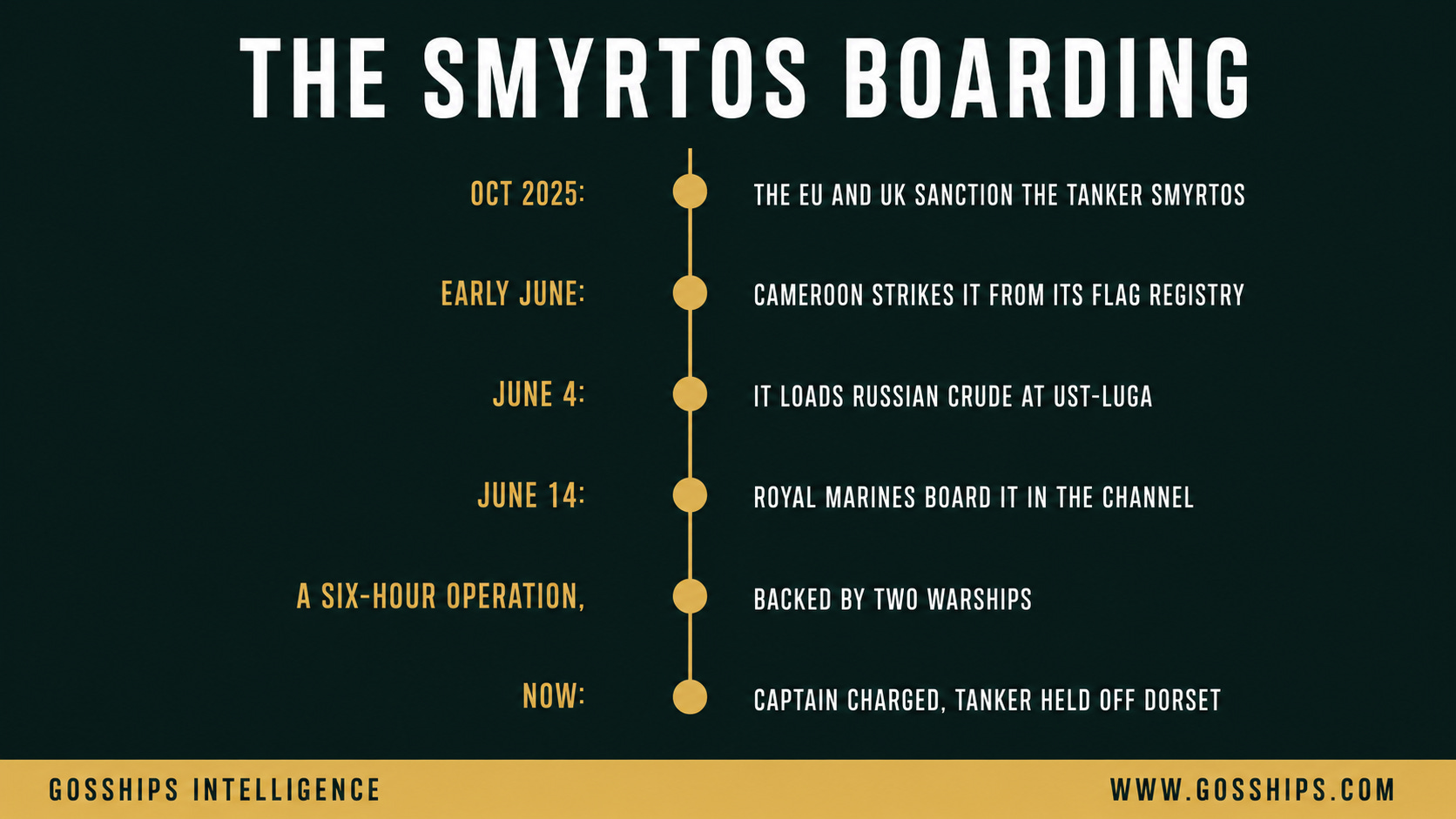
→ October 2025: The EU And UK Add The Tanker Smyrtos To Their Sanctions Lists Over Russian Crude
→ Early June: Cameroon Strikes Smyrtos And 35 Other Shadow Ships From Its Flag Registry Under EU Pressure
→ June 4: Smyrtos Loads About 600,000 Barrels Of Russian Urals Crude At The Baltic Port Of Ust-Luga
→ June 14: Royal Marines From 42 Commando Board The Stateless Tanker In The English Channel
→ A Six-Hour Operation Backed By HMS Sutherland, HMS Ledbury, And Commando Helicopters
→ Now: Britain Charges The Tanker’s Captain Under Sanctions Law, And The Ship Is Held At Anchor Off The Dorset Coast
🛢️ The Story
For three years the West has sanctioned Russia’s shadow fleet from a distance. On June 14 it climbed aboard.
In the early hours of Sunday, Royal Marines from 42 Commando, working alongside officers from Britain's National Crime Agency, boarded the oil tanker Smyrtos as it pushed westbound through the English Channel. The six-hour operation was backed by the frigate HMS Sutherland, the minehunter HMS Ledbury, Merlin Mk4 helicopters from the Commando Helicopter Force, Wildcat helicopters, RAF Chinooks and a P-8 Poseidon. The Ministry of Defence called it the first UK-led operation of its kind, the first time Britain has put boots on the deck of a sanctioned Russian tanker in its own waters. Britain had taken part before, supporting the US seizure of the Russian-flagged Marinera in the North Atlantic in January and backing French boardings further out at sea. It had even seized a tanker of its own once, the Iranian Grace 1 off Gibraltar in 2019. But it had never led an operation against a Russian shadow-fleet ship in its own home waters until now.
The ship they boarded is a case study in how the shadow fleet hides. The Smyrtos is a 244-metre Aframax crude carrier, IMO 9389100, and on June 4 it loaded about 600,000 barrels of Russian Urals crude, more than 100,000 tonnes, at the Baltic port of Ust-Luga, according to Lloyd’s List. From there it set course for the Indian port of Sikka, one of the main gateways for Russian crude into India. The EU and the United Kingdom had both sanctioned the vessel back in October 2025 for its role in moving Russian oil. To keep trading, it did what these ships do: after February 2025 it was renamed from Myrtos to Smyrtos, and its management was reshuffled through a chain of companies that led, at various points, to Daira Shipping in the Seychelles, Crest Maritime in Singapore, and Zhao Yao Shipping in Hong Kong, while the ultimate owner stayed hidden. The names changed. The cargo did not.
What finally exposed the Smyrtos was not its owner but its flag, or rather the loss of it. Every merchant ship sails under the legal protection of a flag state, and that flag is normally what keeps a foreign navy from boarding it on the high seas. The Smyrtos was still flying the flag of Cameroon as it entered the Channel. The problem was that Cameroon, under diplomatic pressure from the EU, had already struck the Smyrtos and 35 other shadow-fleet vessels from its registry. A ship flying a flag it is no longer entitled to is, in the eyes of the law, a ship with no nationality at all, and a stateless ship loses the one shield that matters.
That is the legal hinge of the entire operation. Under Article 110 of the UN Convention on the Law of the Sea, a warship has the right to board a vessel it reasonably suspects of having no nationality. Once British forces established that the Smyrtos was effectively stateless, the right of visit was theirs, and domestic sanctions law did the rest. This was not a grey-zone improvisation. It was a planned use of a rule that has existed for decades, aimed at a ship that had sanctioned itself out of the protection that rule normally provides.
The timing was not an accident either. On March 26, 2026, the UK government formally authorized its forces and law enforcement to intercept and detain sanctioned Russian oil vessels operating in or near British waters, naming the English Channel specifically. The Smyrtos is the first ship taken under that authority. Defence Secretary Dan Jarvis tied the operation directly to the war, saying “Russia relies on its shadow fleet to fund its conflict in Ukraine,” and framing the interdiction as a blow to Moscow’s war chest. Britain has now sanctioned more than 500 shadow-fleet vessels, according to the Ministry of Defence. Until Sunday, those were names on a list. Now one of them is sitting at anchor off the Dorset coast under a British guard, and on June 15 prosecutors charged its captain, the Indian national Ajay Pant, with supplying prohibited Russian oil in breach of UK sanctions, an offence that carries up to ten years in prison.
This does not happen in isolation. It lands inside an enforcement wave that has escalated all year, and it was not even the only boarding of the weekend. On the same Sunday, the French navy boarded another sanctioned Russian tanker, the Tagor, in the Atlantic west of Brittany, with British support. The United States has run its own interdiction campaign and this month secured the first criminal guilty plea from a shadow-fleet master in its history. The EU has moved to freeze the Russian oil price cap and, for the first time, target the firms that fuel the shadow fleet. Flag registries from Cameroon to Panama have been shedding sanctioned tonnage under pressure. The Smyrtos boarding is the next rung up that ladder: not a sanction, not a fine, but a physical seizure in one of the busiest waterways on earth. What that means for the hundreds of ships still running Russian, Iranian and Venezuelan crude, and for the owners and insurers behind them, is below.
📊 By The Numbers
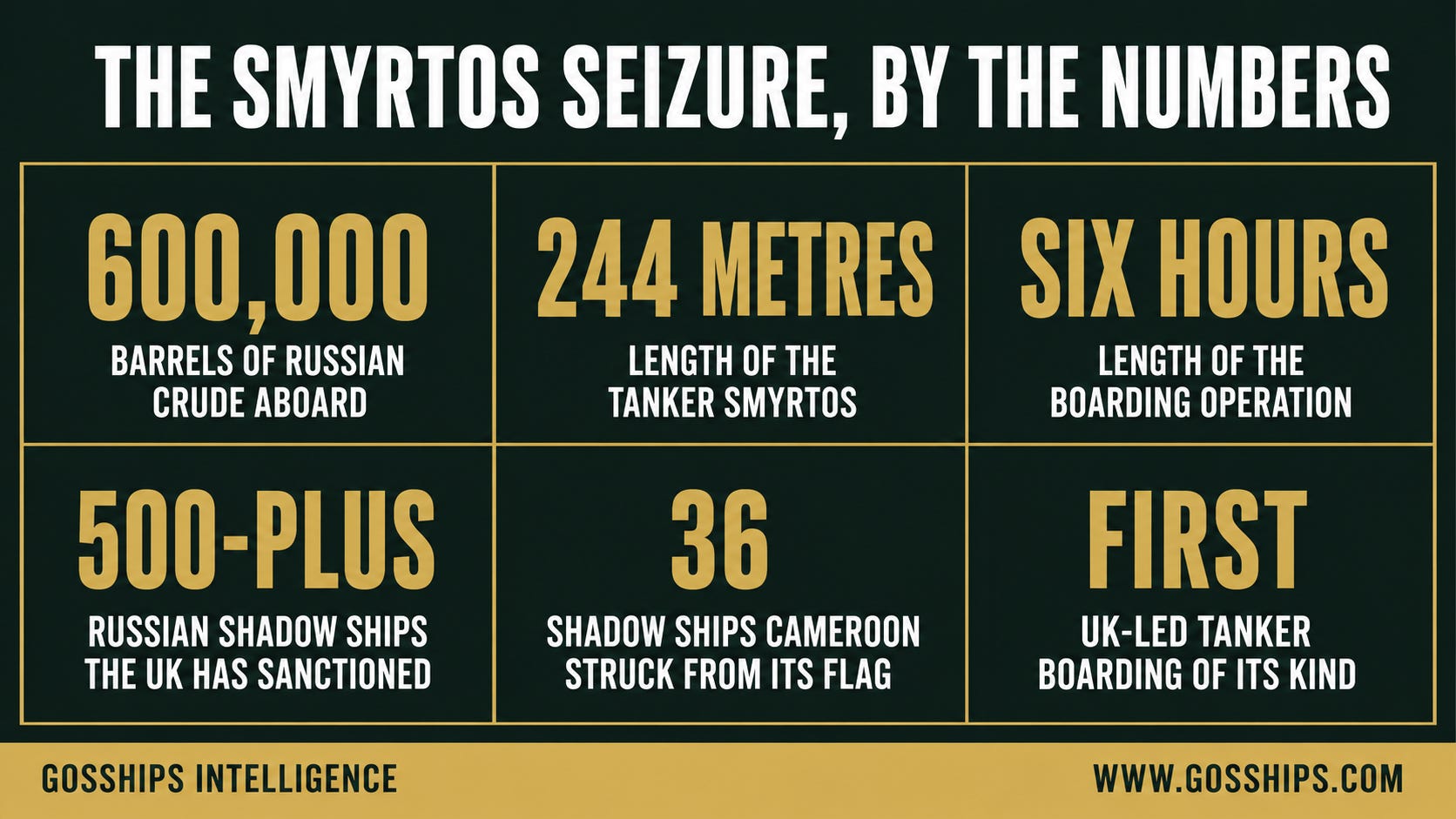
→ 600,000: Barrels Of Russian Urals Crude Aboard The Smyrtos, Loaded At Ust-Luga On June 4 (Lloyd’s List)
→ 244 Metres: Length Of The Aframax Tanker, IMO 9389100 (Lloyd’s List)
→ Six Hours: Length Of The Boarding Operation By 42 Commando And The National Crime Agency (Royal Navy)
→ 500-Plus: Russian Shadow-Fleet Vessels The UK Has Sanctioned To Date (UK Ministry of Defence)
→ 36: Shadow Ships Cameroon Struck From Its Flag Registry, Smyrtos Among Them (Lloyd’s List)
→ October 2025: When The EU And UK First Sanctioned The Smyrtos → Article 110: The UNCLOS Rule On Stateless Ships That Made The Boarding Legal
Why a stateless ship is the shadow fleet’s biggest weakness, what the Article 110 precedent does to every owner running sanctioned crude past Europe, how insurers and charterers reprice the Channel overnight, and the escalation risk now that armed guards are turning up on these tankers. That read is below.
