
OFAC Blocks Cuba From Russian Oil — But Two Tankers Are Already En Route. One Is Sanctioned. One Is Running Dark.
The U.S. eased Russian oil sanctions for the world. It carved Cuba out. Now a sanctioned Sovcomflot tanker and an AIS-spoofing Hong Kong vessel are testing the blockade live.
The Story
The Treasury Department’s Office of Foreign Assets Control published an amended general license on Thursday adding Cuba to the list of countries explicitly barred from receiving Russian crude oil or petroleum products. The move closes a loophole in the broader Russian oil sanctions relief the U.S. issued on March 12, a temporary measure designed to stabilize global energy prices during the Hormuz crisis by allowing the purchase of Russian crude already loaded on tankers at sea. That relief was extended to most of the world. Cuba, North Korea, and Russian-occupied regions of Ukraine were carved out.
The timing is not coincidental. Two tankers carrying Russian fuel are heading directly for the island, and both were being tracked in real time when Treasury moved.
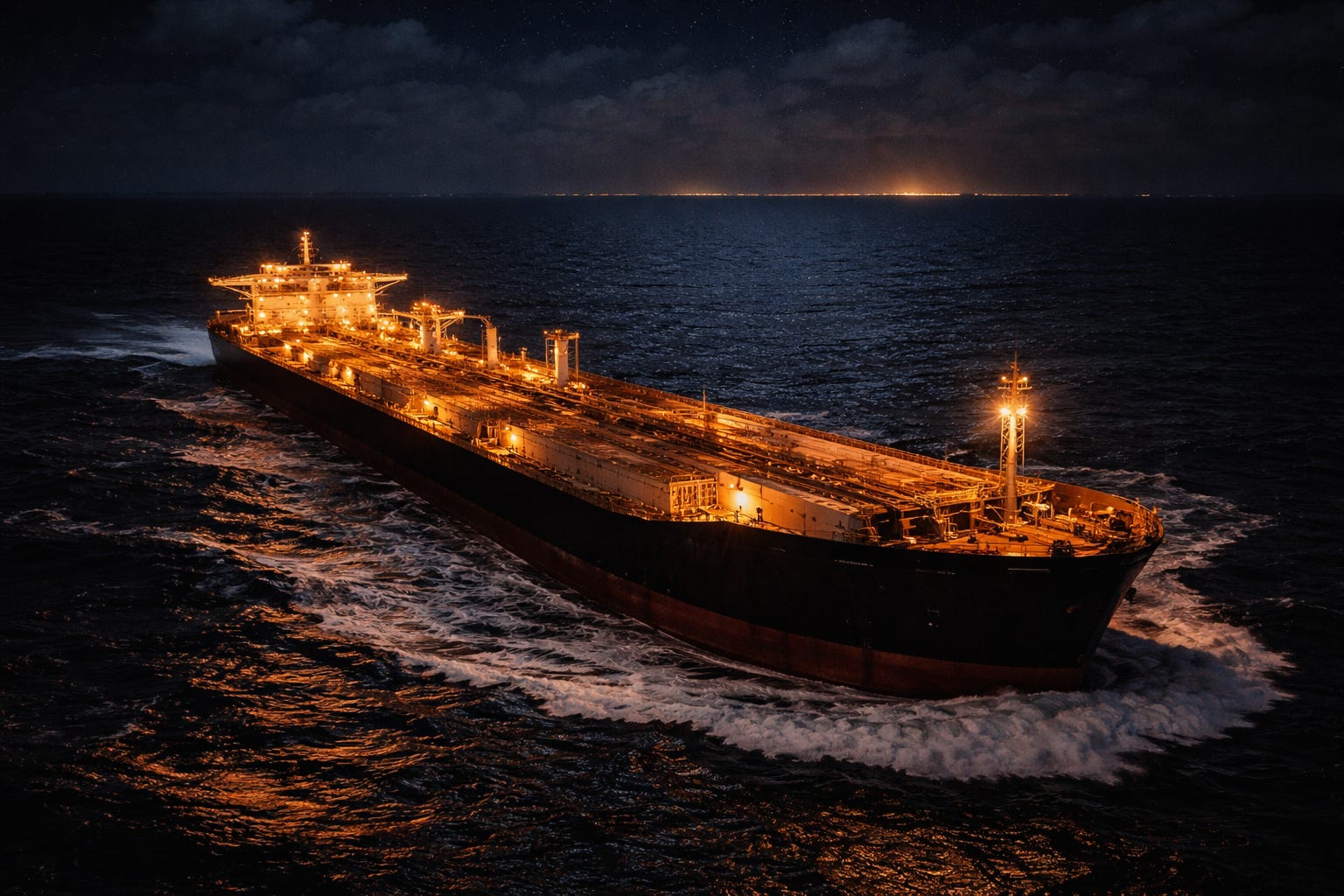
The Anatoly Kolodkin is a Russian-flagged tanker owned by state shipping company Sovcomflot, sanctioned by the United States, the European Union, and the United Kingdom. She departed the Russian port of Primorsk on March 8 carrying approximately 730,000 barrels of Urals crude, bound for the oil terminal at Matanzas, Cuba. Kpler data places her roughly 3,000 nautical miles from Cuba in the mid-Atlantic, with an estimated arrival as early as March 23. If she delivers, it would be the first oil shipment to reach Cuba from any country in over three months.
The second vessel is the Sea Horse, flying the Hong Kong flag and carrying an estimated 190,000-200,000 barrels of Russian gasoil (roughly 27,000 metric tons). According to Windward’s maritime intelligence analysis, the Sea Horse loaded its cargo via a ship-to-ship transfer off Cyprus in late February, switched off its AIS transponder during the transfer, and then drifted in the Atlantic before resuming its course toward the Caribbean on March 17. The vessel is not currently sanctioned, but Windward flagged it for deceptive shipping practices consistent with sanctions evasion: AIS spoofing, destination switching (originally declared Havana, then changed to “Gibraltar for orders”), and a lack of Western insurance coverage. She was positioned in the northwestern Caribbean roughly 1,500 kilometers from Cuba as of this week.
Cuba has not received a confirmed fuel import since January 9, when Mexico halted oil exports to the island under U.S. pressure. The Trump administration ousted Venezuelan President Nicolás Maduro in a military operation in January, cutting off Cuba’s primary alternative supply. The island of roughly 10 million people has been running on natural gas, solar, and deteriorating thermoelectric plants. A nationwide blackout earlier this week lasted 29 hours.
Why It Matters
This is a live sanctions enforcement test playing out at sea, and it’s happening at the intersection of three separate U.S. policy tracks that are pulling in different directions.
Track one: the U.S. eased Russian oil sanctions globally on March 12 to flood the market with supply during the Hormuz crisis. Track two: OFAC carved Cuba out of that relief on March 20, explicitly blocking Russian barrels from reaching the island. Track three: the U.S. is maintaining a de facto naval energy blockade on Cuba that has starved the island of fuel since January.
For the tanker market, the enforcement question is immediate. The Anatoly Kolodkin is a sanctioned vessel heading for a blockaded port. If the U.S. Coast Guard intercepts her in Caribbean waters, it would be the most significant physical enforcement action against a Russian-flagged tanker by the United States since the Ukraine sanctions regime began. If she’s allowed to deliver, it would signal that the blockade has limits Washington isn’t willing to enforce against a nuclear-armed adversary’s state shipping company.
The Sea Horse presents a different compliance puzzle. She’s not sanctioned, but her behavioral profile (AIS dark periods, STS transfers, destination switching, no Western P&I coverage) is a textbook case of deceptive shipping practices under OFAC’s maritime advisory framework. Any entity facilitating her discharge in Cuba now faces secondary sanctions exposure under Thursday’s amended license. Port operators, agents, and any financial institutions touching the transaction are on notice.
The broader signal for compliance teams: the U.S. is simultaneously loosening and tightening Russian oil sanctions depending on the destination. Russian crude is being welcomed into the global market to offset Hormuz losses. The same Russian crude is being blocked from Cuba. The same Russian crude is being seized by France in the Mediterranean. Three enforcement postures, one commodity, one week. Navigating this requires vessel-level due diligence that most compliance frameworks were not built for.
What to Watch
The Anatoly Kolodkin’s ETA at Matanzas is as early as March 23, three days from now. That’s the decision point. Either the U.S. intercepts, or it doesn’t. The Sea Horse may arrive even sooner. If Windward’s tracking is accurate, she could reach Cuban waters within days.
Cuba’s President Miguel Díaz-Canel has pledged “unyielding resistance” to the U.S. energy blockade. The Kremlin has stated it remains committed to providing Cuba with energy assistance. Trump said this week he believes he’ll have “the honor of taking Cuba.” The diplomatic temperature around these two tankers is rising faster than the fuel crisis that’s driving them.
If both vessels discharge successfully in Cuba despite OFAC’s amended license and the U.S. naval presence in the Caribbean, it redefines the credibility of American sanctions enforcement in the Western Hemisphere. If one or both are intercepted, it marks a new phase of direct U.S.-Russia confrontation at sea. Over oil, on the doorstep of Florida.

