


⚓ The Gosships Team
Gosships Intelligence Is Published At Gosships.com
For Sponsorship And Partnership Inquiries Contact intelligence@gosships.com
|⚓ About Us | 🛢️ Deep Water Reports | 📋 SwiftAction Training |
🏅 Founding Black Gold Membership (*52 Slots Left)
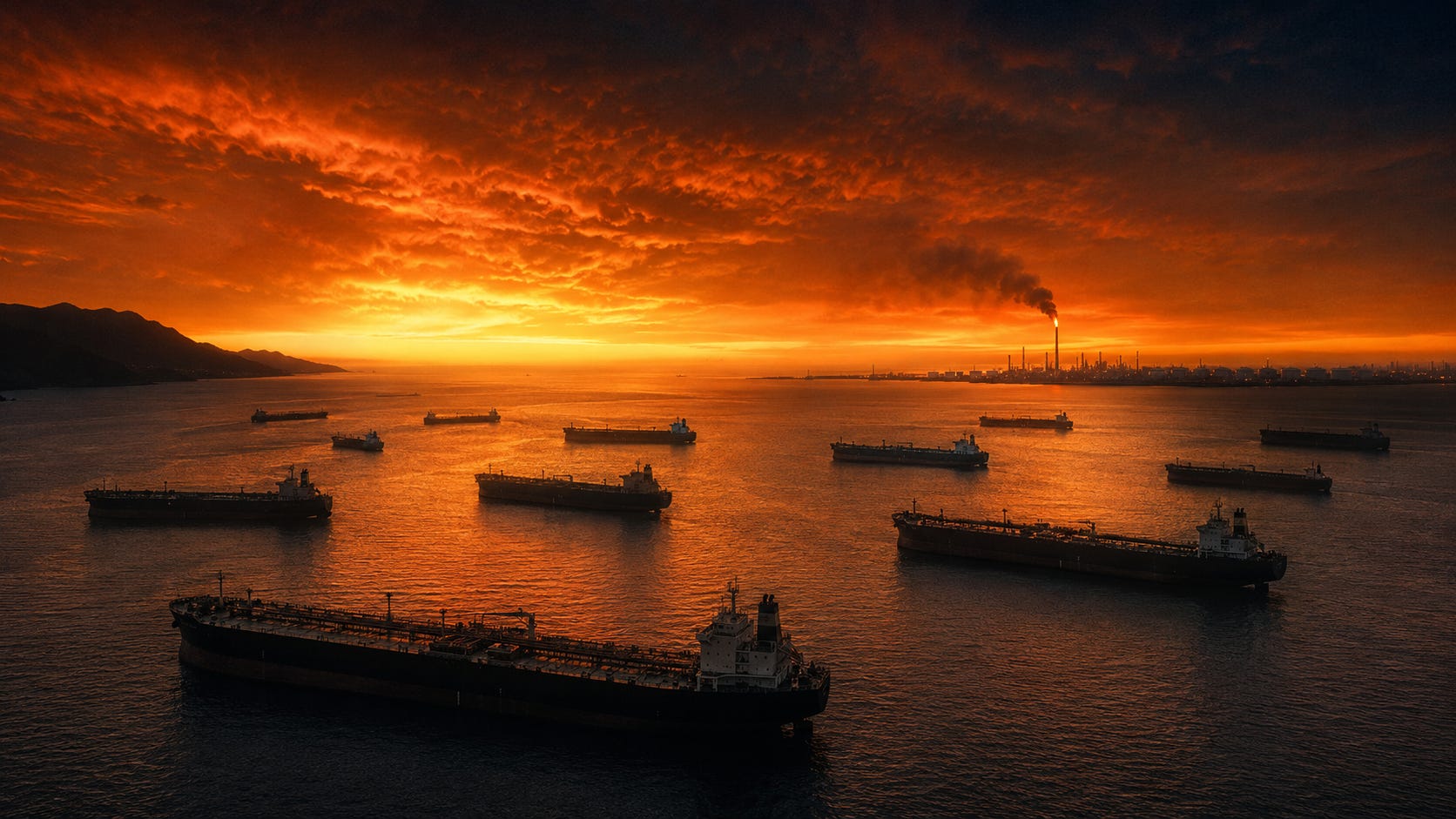
Saudi Aramco posted Q1 2026 adjusted net income of $33.6 billion on Monday, up 26% year over year and beating analyst consensus by $2.4 billion, per CNBC. The result reversed 12 consecutive quarters of profit decline, per The Middle East Observer. The same Monday, on the same earnings call, Aramco CEO Amin Nasser warned that the global oil market will not normalize until 2027 if disruption in the Strait of Hormuz persists past the middle of June, per CNBC and Fox Business. The paradox is the story. The world has lost approximately one billion barrels of oil supply since the Iran war began, with a net loss of 880 million barrels after redirected Aramco exports through the East-West pipeline. The market is losing 100 million barrels per week. Only two to five ships pass through Hormuz daily. The pre-war average was 70. More than 600 ships, mostly oil and product tankers, remain stuck in the Gulf, with 240 more waiting outside Hormuz, per Nasser quoted by CNBC.
By Gosships analysis, the world’s largest oil company just reversed 12 consecutive quarters of profit decline while its own CEO warned the global oil market is structurally broken through 2027. The repositioning problem Nasser described, “mixed up” tankers deployed in the wrong places, is the operational reality behind every shipping CEO’s Q1 commentary this week. Trump said Monday the ceasefire with Tehran is on “massive life support” after rejecting Iran’s counterproposal, per CNN and the Washington Post. The tanker market is now pricing not whether Hormuz reopens but when and how the global fleet rebalances if it does.
📋 In this issue:
🛢️ The Story
📊 By The Numbers
🔍 Why It Matters
👀 What to Watch
🚨 Gosships Signal
📊 Get The Deep Water Report
→ Global Tanker Market Outlook Q2 2026
📋 Competency-Based Maritime Training
→ SwiftAction
📌 Gosships Data Card
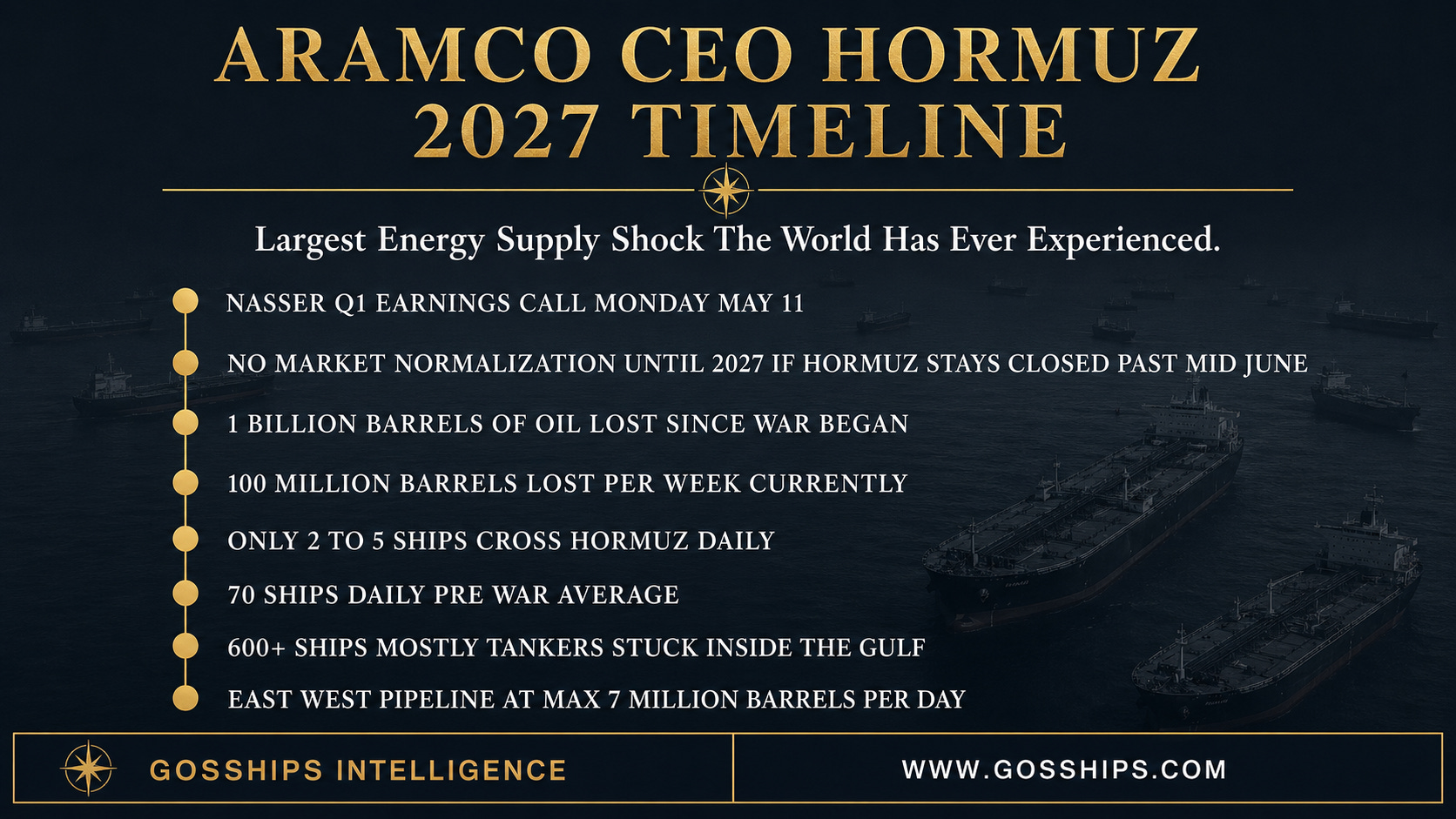
→ Aramco CEO Nasser Q1 Earnings Call Statement Monday May 11
→ Oil Market Will Not Normalize Until 2027 If Hormuz Stays Closed Past Mid-June
→ Largest Energy Supply Shock The World Has Ever Experienced Per Nasser
→ 1 Billion Barrels Of Oil Supply Lost Since War Began
→ 880 Million Barrels Net Loss After East-West Pipeline Rerouting
→ 100 Million Barrels Lost Per Week While Hormuz Closed
→ 2 To 5 Ships Pass Hormuz Daily Currently
→ 70 Ships Daily Pre-War Average
→ 600+ Ships Stuck Inside The Gulf Per Aramco
→ 240 Ships Waiting Outside Hormuz Per Aramco
→ East-West Pipeline At Maximum 7 Million Barrels Per Day Per Nasser
→ Trump Said Ceasefire On Massive Life Support Per Washington Post
→ Tanker Fleet Now Mixed Up With Ships In Wrong Places Per Nasser
🛢️ The Story
Saudi Aramco CEO Amin Nasser told investors on the company’s first quarter 2026 earnings call Monday May 11 that the oil market will not normalize until 2027 if disruption in the Strait of Hormuz persists past the middle of June, per CNBC reporter Spencer Kimball. “If the Strait of Hormuz opens today, it will still take months for the market to rebalance, and if its opening is delayed by a few more weeks, then normalization will last into 2027,” Nasser said, per CNBC. Nasser said on the call: “The energy supply shock that began in the first quarter is the largest the world has ever experienced,” per Fox Business.
The total oil supply loss since the Iran war began has reached approximately one billion barrels, Nasser said, per Fox Business. The net loss is around 880 million barrels after redirected exports through Aramco’s East-West pipeline, per CNBC. Aramco’s East-West pipeline has reached its maximum capacity of 7 million barrels per day, per Nasser quoted by Fox Business. “Our East-West pipeline, which reached its maximum capacity of 7 million barrels of oil per day, has proven itself to be a critical supply artery, helping to mitigate the impact of a global energy shock and providing relief to customers affected by shipping constraints in the Strait of Hormuz,” Nasser said on the call.
The Aramco CEO described the tanker market disruption as the biggest single challenge facing the global oil market. More than 600 ships, mostly oil and product tankers, are currently stuck in the Gulf, per Nasser via CNBC. Approximately 240 ships are waiting outside Hormuz. Some of these ships may leave to other places because they have been idling in the region for too long, Nasser said. The fleet is “mixed up” with some tankers deployed in the wrong places. Ships will need to be repositioned from parts of the world to normalize the supply chain.
