


⚓ The Gosships Team
Gosships Intelligence Is Published At Gosships.com
For Sponsorship And Partnership Inquiries Contact intelligence@gosships.com
|⚓ About Us | 🛢️ Exclusive Report | 📋 SwiftAction Training |
🏅Black Gold Membership (*53 Slots Left)
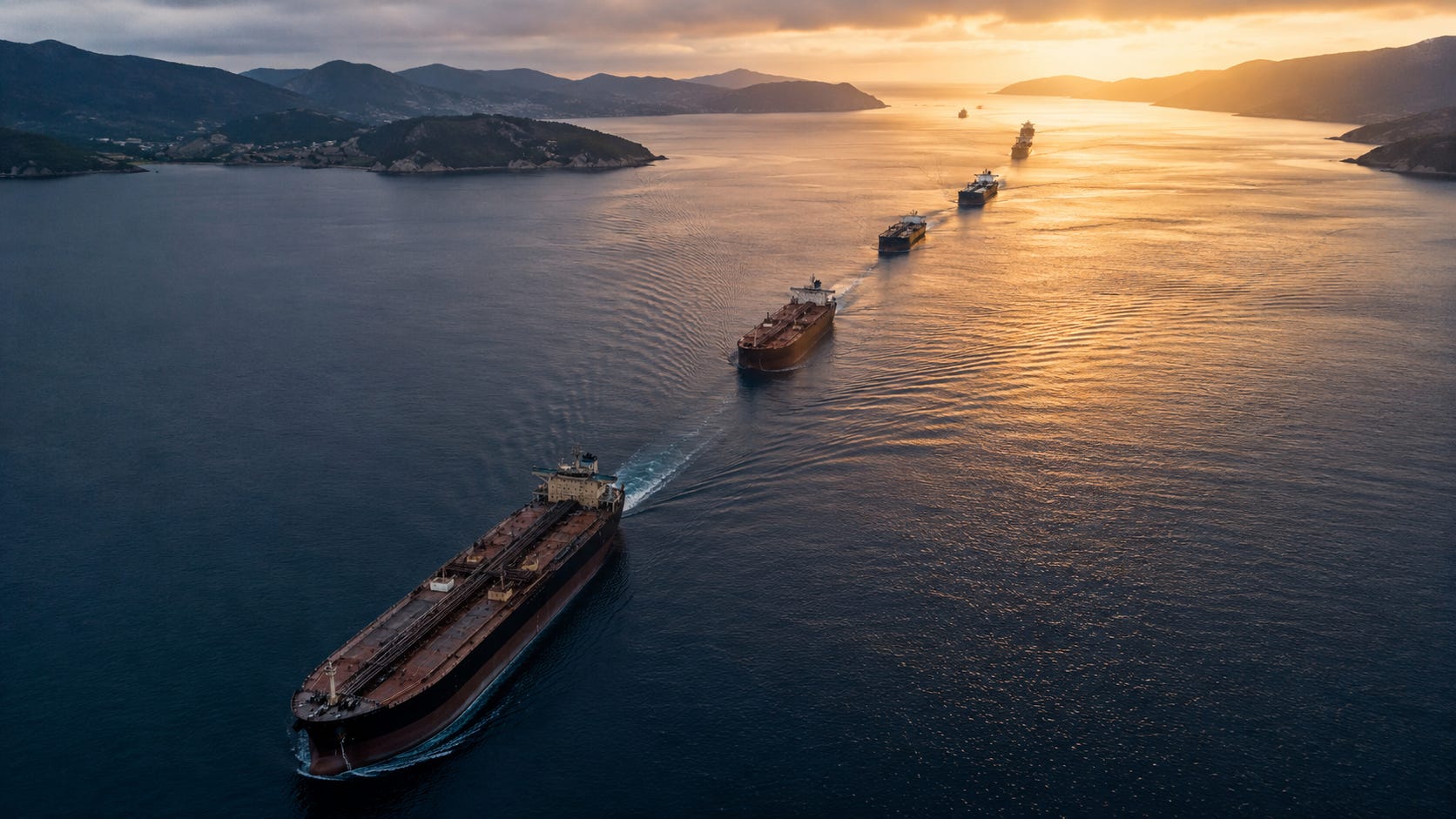
For nearly four months the tanker market was paid to fear the Strait of Hormuz, the same fear that drove crude toward $120 a barrel and raised the price of filling your tank. On June 14 that fear got an expiration date. The United States and Iran reached a deal to end the war, President Trump ordered the strait reopened and the naval blockade lifted, and in a single afternoon the richest freight market in history began to come apart.
📋 In This Issue:
🛢️ The Story
📊 By The Numbers
🔍 Why It Matters
👀 What To Watch
🚨 Gosships Signal
🔔 Not Yet Subscribed? Gosships Intelligence Delivers Oil Shipping Intelligence. Subscribe Here!
📊 Order Our Exclusive Report
→ Global Tanker Market Outlook Q3 2026 Edition
📋 Competency-Based Maritime Training
→ SwiftAction
📌 Gosships Data Card
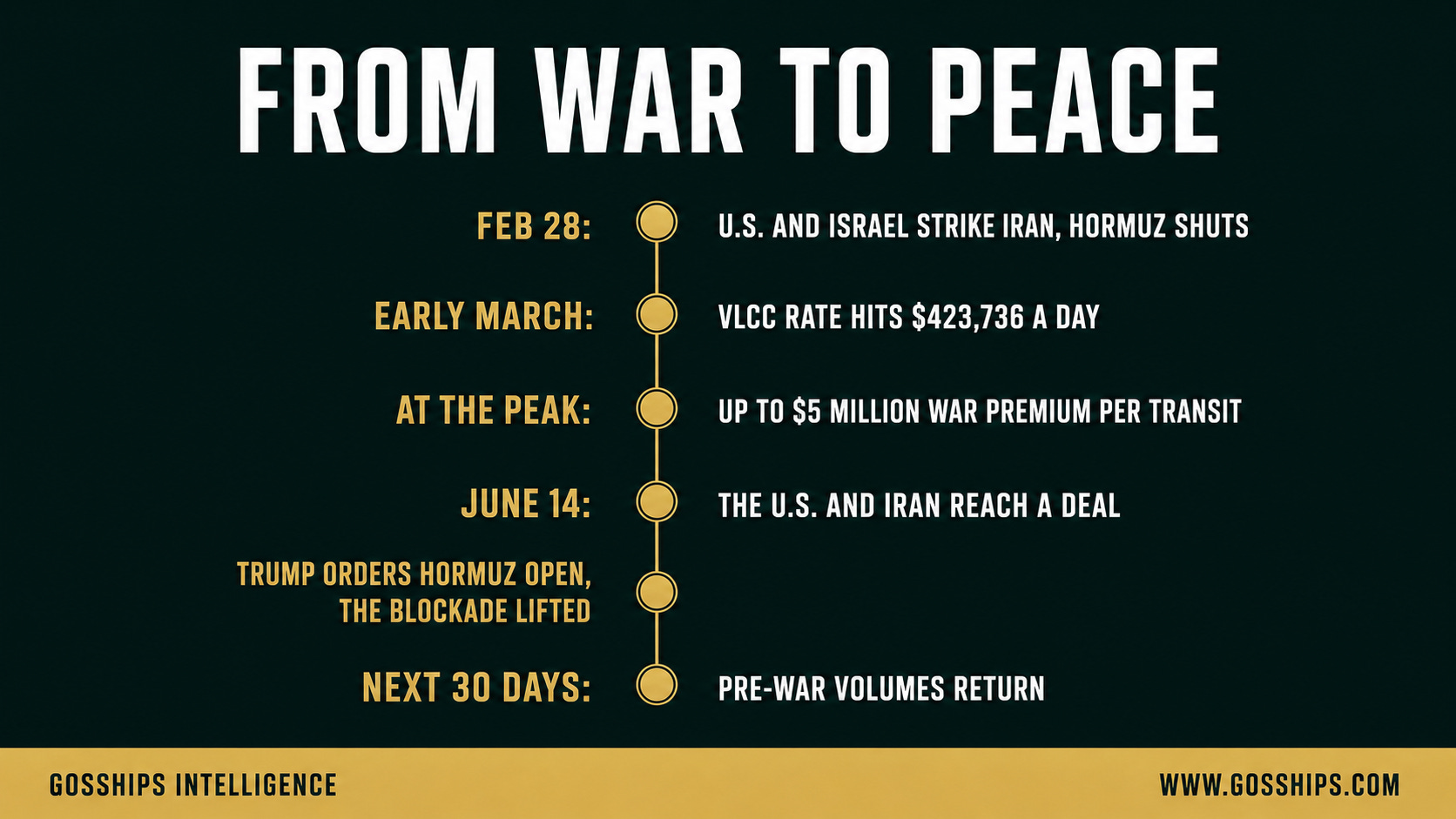
→ Feb 28: U.S. And Israel Strike Iran, And The Strait Of Hormuz Effectively Shuts Within 48 Hours
→ Early March: The Middle East Gulf To China VLCC Rate Hits An All-Time High Of $423,736 A Day (CNBC)
→ At The Peak: War-Risk Premiums Reach As Much As $5 Million Per VLCC Transit (Broker And Insurer Estimates)
→ June 14: The U.S. And Iran Reach A Deal To End The War And Reopen The Strait
→ Trump Authorizes The Toll-Free Opening Of Hormuz And The Immediate Removal Of The Naval Blockade
→ Next 30 Days: Pre-War Shipping Volumes Are Set To Return, With A Formal Signing On June 19
🛢️ The Story
The signature the whole market was waiting for finally landed, and it landed hard. On June 14 the United States and Iran reached a deal to end nearly four months of war, and President Trump moved immediately on the part that matters to this industry. In a statement, he said he would “fully authorize the toll free opening of the Strait of Hormuz” and, in the same breath, authorize the immediate removal of the United States naval blockade of Iran. The two measures that have defined the tanker market since late February were lifted in a sentence.
The deal itself was confirmed from both sides. Iran’s deputy foreign minister, Kazem Gharibabadi, acknowledged the agreement, which according to reporting by Axios and others extends the ceasefire, ends the war including in Lebanon, withdraws U.S. forces from around Iran, and has Iran reaffirm that it will not pursue a nuclear weapon. A formal signing ceremony is set for June 19 in Switzerland, with the framework extending the ceasefire for 60 days. The deal is not yet ink on paper, and Israeli strikes in Lebanon have already been reported as a threat to it, but on the water the terms are blunt: the strait reopens without tolls, the blockade is gone, and pre-war shipping volumes are to return within 30 days.
For shipowners, that is the end of the most lucrative run any of them have ever seen, and the beginning of the bill. To understand the scale of what is unwinding, recall where the market was a week ago. When the strait shut in early March, the benchmark Middle East Gulf to China VLCC rate hit an all-time high of $423,736 a day, according to CNBC. War-risk premiums, which sat near 0.125% of a ship’s hull value before the crisis, ballooned to between 2.5% and 5%, by broker and insurer estimates as much as $5 million added to a single VLCC transit. Brent crude spiked to nearly $120 a barrel, roughly 64% above its pre-closure level. Every one of those numbers existed because the strait was dangerous. The deal removes the danger, and the numbers have nowhere to go but down.
They are already falling. Brent slid to around $87 in the days before the announcement as a deal looked certain, down roughly 20% from its 2026 peak, and the war-risk premium that was the single largest driver of freight is the fastest thing to evaporate. It does not wait for the first tanker to sail. It reprices the moment underwriters believe the war is over, which is now.
The relief reaches well beyond shipping. The same war premium the strait forced into freight was forced into every barrel of oil, which is why drivers paid more at the pump and airlines paid more for jet fuel through the spring. It has been draining since the deal looked certain. A toll-free strait and a lifted blockade mean the roughly one-fifth of the world’s oil supply that moves through Hormuz can flow again without a war discount on one side or a war markup on the other. The catch is timing. Trump’s order takes effect now, but the agreement gives the trade 30 days to rebuild to pre-war volumes, so the unwind will be measured in weeks of returning ships and falling quotes, not a single afternoon.
Then comes the fleet itself. During the brief April truce, Bloomberg counted more than 800 vessels trapped inside the Gulf, unable to leave safely. Many never got out before the fighting resumed. Those ships, plus the tankers that have been anchored outside the strait waiting for exactly this moment, are now cleared to move. Tonnage that was scarce, fought over and priced like gold for months becomes available all at once, and a market built on shortage meets a wall of returning supply.
There is one more barrel to account for, and it is Iranian. The deal pulls Iran’s crude out of the shadows. Iran has exported roughly 13.7 million barrels since February 28, according to TankerTrackers.com, most of it moving through the gray and dark channels that sanctions force it into. A reopened strait and the sanctions relief built into the agreement move those barrels, and the tankers that carry them, back toward legal trade, reshuffling compliant supply and freight demand in one motion.
All of it lands on a fleet that spent the war ordering ships for a boom that just ended. The world VLCC orderbook stands at a record 262 vessels, according to Clarksons Research data reported by Splash247. Those keels were laid on the economics of a closed strait. The strait just opened. What the peace does to rates, to asset values, and to the wall of newbuildings now heading into a normalizing market is where the real money moves, and it is below.
📊 By The Numbers
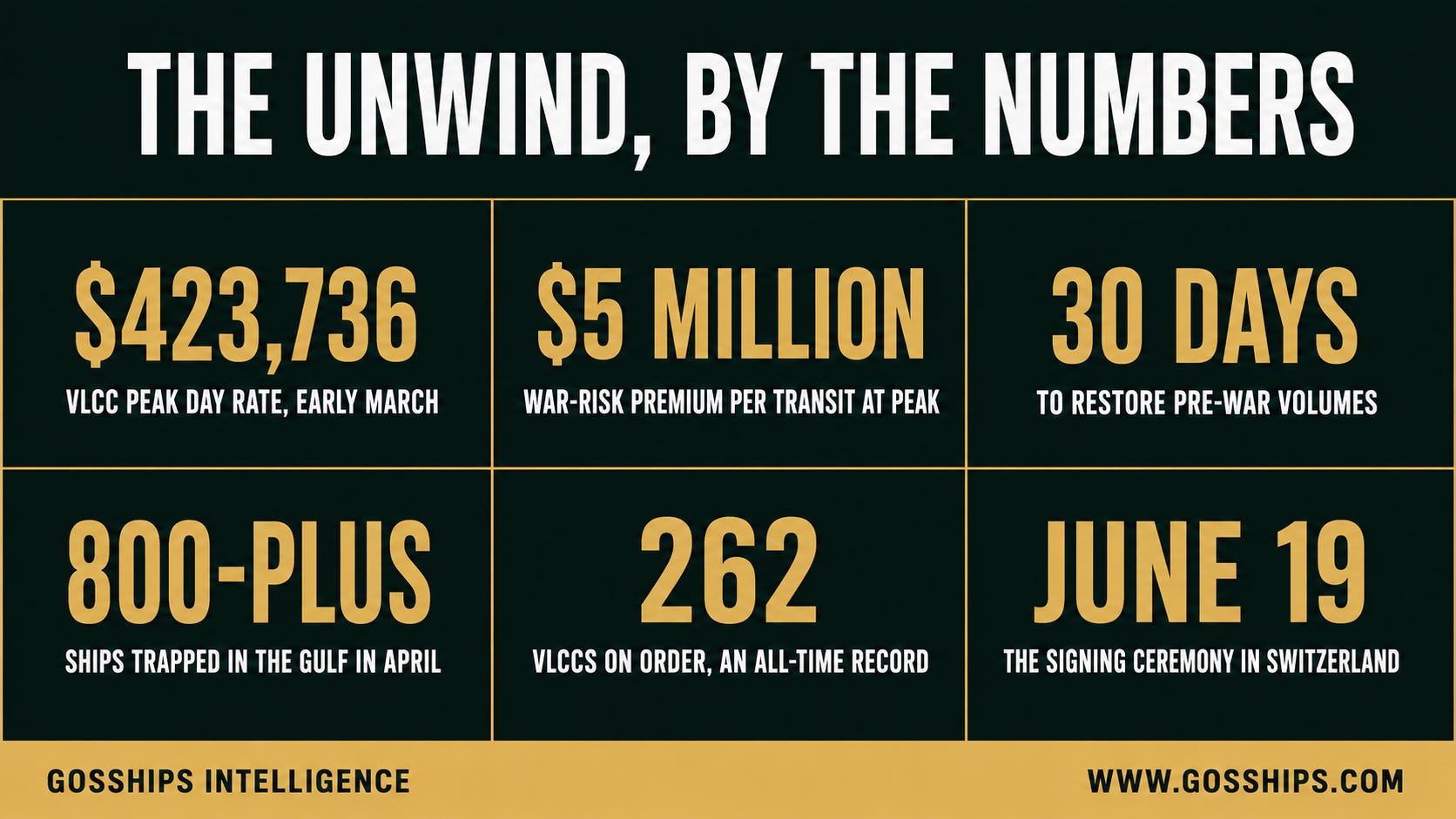
→ $423,736: The All-Time-High Middle East Gulf To China VLCC Day Rate In Early March (CNBC)
→ Up To $5 Million: The War-Risk Premium Per VLCC Transit At The March Peak, Versus About 0.125% Of Hull Value Pre-Crisis (Broker And Insurer Estimates)
→ ~$87: Where Brent Traded Before The Deal, Down Roughly 20% From The 2026 Peak Near $120
→ 800-Plus: Vessels Trapped Inside The Gulf During April’s Truce (Bloomberg)
→ 13.7 Million: Barrels Of Crude Iran Has Exported Since February 28, Largely Through Dark-Fleet Channels (TankerTrackers.com)
→ 262: Very Large Crude Carriers On Order Worldwide, An All-Time Record (Clarksons Research, Via Splash247)
→ 30 Days: The Window For Pre-War Shipping Volumes To Return, With A Formal Signing On June 19
How fast the war premium actually drains, which owners get caught long at the top, why a record orderbook is now the market’s biggest problem, and what to watch as 800 ships sail at once. That read is for members.
🔍 Why It Matters
Peace is not a relief rally for tanker owners. It is the removal of the single thing that made the last few months extraordinary, and it arrives all at once.
