


⚓ The Gosships Team
Gosships Intelligence Is Published At Gosships.com
For Sponsorship And Partnership Inquiries Contact intelligence@gosships.com
|⚓ About Us | 🛢️ Exclusive Report | 📋 SwiftAction Training |
🏅Black Gold Membership (*53 Slots Left)
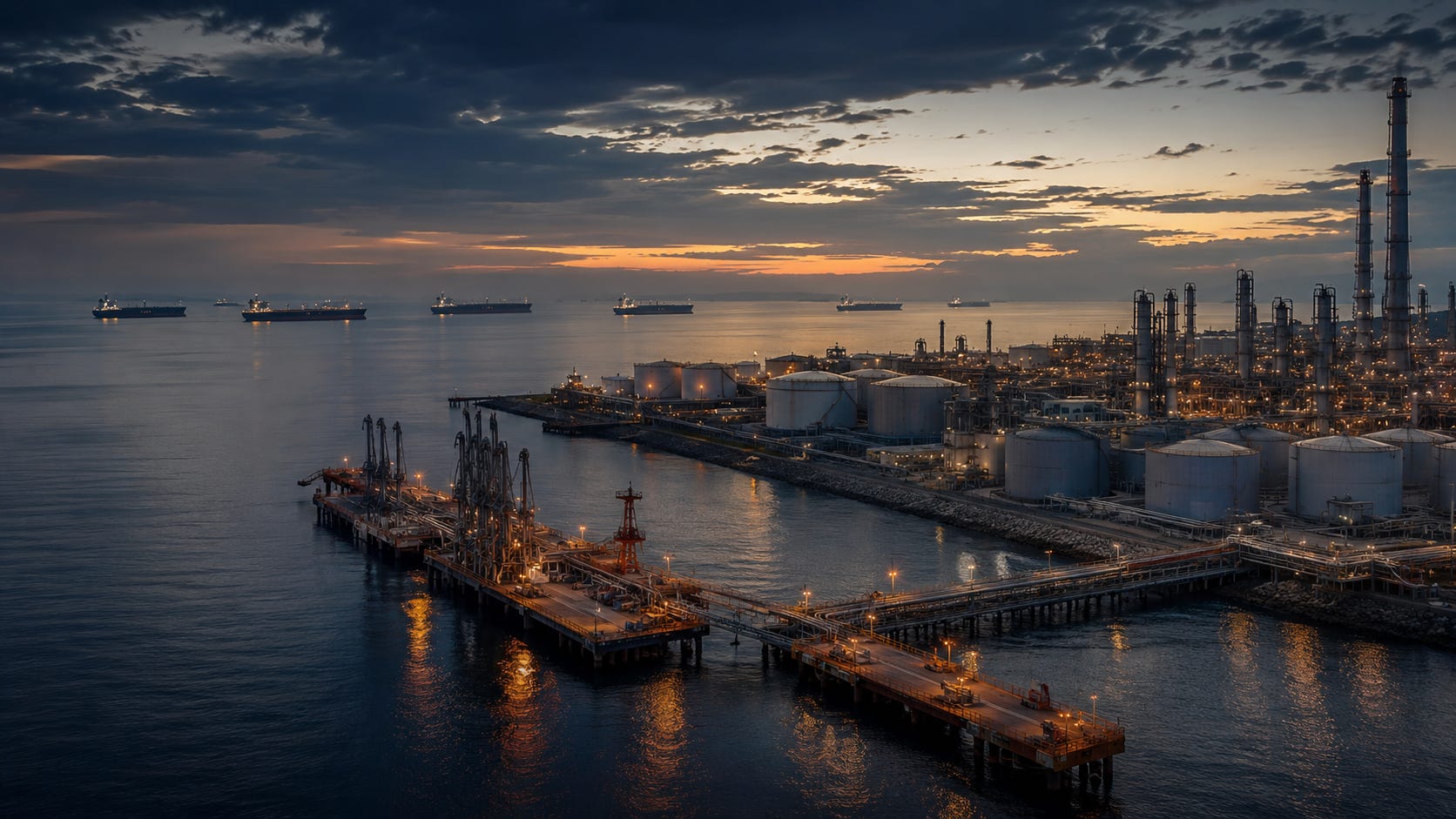
Hormuz is open again, and the two countries that import the most oil on Earth still cannot get their crude out of the Gulf. Days after the US-Iran deal reopened the Strait of Hormuz on paper, China’s PetroChina put out a tender for a single supertanker to lift Iraqi crude, received six offers, and rejected every one of them because freight had tripled from the pre-war rate. Indian refiners are pulling back from Gulf barrels for the same reason. The strait reopened, but the cost of moving oil through it did not come down, and a ceasefire that could unravel in a month is not something you bet a two-million-barrel cargo on. The relief everyone expected has arrived for the politicians and missed the buyers entirely. So who is the reopening actually for?
📋 In This Issue:
🛢️ The Story
📊 By The Numbers
🔍 Why It Matters
👀 What To Watch
🚨 Gosships Signal
🔔 Not Yet Subscribed? Gosships Intelligence Delivers Oil Shipping Intelligence. Subscribe Here!
📊 Order Our Exclusive Report
→ Global Tanker Market Outlook Q3 2026 Edition
📋 Competency-Based Maritime Training
→ SwiftAction
📌 Gosships Data Card
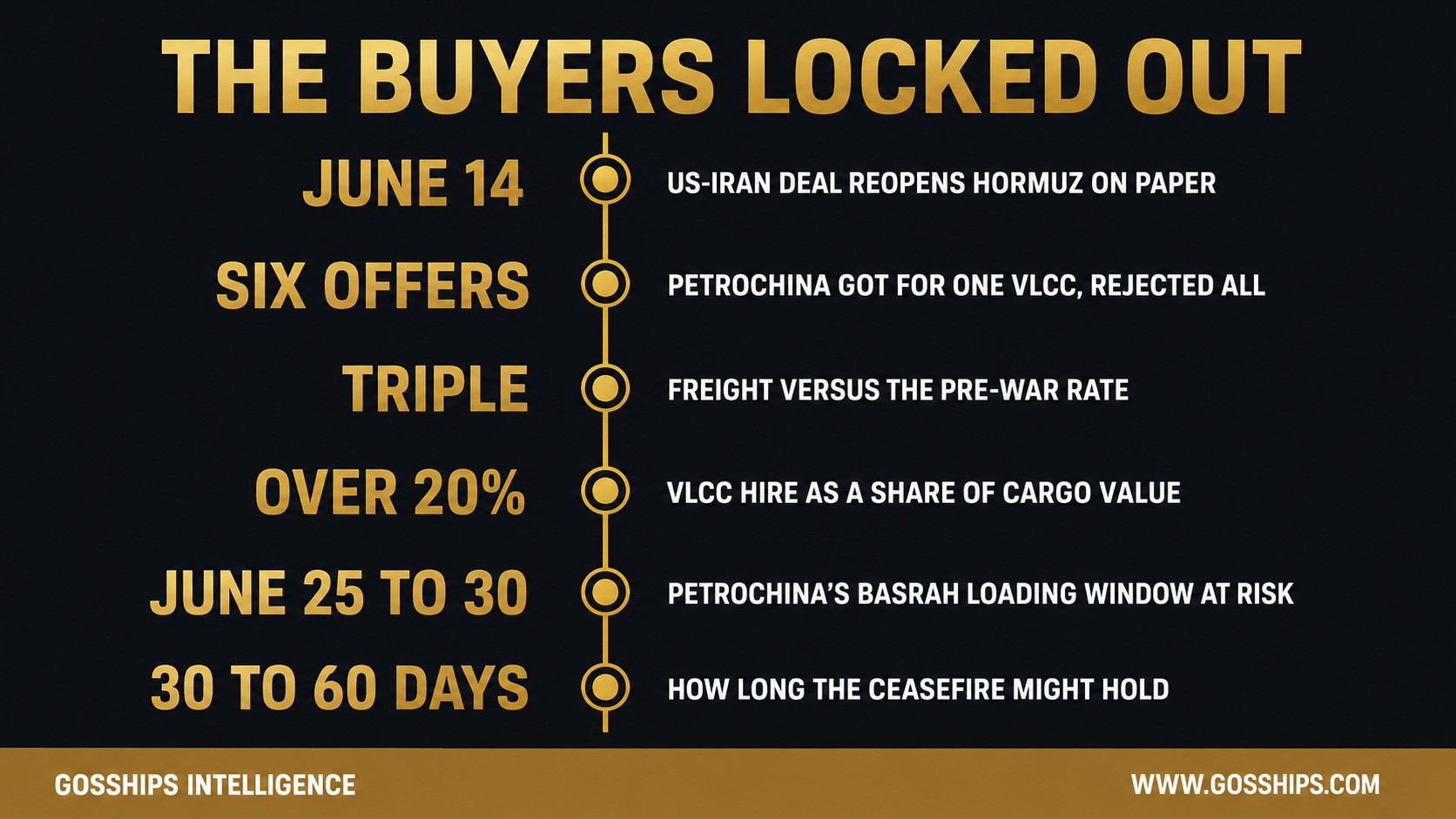
→ JUNE 14 - The US-Iran deal reopens Hormuz on paper
→ SIX OFFERS - PetroChina got for one VLCC, and rejected them all
→ TRIPLE - Freight versus the pre-war rate
→ OVER 20% - VLCC hire as a share of the cargo’s value
→ JUNE 25-30 - PetroChina’s Basrah loading window, now at risk
→ 30 TO 60 DAYS - How long the interim ceasefire might hold
Sources: Reuters; Argus Media; OilPrice.
🛢️ The Story
The US-Iran agreement, reached on June 14 and signed on June 17, was supposed to end the squeeze. It reopened the Strait of Hormuz to commercial shipping, lifted the US naval blockade, and let oil flow again. What it did not do was bring down the price of moving that oil, and that gap is now stranding the world’s largest buyers.
The clearest example is PetroChina. According to Reuters, the Chinese state major floated a tender to charter a very large crude carrier to load Basrah crude out of Iraq for a lifting between June 25 and 30. It received six offers. It took none of them, because freight had roughly tripled compared with the rate before the war. China is the biggest crude importer on the planet, the kind of counterparty shipowners normally fall over themselves to serve, and it could not find a VLCC at a price it was willing to pay. A PetroChina executive put the bind plainly, according to Reuters: “There are tankers available, but the problem is it’s too expensive and there is no guarantee you can exit the strait.” India, another of the largest Gulf buyers, is doing the same arithmetic and pulling back from West Asian barrels rather than pay the spike.
The number behind the standoff is extraordinary. Argus Media reported that VLCC rates have surged to more than 20 percent of the FOB value of the cargo itself. In a normal market, freight is a small single-digit percentage of what the oil is worth. When it costs a fifth of the cargo’s value just to move it, the economics of a long-haul crude purchase break, and a refiner is better off waiting, drawing on stored barrels, or buying closer to home.
This is the part the “Hormuz is open” headlines miss. The strait did reopen, and tankers are moving through it again. But the freight market does not reset the moment a memorandum is signed. War-risk insurance is still running well above pre-crisis levels, the central channel of the strait is still being cleared of mines, and owners who repositioned tonnage during the months of blockade cannot snap their fleets back into the Gulf overnight. The supertanker that would have cost one rate in February costs three times that today, and the owner has every reason to hold out for the high number while buyers scramble.
Layered on top of the freight problem is a trust problem. The deal that reopened Hormuz is an interim arrangement, a ceasefire with a clock on it. Analysts have noted that an agreement that could come apart within 30 to 60 days is not a reliable foundation for the kind of commitment a Gulf crude purchase requires: chartering a vessel weeks ahead, scheduling a load window, locking in port slots, and accepting the risk that the strait could close again before the cargo is clear. A buyer who commits today and watches the ceasefire collapse next month is left holding a stranded cargo and a freight bill at triple the old rate. Faced with that, the rational move for PetroChina and its peers is to do exactly what they are doing: wait.
There is also a hard physical reason the freight will not fall on command. During the months of blockade, owners pulled VLCCs out of the Gulf and repositioned them onto safer trades, and that tonnage cannot teleport back. A supertanker freed up in the Atlantic is weeks of ballast steaming away from a Basrah load port, so even owners willing to serve the Gulf again cannot do it instantly. Add war-risk premiums that remain far above pre-crisis levels, a central channel still being swept for mines, and a queue of previously stranded ships all trying to move at once, and the result is a freight market that is tight, jumpy and slow to heal. The strait can reopen in a day. The freight market takes weeks.
The knock-on effects are already rippling outward. When the biggest buyers stop lifting Gulf barrels, they do not simply stop buying oil. They reach for alternatives: Atlantic Basin crude from West Africa and the Americas, longer hauls that tie up even more tonnage and push freight higher still, or stored barrels that quietly draw down national inventories. Smaller refiners without deep storage or diversified supply have no such cushion, and face the worst of it, forced to either overpay for a scarce VLCC or trim throughput. Each of those workarounds carries its own cost, and all of them eventually surface in the price of diesel, jet fuel and gasoline thousands of miles from the Gulf. A freight spike at Basrah does not stay at Basrah.
The irony is sharp. For months the story was that Iran could not get its oil out because of the blockade. Now the blockade is gone, Iranian and Gulf tankers are sailing again, and it is the buyers who cannot complete the trade. The chokepoint moved from the water to the freight desk. And because China spent the past year building a record crude stockpile, it has the luxury of waiting out the freight spike in a way smaller importers do not, drawing down stored barrels rather than overpaying to ship new ones. The reopening relieved the politics. It did not relieve the market, and the buyers who matter most are still standing at the dock. What that means for rates, for refiners, and for the price that eventually reaches the pump is where this gets sharp.
📊 By The Numbers
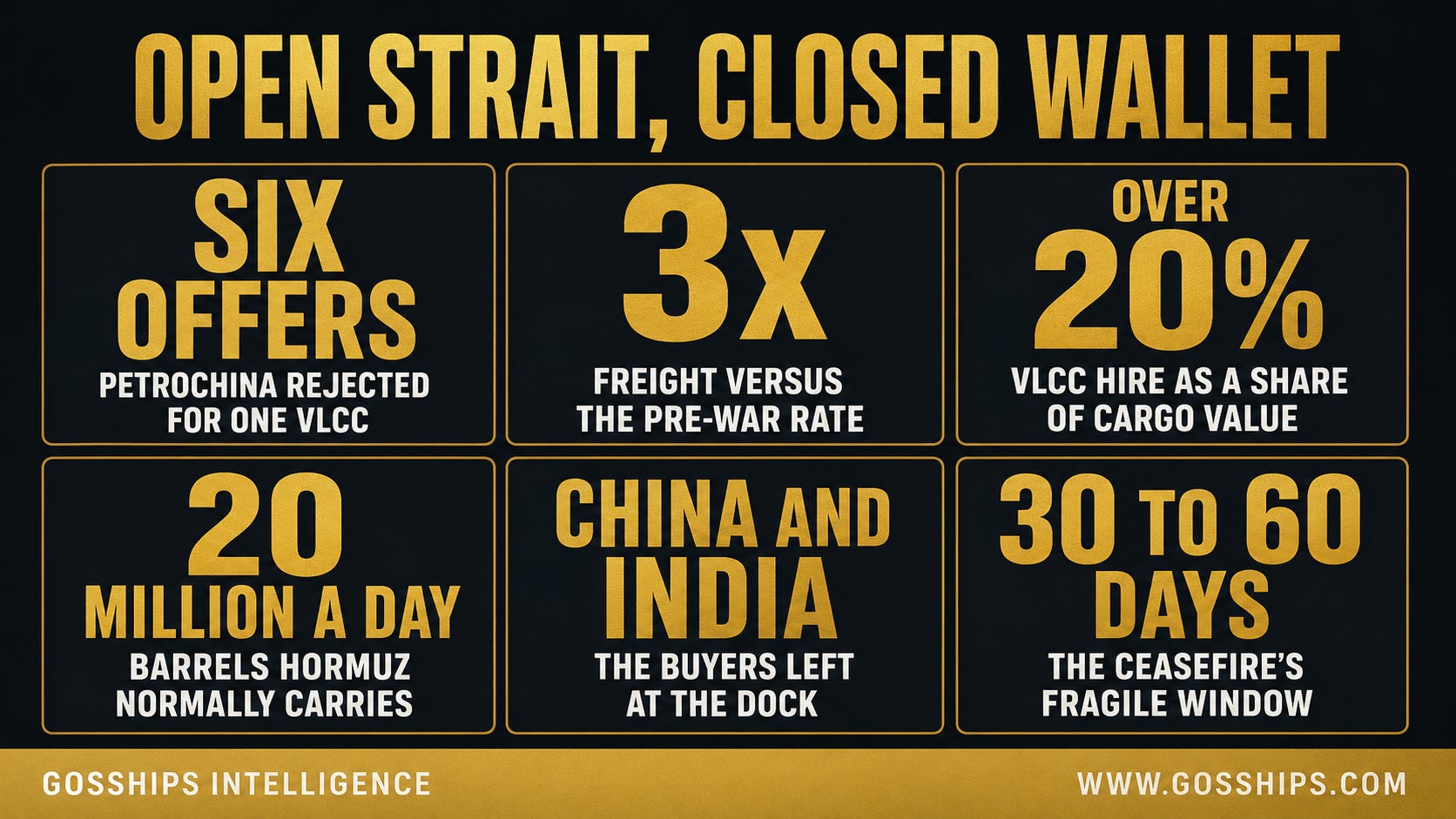
→ Six VLCC offers - PetroChina received and rejected for a single Basrah cargo (Reuters)
→ Triple - Current Gulf freight versus the pre-war rate
→ Over 20% - VLCC hire as a share of the cargo’s FOB value (Argus)
→ ~20 million barrels a day - Oil that normally transits the Strait of Hormuz
→ China and India - The two biggest Gulf buyers, both sidelined by freight
→ 30 to 60 days - The fragile window of the interim ceasefire
Sources: Reuters; Argus Media; OilPrice; IEA.
Related Coverage
Sinokor Cornered the VLCC Market. Now They Just Bought Their First Three Suezmaxes. Brokers Expect an Avalanche.
MSC, COSCO, HMM and Other Container Giants Are Quietly Building Crude Tanker Fleets. What’s the Strategy?
Found This Article Interesting?
🔍 Why It Matters
The headline says Hormuz reopened. The market says the reopening is only as real as the freight rate, and that changes who wins the next month.
