

The IMO Just Cleared the Path for the Autonomous Tanker. Owners Are Ordering 140 New Supertankers to Match. The Next VLCC May Run on a Skeleton Crew. Is the Sailor Obsolete?
A new global code writes the autonomous ship’s rulebook from July 1. The biggest owners are already building for it, and crews are the variable.

⚓ The Gosships Team
Gosships Intelligence Is Published At Gosships.com
For Sponsorship And Partnership Inquiries Contact intelligence@gosships.com
|⚓ About Us | 🛢️ Exclusive Report | 📋 SwiftAction Training |
🏅Black Gold Membership (*53 Slots Left)
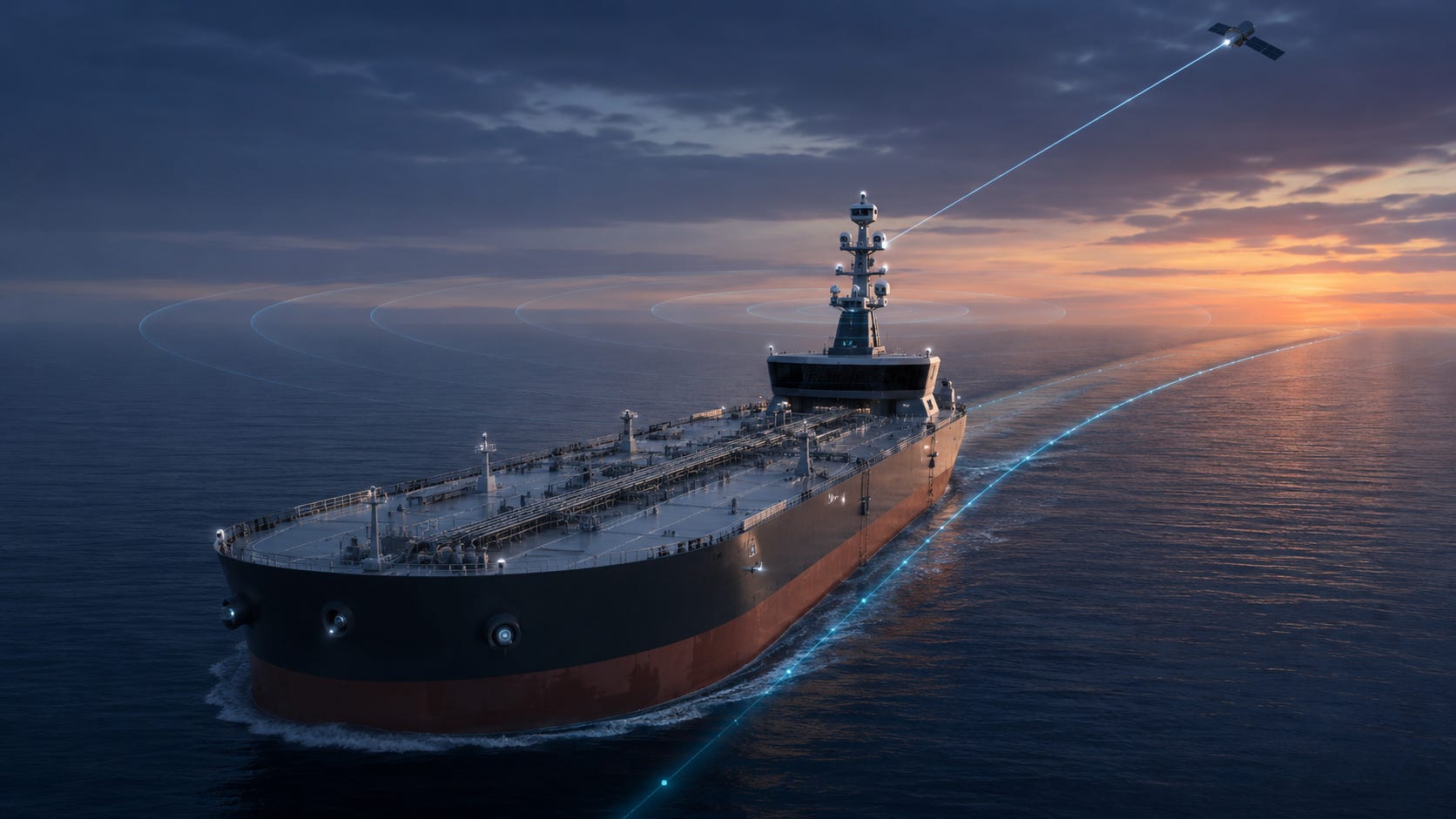
The richest owners in shipping just placed the biggest tanker order in a generation, and the rule that will govern what those ships become took effect this summer. In May 2026 the IMO adopted the first global Code for autonomous ships. It starts on July 1. At the same moment, owners have ordered more than 140 supertankers, the largest crude orderbook in years, and the world’s biggest shipbuilder is wiring AI navigation into entire fleets. The ships being signed today will deliver in 2027 and 2028 into a world where the law no longer assumes a full crew on the bridge. After tankers were attacked transiting a war zone this spring, the question owners are quietly pricing is no longer whether to automate, but how few people the next supertanker really needs. So is the sailor obsolete?
📋 In This Issue:
🛢️ The Story
📊 By The Numbers
🔍 Why It Matters
👀 What To Watch
🚨 Gosships Signal
🔔 Not Yet Subscribed? Gosships Intelligence Delivers Oil Shipping Intelligence. Subscribe Here!
📊 Order Our Exclusive Report
→ Global Tanker Market Outlook Q3 2026 Edition
📋 Competency-Based Maritime Training
→ SwiftAction
📌 Gosships Data Card
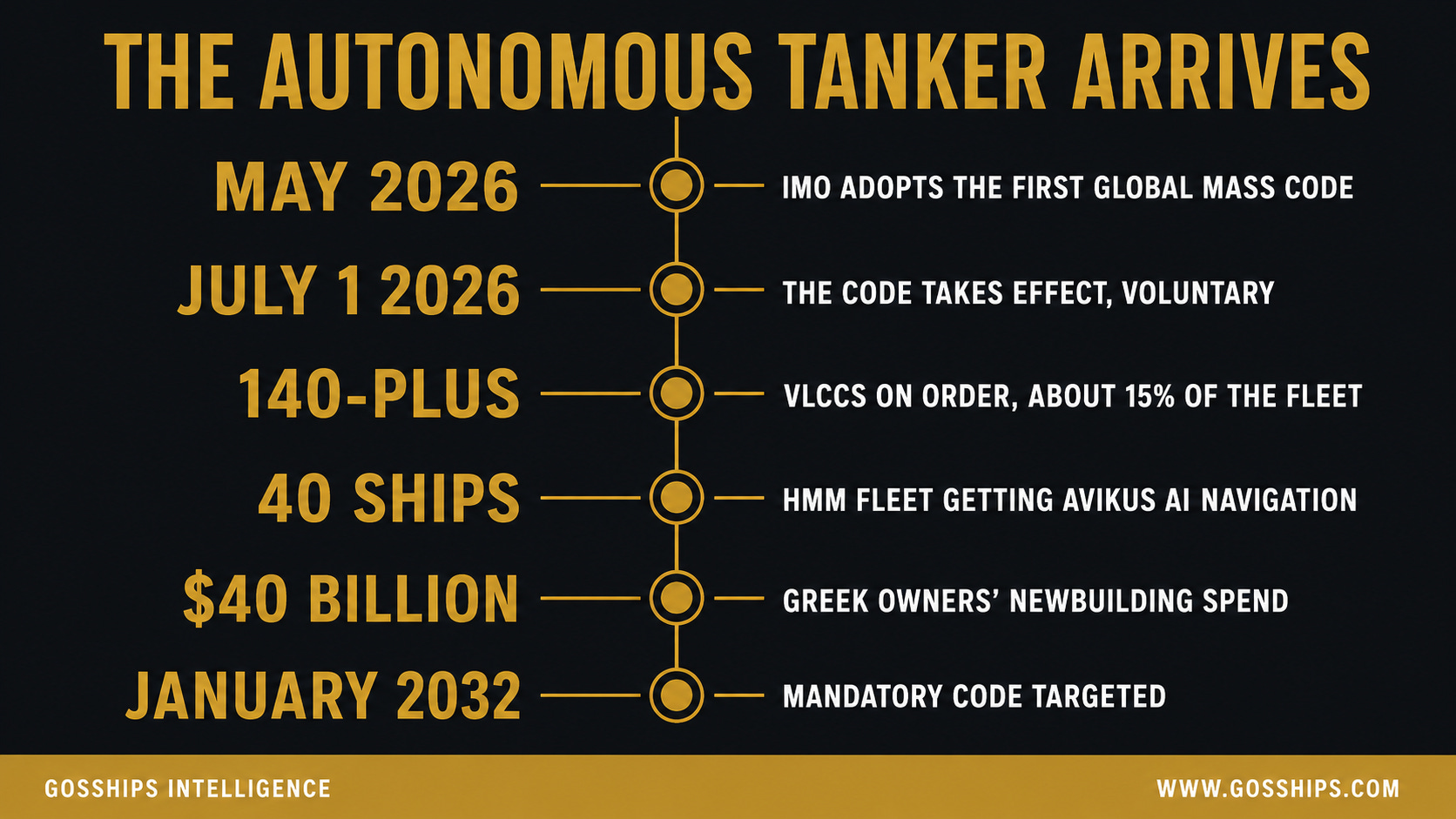
→ MAY 2026 - IMO adopts the first global MASS Code for autonomous ships
→ JULY 1 2026 - The Code takes effect on a voluntary basis
→ 140-PLUS - VLCCs on order, about 15 percent of the fleet
→ 40 SHIPS - HMM fleet getting Avikus AI navigation
→ $40 BILLION - Greek owners’ newbuilding spend
→ JANUARY 2032 - Mandatory MASS Code targeted to enter force
Sources: IMO; DNV; Lloyd’s List; Korea Herald.
🛢️ The Story
Two things happened this spring that, taken together, will reshape what a tanker is. The first was regulatory. At its 111th session in May 2026, the IMO’s Maritime Safety Committee adopted the first International Code of Safety for Maritime Autonomous Surface Ships, the MASS Code. It enters effect on July 1, 2026 on a voluntary basis, feeds a multi-year Experience Building Phase, and is meant to become the basis for a mandatory code targeted to enter force on January 1, 2032 at the earliest. For the first time, there is a global rulebook for ships that operate with reduced crews or, eventually, none. It applies to cargo ships, and that includes tankers.
The second was commercial. While regulators wrote the rules, owners wrote the checks. Crude tanker ordering hit a record start to 2026, with at least 129 crude tankers contracted in the first quarter alone, more than 81 of them VLCCs, according to figures reported by Lloyd’s List and Hellenic Shipping News. The VLCC orderbook has now passed 140 ships, roughly 15 percent of the existing fleet, and the share of the live fleet on order has tripled from about 12 percent to 33 percent. Deliveries climb to around 40 VLCCs in 2026 and peak near 58 in 2027. This is the largest forward supply of supertankers the market has seen in years, and almost all of it lands in 2027 and 2028.
Who is buying matters as much as how many. Greek owners are driving the spree, holding an estimated $39.89 billion of ordered tonnage, around 60 percent of the $65.72 billion committed by the top five owning nations, per Lloyd’s List. With second-hand values near record highs, owners with ageing fleets have a rare chance to sell old steel high and reinvest in younger, more efficient ships. The strategy is not just bigger. It is newer, cleaner and, increasingly, smarter.
That last word is where the shipbuilders come in. HD Hyundai, the largest shipbuilding group in the world, has put its autonomy subsidiary Avikus at the center of its pitch. Avikus secured what it called an industry-record contract to supply its AI-based autonomous navigation system, HiNAS Control, to 40 vessels operated by HMM, Korea’s largest container line, and has been rolling the technology across other fleets. HD Hyundai has lined up real-ship demonstrations of its next-generation autonomous technology, with approvals in hand from class society ABS. Avikus and DNV have worked toward what they described as a world-first type approval for autonomous navigation systems.
The classification societies, the bodies that certify a ship is safe to sail, are racing to keep up. Lloyd’s Register, SK Shipping and HD Hyundai announced at Posidonia 2026 a joint effort to develop a certifiable design for next-generation autonomous ships aligned with the MASS Code. Crucially, the partners are not chasing fully unmanned vessels. They are designing transitional ships that pair advanced automation with reduced crew levels. The American Bureau of Shipping and HD Hyundai Heavy Industries have gone further into the tanker space specifically, signing a joint development agreement for a US-flagged 50,000 deadweight tonne oil and chemical tanker.
The fuel question rides alongside the crew question. Most of the latest tanker orders are still conventionally fuelled, though many are being built with the option to retrofit to methanol or LNG later, and the long-run direction of travel is toward lower-emission fuels including LNG, ammonia and methanol. An owner ordering a VLCC today is making two bets at once: which fuel it will burn in 2035, and how many people it will take to run.
The war in the Gulf turned that second bet from a spreadsheet exercise into a human one. This spring, as the Strait of Hormuz closed, vessels transiting the chokepoint were attacked. CMA CGM confirmed its ship the San Antonio was hit while crossing the strait, with crew members injured and evacuated. Every owner watching that footage did the same math: a ship that can be navigated with fewer people on board, or monitored from a shore control center, is a ship that exposes fewer lives to a mine or a missile. The safety case for automation used to be about fatigue and human error. Now it is also about not having a crew in the blast radius. What that means for earnings, for seafarers, and for who actually controls a 300,000-tonne ship is where this turns from a technology story into a power story.
📊 By The Numbers
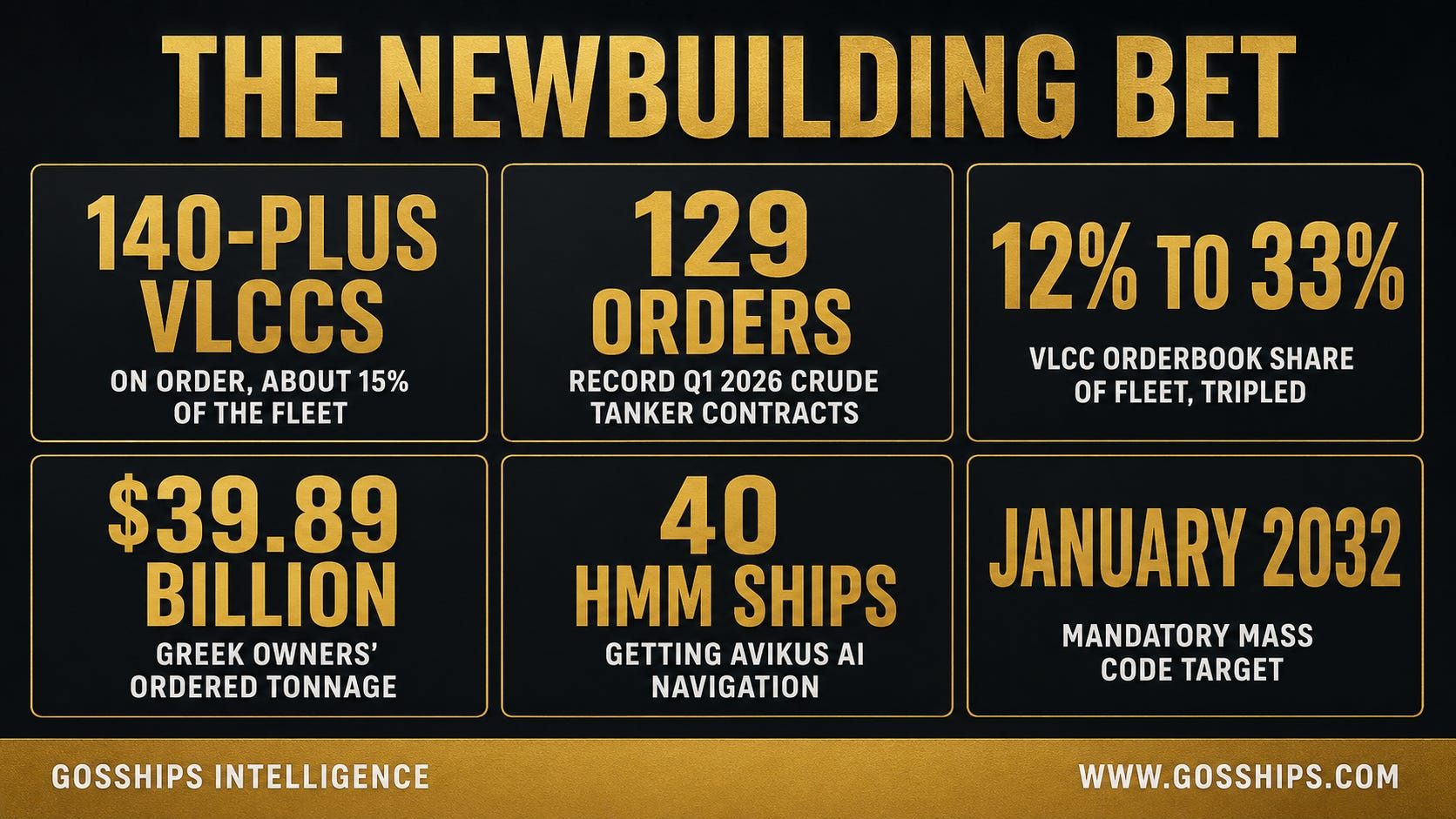
→ 140-plus VLCCs - On order, about 15 percent of the existing fleet (Lloyd’s List)
→ 129 orders - Record Q1 2026 crude tanker contracts, 81-plus of them VLCCs
→ 12% to 33% - VLCC orderbook as a share of the live fleet, tripled
→ $39.89 billion - Greek owners’ ordered tonnage, about 60% of the top five nations’ total
→ 40 HMM ships - Getting Avikus HiNAS Control AI navigation
→ January 2032 - Targeted entry into force for a mandatory MASS Code
Sources: Lloyd’s List; Hellenic Shipping News; Korea Herald; IMO; DNV.
Related Coverage
Record VLCC Tanker Rates Hit $423,736 Per Day
Sinokor Cornered the VLCC Market. Now They Just Bought Their First Three Suezmaxes. Brokers Expect an Avalanche.
MSC, COSCO, HMM and Other Container Giants Are Quietly Building Crude Tanker Fleets. What’s the Strategy?
🔍 Why It Matters
