
⚓ The Gosships Team
Gosships Intelligence Is Published At Gosships.com
For Sponsorship And Partnership Inquiries Contact intelligence@gosships.com
|⚓ About Us | 🛢️ Exclusive Report | 📋 SwiftAction Training |
🏅Black Gold Membership (*53 Slots Left)
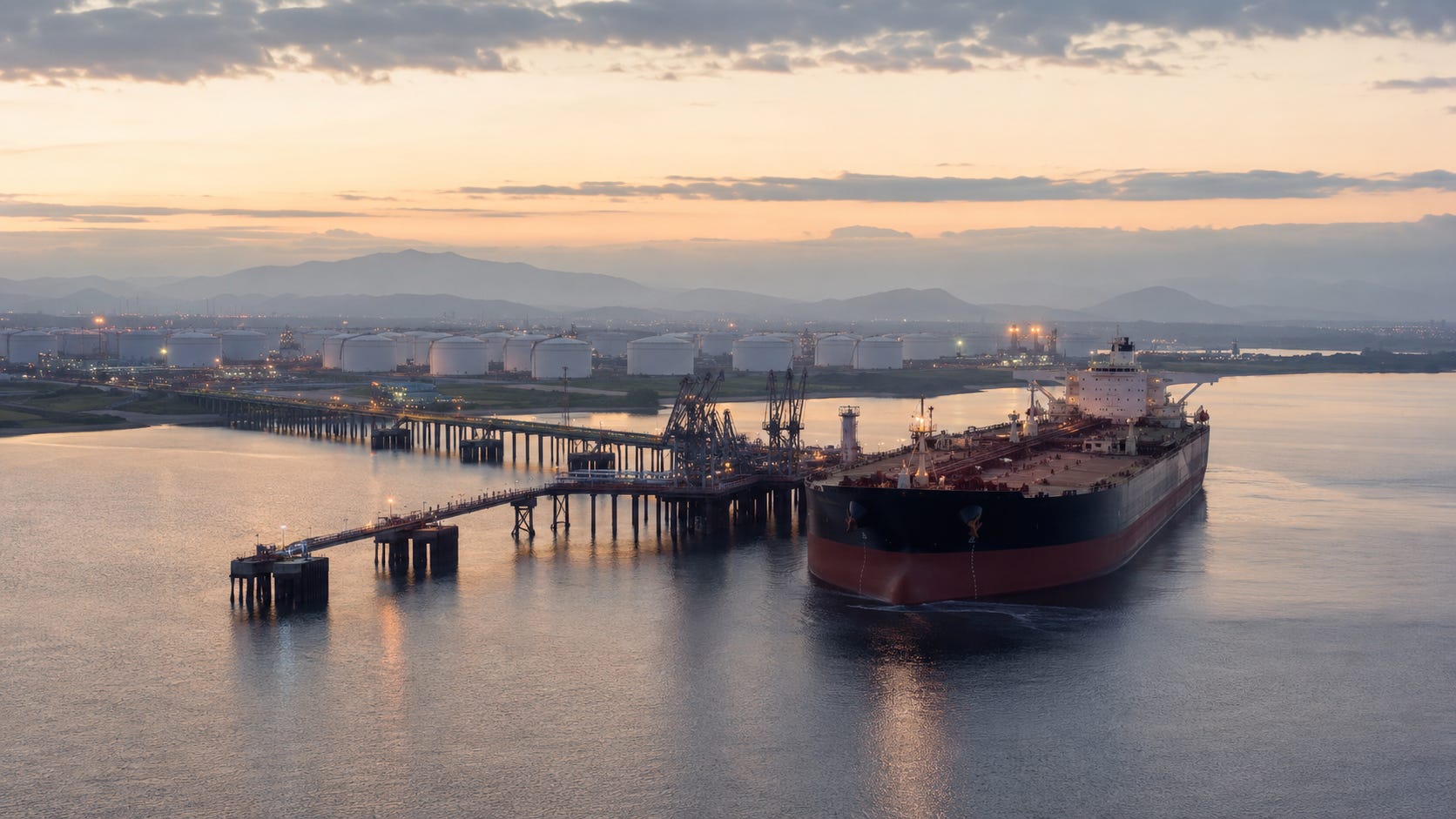
The United States spent weeks proving it could strangle Iran’s oil. Then it gave the chokehold back in a single signature. Under the US naval blockade, Iran’s oil exports collapsed to a six-year low in May, less than a fifth of what it shipped in 2025, with trackers reporting that no crude at all ran the blockade. A decade of sanctions never came close to that. Then, on June 17, President Trump put his name to a deal at the Palace of Versailles, Iran’s president signed in Tehran, and the blockade began coming down. Within days, named Iranian supertankers were hauling millions of barrels out of the Gulf, the first such shipments in two months. The fastest reversal in the modern history of oil sanctions is happening right now, and brokers, refiners and compliance desks are left with one question: after all that, who actually won?
📋 In This Issue:
🛢️ The Story
📊 By The Numbers
🔍 Why It Matters
👀 What To Watch
🚨 Gosships Signal
🔔 Not Yet Subscribed? Gosships Intelligence Delivers Oil Shipping Intelligence. Subscribe Here!
📊 Order Our Exclusive Report
→ Global Tanker Market Outlook Q3 2026 Edition
📋 Competency-Based Maritime Training
→ SwiftAction
📌 Gosships Data Card
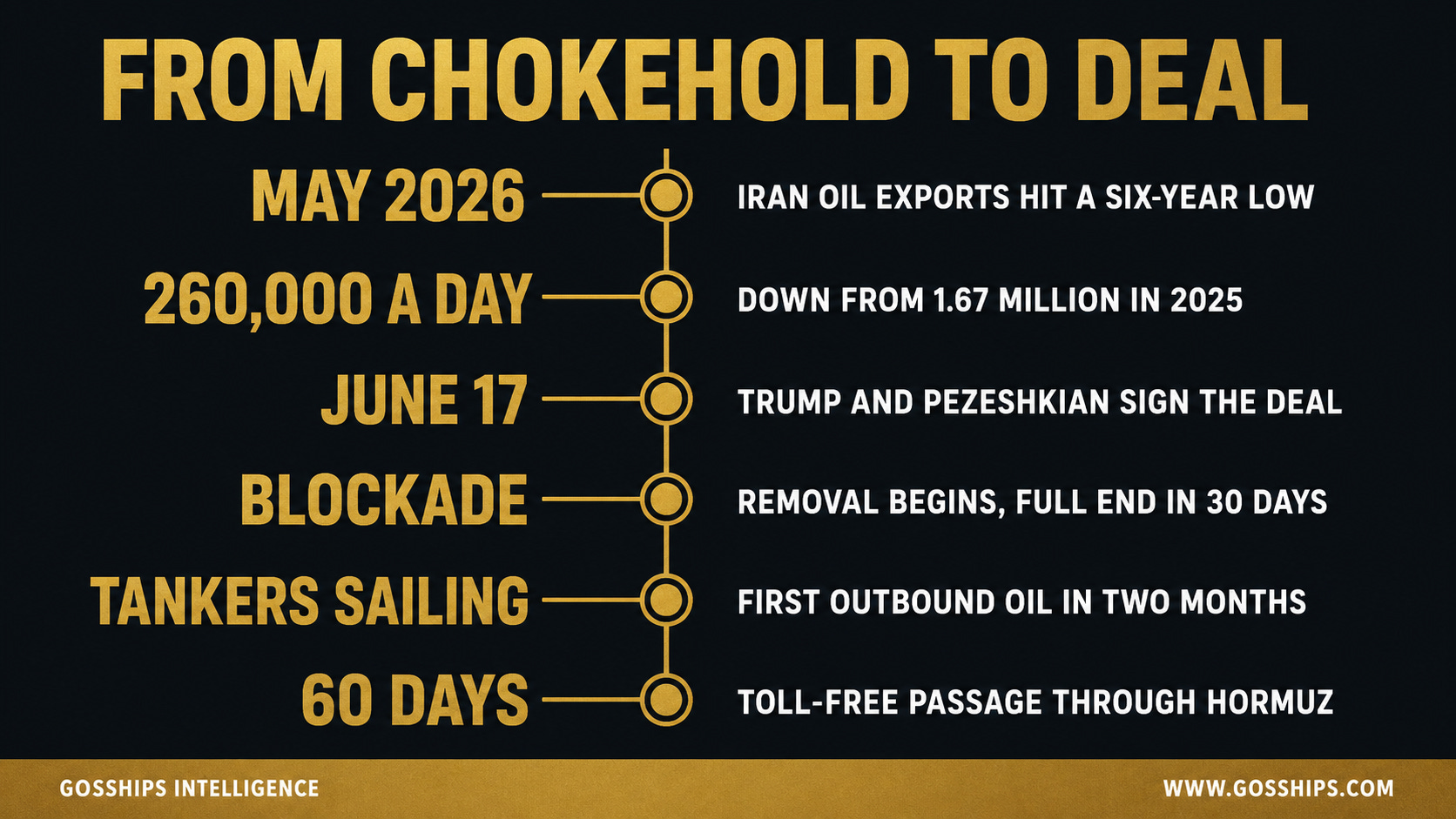
→ MAY 2026 - Iran oil exports hit a six-year low, no crude ran the blockade
→ 260,000 A DAY - Down from a 1.67 million barrel a day average in 2025 (Reuters)
→ JUNE 17 - Trump and Pezeshkian sign the deal
→ BLOCKADE - Removal begins immediately, full end within 30 days
→ TANKERS SAILING AGAIN - First outbound Iranian oil in two months
→ 60 DAYS - Toll-free passage through the Strait of Hormuz
Sources: Reuters; MarineLink; UANI; NBC News; Al Jazeera.
🛢️ The Story
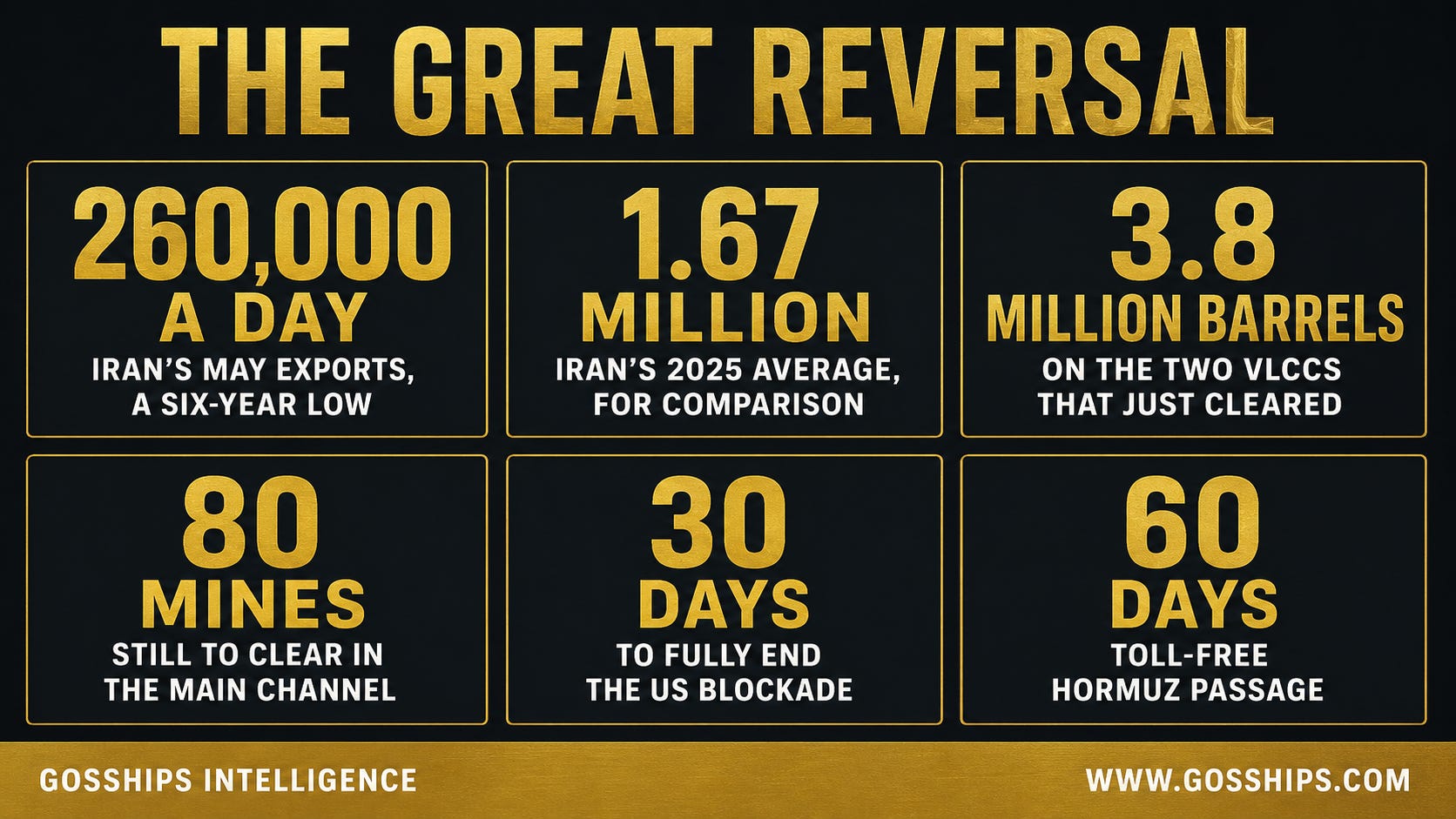
For most of the spring, the most effective tool against Iran’s oil was not a sanction. It was a ship. After the February strikes on Iran and the closure of the Strait of Hormuz, the United States imposed a naval blockade on Iranian ports, and the effect on exports was something a decade of paper sanctions had never managed. By Reuters’ count, Iran’s oil exports sank to roughly 260,000 barrels a day in May, the lowest in six years and less than a fifth of the 1.67 million barrels a day it averaged in 2025. The tracking group United Against Nuclear Iran put the collapse even starker, logging only a handful of naphtha cargoes and a limited volume of LPG for the entire month, and reporting that not a single crude cargo successfully departed Iranian waters and ran the blockade.
Iran’s famous shadow fleet, the network of aging, hard-to-trace tankers that had carried its barrels around sanctions for years, suddenly could not get out the door. Vessels that did move took long, uneconomic detours to dodge interdiction. Trackers logged Iran-flagged, OFAC-sanctioned ships routing through the Lombok Strait and up the South China Sea toward Hong Kong, unusual paths that added weeks and cost to avoid the US Navy. The dark fleet’s entire value proposition, the ability to move oil invisibly, had been answered by a cordon of warships that did not care how invisible the ship was.
Then, almost overnight, the leverage was traded away. On June 17, President Trump put his name to a memorandum of understanding with Iran at the Palace of Versailles following the G7 summit, while Iranian President Masoud Pezeshkian signed in Tehran, with a formal signing ceremony set to follow days later. The understanding took effect roughly two days ahead of the timetable diplomats had floated, and Washington began winding the blockade down. Its terms are sweeping: an end to military strikes, a 60-day extension of the ceasefire, the reopening of the Strait of Hormuz to commercial shipping toll-free for 60 days, and the end of the US naval blockade of Iranian ports. The United States began removing the blockade immediately and committed to fully lift it within 30 days, with demining of the strait to be arranged on the same timeline. Crucially for the oil market, Iran was cleared to begin selling crude and fuel at once.
The tankers did not wait. At least five vessels carrying Iranian oil have cleared the dissolving blockade since June 16, the first such outbound shipments in two months, and Vice President JD Vance said more than 12 million barrels of oil moved through Hormuz in a single night. The very large crude carriers Hero II and Diona, carrying a combined 3.8 million barrels, cleared the Gulf of Oman and turned east, and the Suezmax Sonia I, with roughly one million barrels, passed bound for Singapore. The strait is not fully open even so. The main central channel is still mined, with an estimated 80 mines left to clear, so ships are threading the northern route through Iranian waters and the southern route through Omani waters. Kpler estimates that 118 tankers stranded in the Gulf could exit within 15 days, once owners trust the deal will hold. After weeks of near-total shutdown, Iranian crude is moving again, and the ships moving it are no longer hiding.
What the reversal does to the market is more complicated than a simple flood. Iran’s barrels are returning into a market that is already nervous about oversupply, and its single biggest customer is hesitant. Chinese demand, the destination for the overwhelming majority of Iranian crude, has been lacklustre, weighed down by poor refining margins at the independent plants that buy discounted sanctioned oil. So the barrels come back, but the buyer is not desperate for them, which caps how fast prices and flows actually normalize. The question of who won the standoff, and what it means for freight rates, the shadow fleet and the price on the screen, is where this gets sharp.
📊 By The Numbers