


⚓ The Gosships Team
Gosships Intelligence Is Published At Gosships.com
For Sponsorship And Partnership Inquiries Contact intelligence@gosships.com
|⚓ About Us | 🛢️ Exclusive Report | 📋 SwiftAction Training |
🏅Black Gold Membership (*53 Slots Left)
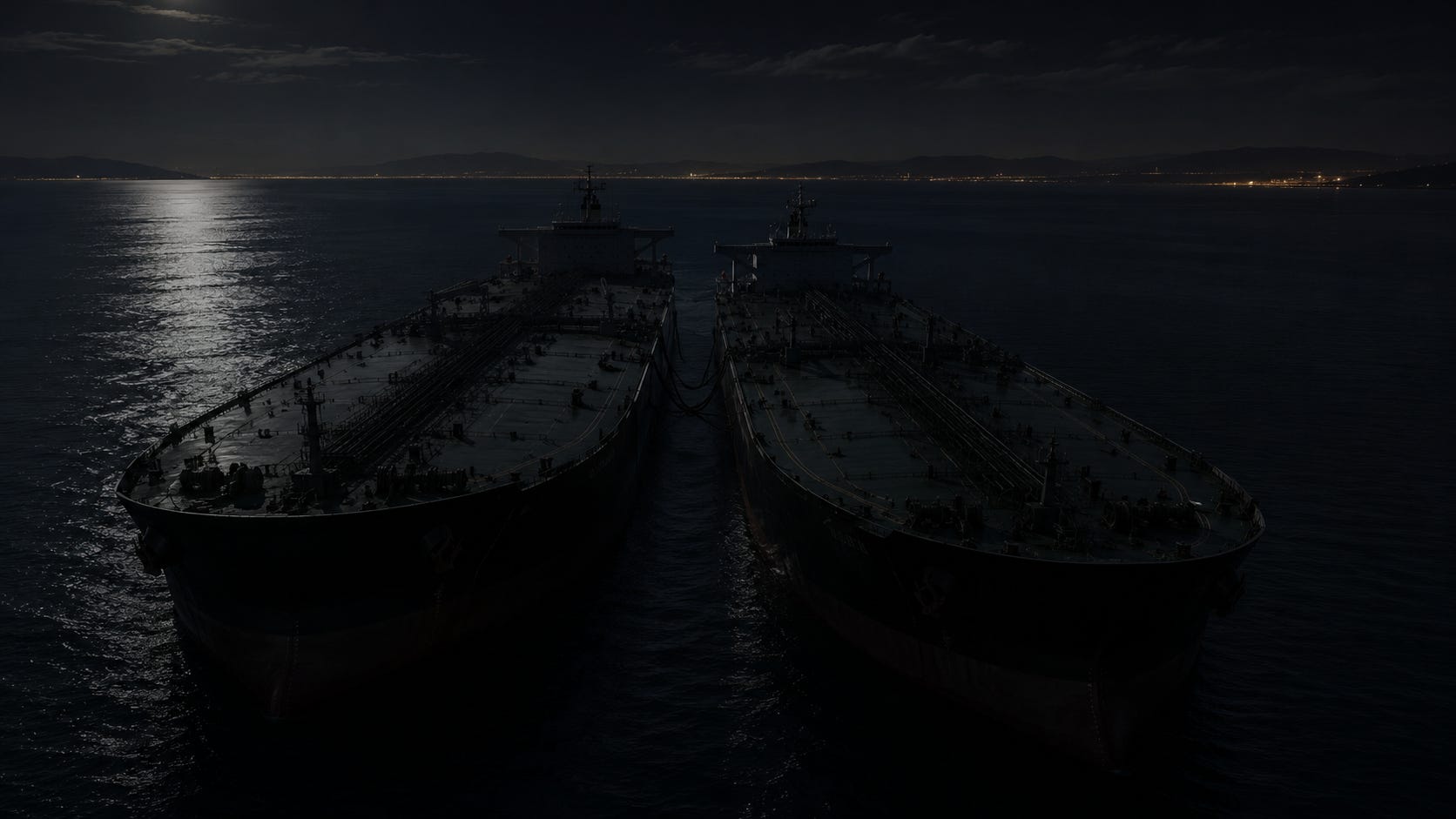
Two of the biggest names in shipping just found the most profitable trade of the war in the one place most others were fleeing. As the Strait of Hormuz became the most dangerous stretch of water on earth and most owners pulled their tankers out, the MSC × Sinokor venture sent theirs in. According to brokers, three of those tankers earned up to $120 million in a matter of weeks. The venture could do it because it now controls something no single operator ever has: close to 40 percent of the world’s available spot supertankers.
📋 In This Issue:
🛢️ The Story
📊 By The Numbers
🔍 Why It Matters
👀 What To Watch
🚨 Gosships Signal
🔔 Not Subscribed? Gosships Intelligence Delivers Oil Shipping Intelligence. Subscribe Here!
📊 Order Our Exclusive Report
→ Global Tanker Market Outlook Q3 2026 Edition
📋 Competency-Based Maritime Training
→ SwiftAction
📌 Gosships Data Card
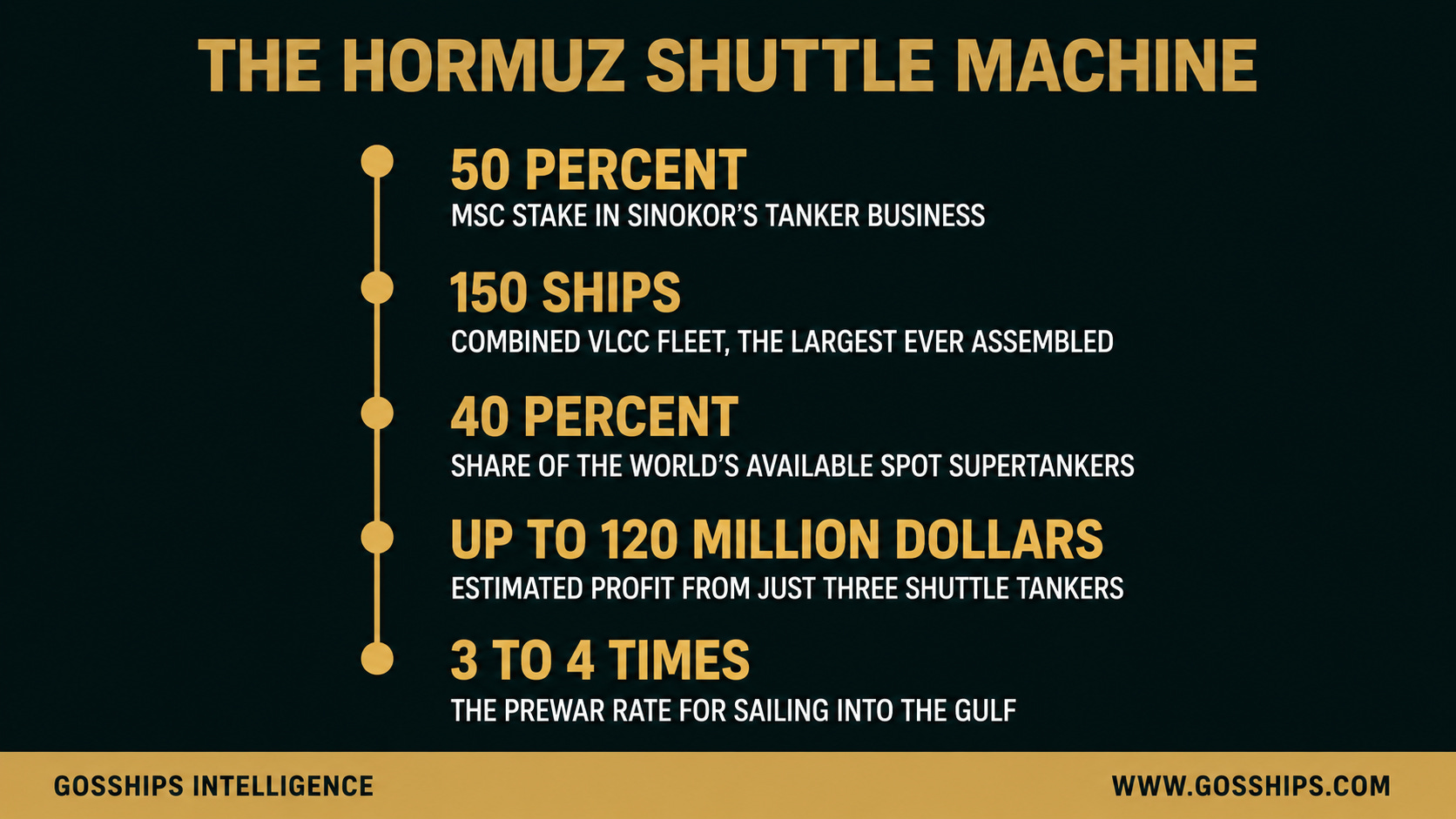
➡️ 50 percent the MSC stake in Sinokor’s tanker business, confirmed by competition filings
➡️ ~150 VLCCs the combined fleet, the largest ever assembled by a single operator
➡️ ~40 percent of the world’s available spot supertankers, the fleet not sanctioned, on long-term charter, or on liner routes
➡️ Up to $120 million brokers’ estimate of profit from just three shuttle tankers since mid-April
➡️ 3 to 4 times the prewar rate that Gulf war-risk voyages could command
Sources: Bloomberg; Fortune; Maritime Executive; Reuters (Cypriot filing); Veson Nautical; Kpler. New reporting July 5, 2026.
🛢️ The Story
When the Strait of Hormuz became an active combat zone, the tanker market divided in two. Most owners withdrew their ships from the danger. A smaller group read the same risk as the most lucrative freight opportunity in a generation and moved toward it. The MSC × Sinokor venture was firmly in that second group, and it held the tonnage to act at a scale no rival could match.
The scale is the part that changes everything. In March, competition filings in Cyprus and Greece confirmed that MSC, the world’s largest container shipping company, had acquired a 50 percent stake in Sinokor Maritime’s tanker business through its Luxembourg subsidiary, according to Bloomberg and Maritime Executive. The framework agreement had been signed on February 2, and a Cypriot filing reported by Reuters set the structure at a 50 percent purchase. The combination gives the two partners joint control over what Bloomberg described as the largest VLCC fleet ever assembled by a single operator, roughly 150 supertankers, commanding close to 40 percent of the world’s available spot supertanker fleet, meaning the ships that are not sanctioned, tied up on long-term charters, or committed to regular liner routes, according to Bloomberg and Fortune.
That fleet was not built quietly. In the opening weeks of 2026, Sinokor bought 35 of the 45 VLCCs sold worldwide, absorbing 78 percent of all transaction volume in the sector, according to Veson Nautical, and paying 10 to 15 percent above prevailing valuations to lock sellers down, according to Gibson Shipbrokers. By the time the war premium arrived, the venture was already sitting on the single largest concentration of modern crude tonnage on the planet.
Then came the shuttle runs. New reporting from Bloomberg and Fortune on July 5 described how the UAE quietly kept its crude moving out of the strait using tactics normally associated with sanctioned states. Ships sailed dark, transponders switched off, then offloaded their cargo ship-to-ship into other tankers waiting safely outside the waterway. It was a covert relay built to get barrels past the danger zone without advertising the route, and it needed a fleet large enough to absorb the risk. The MSC × Sinokor venture had exactly that.
The economics were extraordinary. Brokers estimated that just three tankers running these shuttle routes since mid-April could have earned somewhere between $60 million and $120 million, according to the July 5 reporting. Three tankers, a matter of weeks, up to $120 million. The premium for sailing into the Gulf during the war could command three to four times the prewar rate, and Kpler’s principal freight analyst called Sinokor’s moves during the conflict “groundbreaking.” As most of the market pulled back, the largest fleet on the water pressed in and captured the war premium.
The scale of the operation is now measurable, not just estimated. In the last week alone, according to the July 5 reporting, the MSC × Sinokor fleet sent at least 18 supertankers into the Gulf, enough to carry roughly 36 million barrels of crude out of the region.
The scale of what these tactics achieved became clear at the start of July. According to Bloomberg, the UAE restored its crude and condensate exports to pre-war levels of more than 3.9 million barrels a day in June, a jump of roughly 30 percent, by combining dark transits through the strait with a pipeline to Fujairah that sidesteps the waterway entirely. This was not a handful of opportunistic voyages. It was a national export program run partly in the dark, and it needed large, flexible tonnage of exactly the kind the MSC × Sinokor venture had spent the first half of the year assembling. The danger that created the premium has not passed either: as recently as July 7, Iran struck a Qatari gas carrier and damaged a Saudi tanker in the Strait of Hormuz, days into a fragile truce.
This is where the ownership story and the profit story fuse into something bigger than either. A single operator that controls close to 40 percent of available spot supertankers does not just participate in a spike like this. It shapes it. When the fleet that can absorb the most risk is also the fleet large enough to influence where rates settle, the line between catching a market and setting one starts to blur. Every other owner that kept its ships out of Hormuz watched a competitor bank the upside it had declined.
It is worth being precise about what is and is not established here. The shuttle profit figure is a brokers’ estimate reported by Bloomberg and Fortune, not an audited disclosure, and the dark-sailing tactics were described as the UAE’s method for moving its own, non-sanctioned crude out of a war zone, not as sanctions evasion. What is confirmed by regulatory filing is the ownership: the 50 percent stake, the roughly 150-ship combined fleet, and the near-40 percent share of the available spot fleet. The concentration is the fact. The war profit is the consequence.
This venture has been building toward this moment since it took shape, from the confirmation of the stake to the parallel plays running alongside it. What the Hormuz shuttle runs reveal is the venture moving from acquiring market power to using it, in the most dangerous and most profitable waters in the world.
What that concentration means for the owners who now have to compete against it, whether regulators anywhere will look at 40 percent of the world’s tradable supertankers in two sets of hands, and how the venture deploys this fleet once the war premium fades, is where this gets serious for every desk that touches crude freight.