


|⚓ About Us | 🛢️ Deep Water Reports | 📋 SwiftAction Training |
🏅 Founding Black Gold Membership (*53 Slots Left)
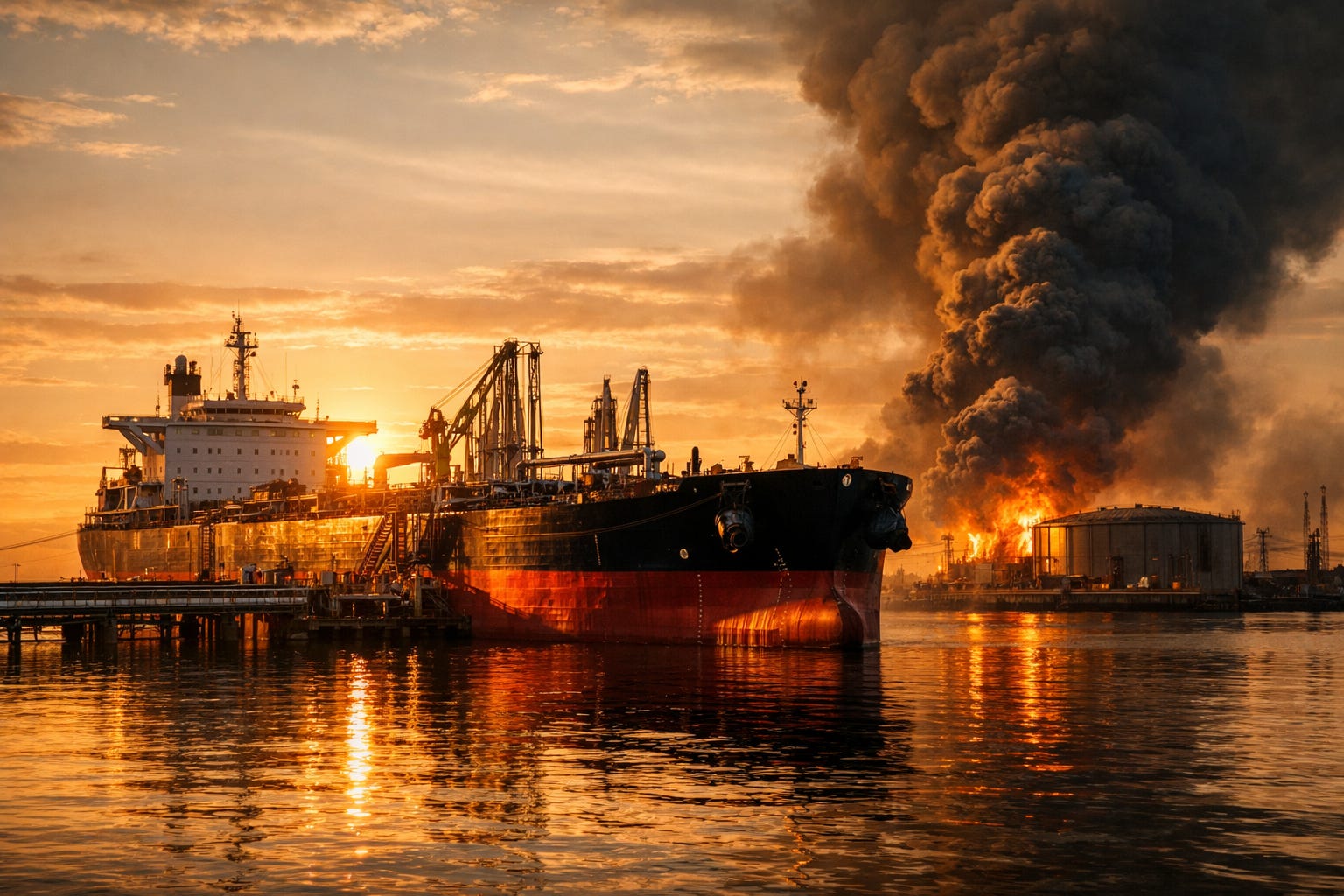
Russia is earning $150 million per day in additional budget revenue from the Iran war, according to the Financial Times. The Kremlin’s oil income just hit its highest level since March 2022, the month after Russian troops invaded Ukraine, according to Bloomberg. The U.S. eased sanctions on Russian oil to stabilize markets after the Strait of Hormuz shut down. The money flows directly into Russia’s war machine. U.S. Senators called it “a windfall of $150 million each day.” Gas in America went from $2.98 to $3.96 in 23 days.
📋 In this issue:
🛢️ The Story
📊 By The Numbers
🔍 Why It Matters
👀 What to Watch
🚨 Gosships Signal
📊 Get The Global Tanker Market Outlook
→ Deep Water Report
📋 Competency-Based Maritime Training
→ SwiftAction
📌 Gosships Data Card
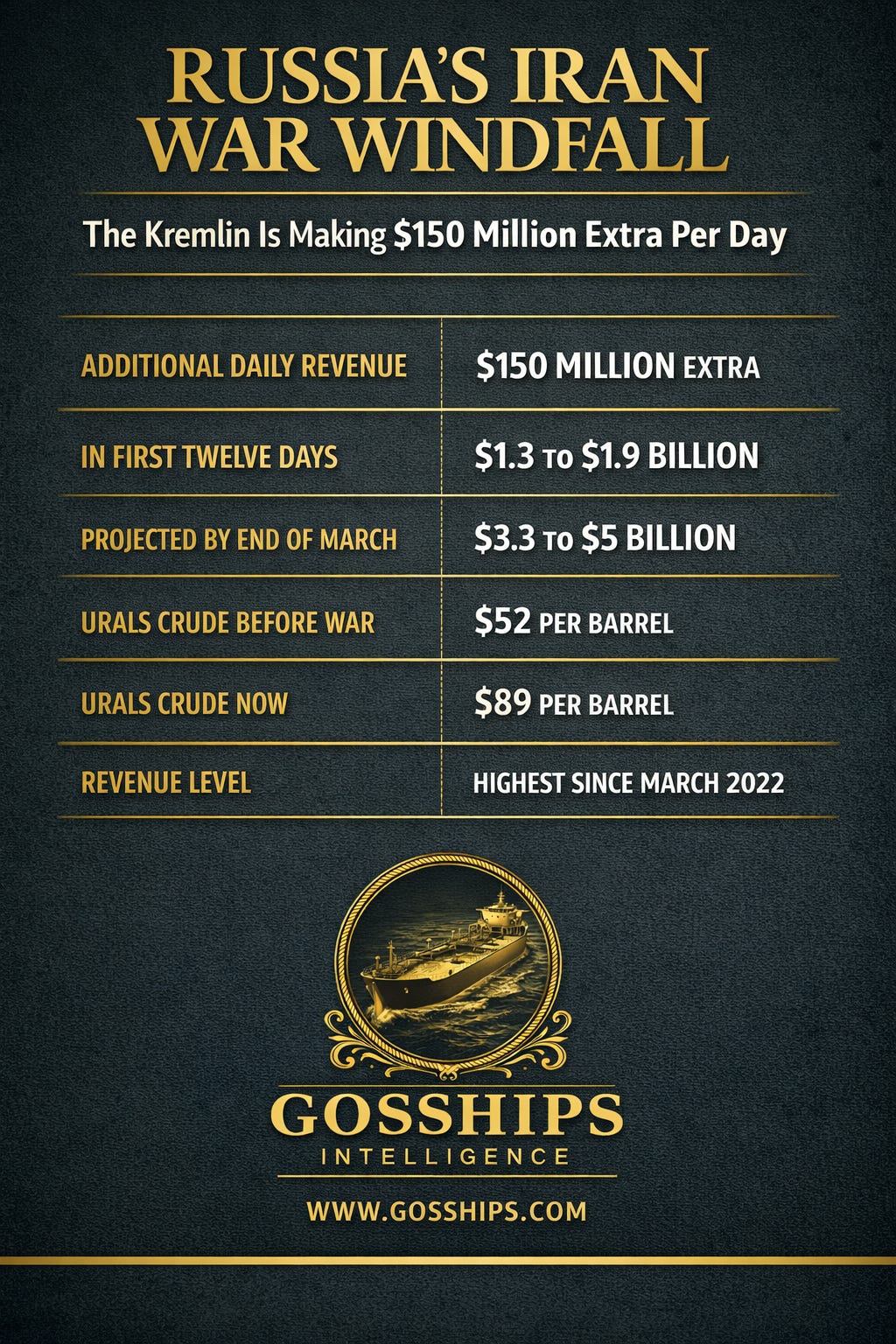
→ Russia Earning Up To $150 Million Per Day In Additional Budget Revenue From Oil Sales (Financial Times, March 2026)
→ Extra Revenue In First 12 Days Of War: $1.3 Billion To $1.9 Billion (Financial Times, March 2026)
→ Projected Additional Revenue By End Of March: $3.3 Billion To $5 Billion (Financial Times, March 2026)
→ Urals Crude Average Before War: ~$52/Barrel. Current Price: ~$89/Barrel (Financial Times; Oil Price API, March 25)
→ Russian Oil Revenue At Highest Level Since March 2022 (Bloomberg, March 24)
→ Russia Shipped 3.6 Million Barrels/Day Of Crude In Four Weeks To March 22 (Bloomberg, March 24)
🛢️ The Story
Russia is earning up to $150 million per day in additional budget revenue from the Iran war, according to estimates by the Financial Times. In the first 12 days of the conflict, the Kremlin received between $1.3 billion and $1.9 billion in extra tax revenue from oil exports. If current price levels hold, Russia could receive between $3.3 billion and $5 billion in additional revenue by the end of March, according to Financial Times calculations based on industry data and analyst estimates.
On March 24, Bloomberg reported that Russia’s oil export income hit its highest level since March 2022, the month after Russian troops invaded Ukraine. Russia shipped 3.6 million barrels per day of crude in the four weeks to March 22, according to Bloomberg, boosting inflows to the Kremlin’s war chest as prices surged and U.S. sanctions eased.
Before the war with Iran began on February 28, Russia’s Urals crude was trading at approximately $52 per barrel on average, according to the Financial Times. As of March 25, Urals crude is trading at approximately $89 per barrel, according to Oil Price API. The Financial Times estimated that every $10 rise in the average monthly oil price adds approximately $2.8 billion to Russian exporters’ revenues, of which roughly $1.63 billion flows to the government through taxes.
The windfall arrived at the exact moment Russia needed it most. Before the Iran war, Russia’s energy revenues had fallen nearly 50% year over year in the first two months of 2026, according to SFG Media. The budget deficit had already exceeded 90% of the level planned for the entire year. Reuters reported that officials in Moscow had been considering cutting spending by at least 10% to manage April’s shortfall.
The Centre for Research on Energy and Clean Air reported that Russia earned approximately 513 million euros per day in total fossil fuel revenues between March 1 and March 15, a 14% increase over February averages, according to Euronews. India and China have sharply increased purchases of Russian crude since the war began. Imports from Russia by both countries rose approximately 22% in the first week after the strikes on Iran, compared with February averages, according to the Financial Times. India’s purchases alone reached approximately 1.5 million barrels per day, roughly 50% higher than early February levels, according to tanker-tracking data cited by the Financial Times.
On March 10, President Trump spoke with President Putin by phone. On March 12, the U.S. Treasury Department issued a temporary authorization allowing countries to purchase Russian oil loaded onto ships between March 12 and April 11, according to the Moscow Times. Treasury Secretary Scott Bessent told CNBC on March 16 that “the Iranian ships have been getting out already, and we’ve let that happen to supply the rest of the world.”
The easing of sanctions combined with higher prices and desperate buyers produced an immediate revenue surge for Russia. Al Jazeera reported on March 20 that Urals crude, which had been trading below $60 before the war, surged to approximately $90 per barrel. George Voloshin, an independent energy analyst based in Paris, told Al Jazeera that “Russia has emerged as a primary beneficiary of the Middle East conflict.”
On March 23, President Putin told a meeting of top economic officials that Russian oil and gas companies “should consider directing additional revenues to pay off their debt to domestic banks,” calling it “a mature decision,” according to the Moscow Times.
U.S. Senators Elizabeth Warren, Jeanne Shaheen, and Chuck Schumer responded in a joint statement: Russia “is reportedly providing Iran intelligence to target and kill US servicemembers, and the Trump administration’s response has been to loosen pressure and help facilitate a windfall of $150 million each day for its war machine,” according to Euromaidan Press.
On the same day Putin told his executives to pay off their debts, Ukraine hit Primorsk, Russia’s largest Baltic oil port, with drones, according to Bloomberg and the Moscow Times. At least four storage tanks caught fire, according to Ukrinform. Loadings were suspended at both Primorsk and Ust-Luga. Euromaidan Press reported that Primorsk is a critical hub for Russia’s shadow fleet: “It is from here that the bulk of Urals crude oil is shipped, including via a shadow fleet to circumvent sanctions.”
Russia is profiting from a war it did not start while the port loading its tankers is under attack from a war it did start. What this means for the tanker market, for sanctions compliance, for the shadow fleet carrying 56% of Russia’s crude exports, and for every broker who just fixed a VLCC to load at the same port Ukraine hit with drones is below.
📊 By The Numbers
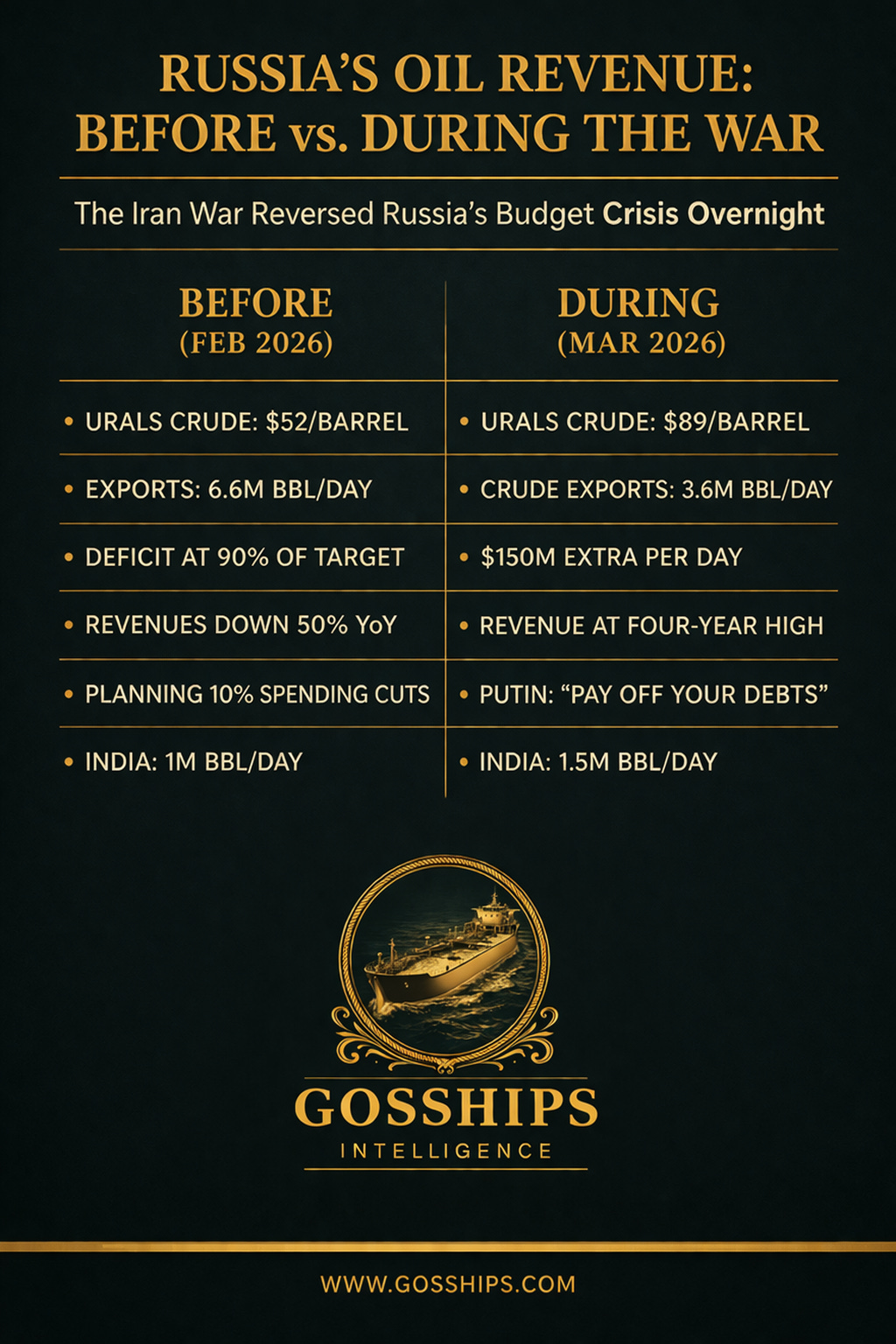
Before The War (February 2026):
→ Urals Crude Average: ~$52/Barrel (Financial Times)
→ Russian Crude And Product Exports: 6.6 Million Barrels/Day, Lowest Since 2022 Invasion (IEA Via Financial Times) → Budget Deficit At 90% Of Full-Year Target (SFG Media)
→ Oil Revenues Down Nearly 50% Year Over Year (SFG Media) → Moscow Considering 10% Spending Cuts (Reuters Via SFG Media)
→ India Importing Russian Crude At ~1 Million Barrels/Day (Financial Times)
During The War (March 2026):
→ Urals Crude: ~$89/Barrel As Of March 25 (Oil Price API)
→ Russia Shipped 3.6 Million Barrels/Day Of Crude In Four Weeks To March 22 (Bloomberg)
→ Additional Revenue: $150 Million/Day (Financial Times)
→ Oil Revenue At Highest Level Since March 2022 (Bloomberg, March 24)
→ Putin Told Companies To Use Windfall To Pay Off Bank Debt (Moscow Times, March 23)
→ India Importing At ~1.5 Million Barrels/Day, Up 50% (Financial Times)
Additional Verified Data:
→ Total Fossil Fuel Revenue: €513 Million/Day, Up 14% From February (CREA Via Euronews, March 1-15)
→ India + China Imports Up 22% In First Week After Strikes (Financial Times) → $1.3B To $1.9B Extra Revenue In First 12 Days (Financial Times)
→ $3.3B To $5B Projected Additional Revenue By End Of March (Financial Times)
→ U.S. Treasury Authorized Russian Oil Deliveries Loaded March 12 To April 11 (Moscow Times)
→ U.S. Senators Called It “A Windfall Of $150 Million Each Day For Its War Machine” (Euromaidan Press)
Related Coverage
Sinokor Is Charging $20 Per Barrel to Ship Oil. Last Year It Was $2.50. They Control 40% of Available Tankers. Nobody Can Do Anything About It. (March 2026)
Goldman Sachs Just Called This “The Largest Supply Shock in the History of the Global Crude Market.” (March 2026)
Russia’s oil revenue hit a four-year high while the Strait of Hormuz remains shut. What this means for tanker rates, for shadow fleet operations, for sanctions compliance, and for the broker who just fixed a VLCC to load Russian crude at Primorsk, the same port Ukraine hit with drones two days ago, is below.
🔍 Why It Matters
For VLCC and Suezmax brokers, Russia’s revenue windfall means Russian
