
What Won’t Six Months’ Pay Buy in Hormuz?
Sinokor reportedly offered crews six months’ pay, about $90,000 for a master, for one Hormuz round trip. Some still refuse.
⚓ Gosships Intelligence
Gosships Intelligence Is Published At Gosships.com
For Sponsorship And Partnership Inquiries Contact intelligence@gosships.com
|⚓ About Us | 🛢️ Exclusive Report | 📋 SwiftAction Training |
🏅Black Gold Membership (*53 Slots Left)
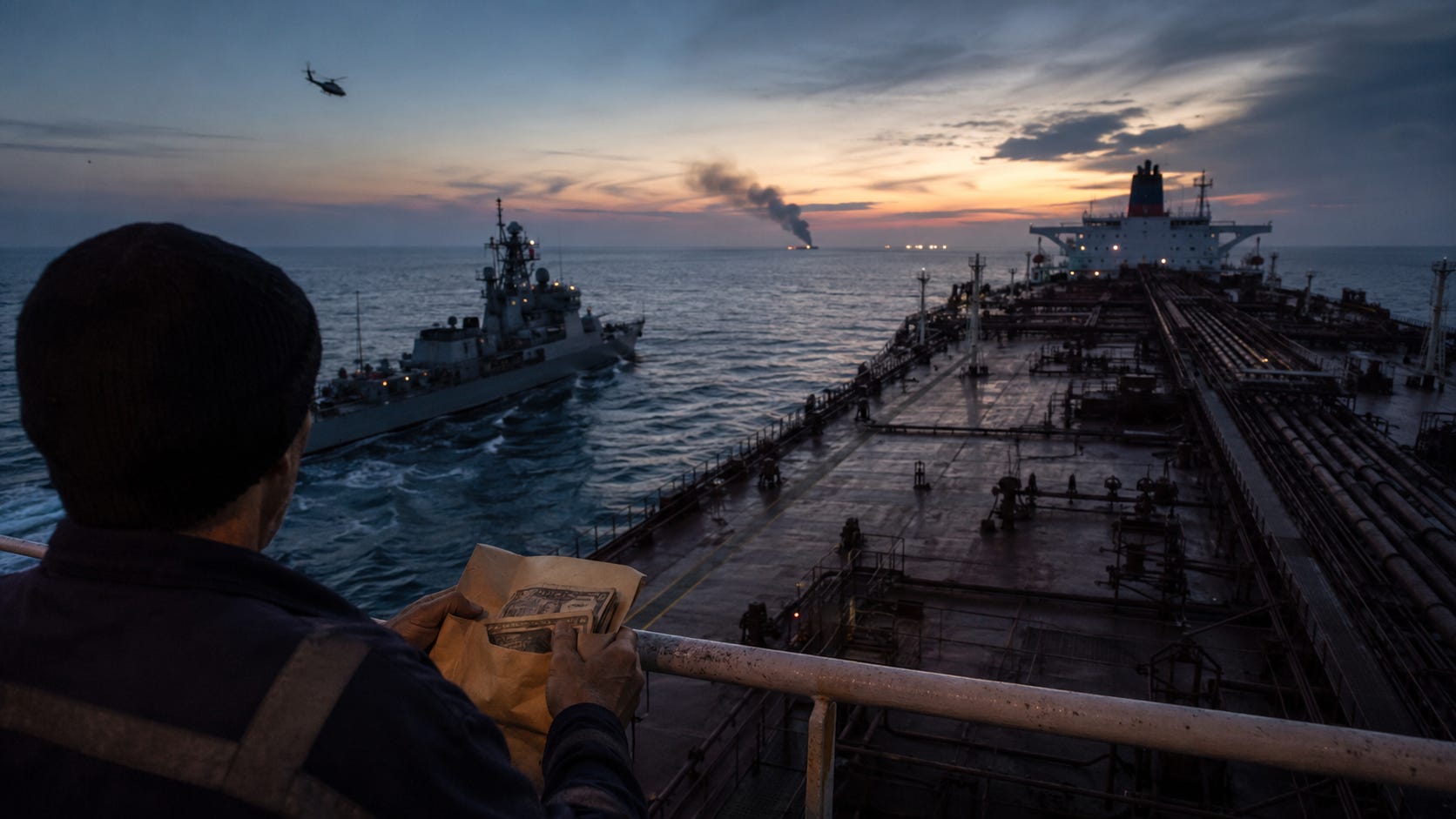
Every other Hormuz story is about ships, insurance or rates. The one thing money is struggling to buy is a crew willing to sail.
The number worth watching this week is not on a freight screen. It sits in a company memo. Bloomberg has seen a document from Sinokor, the firm it calls the largest supertanker owner going, offering crews an extra six months of pay for one round trip through Hormuz, loading in Saudi Arabia or Iraq and discharging in the Gulf of Oman, call it a month’s work. Sinokor will not comment. Six months of a senior master’s pay, on Bloomberg’s figure of as much as $15,000 a month, comes to something near $90,000 for the trip. Crews are turning it down anyway. That refusal is the story here, more than the money is.
📋 In This Issue:
🛢️ The Story
Why the scarce input in the Hormuz trade is no longer ships or insurance, but people
📊 By The Numbers
The six figures that show crew becoming the clearing price of a voyage
🔍 Why It Matters
What it changes for owners, charterers, underwriters, seafarers and the oil market
👀 What To Watch
Six signals that decide whether the crews keep sailing
🚨 Gosships Signal
The question a six-month bonus cannot answer
🔔 Not Subscribed? Gosships Intelligence Delivers Oil Shipping Intelligence. Subscribe Here!
📊 Order Our Exclusive Report
→ Global Tanker Market Outlook Q3 2026 Edition
📋 Competency-Based Maritime Training
→ SwiftAction
Related Coverage
📌 Gosships Data Card
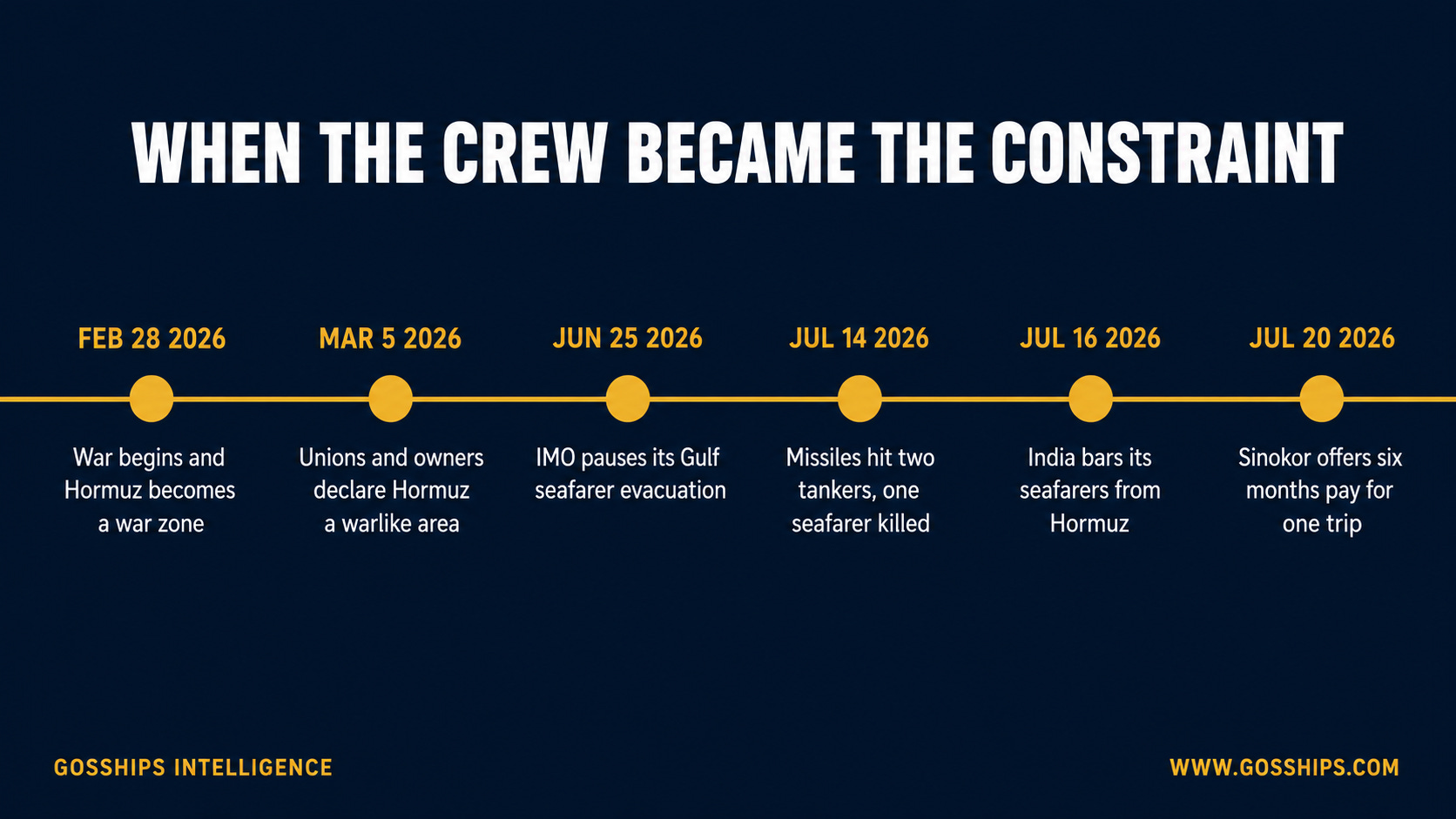
February 28, 2026: War between the United States, Israel and Iran begins, and the Strait of Hormuz, through which about a fifth of the world’s oil moves, becomes an active conflict zone (EIA, The National)
March 5, 2026: The International Transport Workers’ Federation and the shipowners’ Joint Negotiating Group designate the Strait of Hormuz, Gulf of Oman and Persian Gulf a Warlike Operations Area, giving covered seafarers a danger bonus and a contractual right to refuse to sail (ITF)
June 25, 2026: The International Maritime Organization pauses its evacuation of seafarers from the Gulf after a ship is struck leaving the strait, with roughly 6,000 still trapped in early July (IMO via UN News)
July 14, 2026: Missiles hit two ADNOC-operated tankers near the strait, killing one seafarer and injuring eight, per Emirati officials (The National)
July 16, 2026: India directs shipowners and manning agents to stop deploying Indian seafarers on Hormuz voyages until further notice (Bloomberg, The National)
July 20, 2026: Bloomberg reports that Sinokor offered six months of extra pay for a one-month Hormuz round trip, from an internal document; Sinokor does not comment (Bloomberg via gCaptain)
Sources: Bloomberg via gCaptain and The National (July 20 to 21, 2026); Bloomberg via Rigzone and EnergyConnects, with S&P Global traffic data (July 21, 2026); Splash247 (July 21, 2026); ITF and the Joint Negotiating Group (March 5 and June 30, 2026); IMO via UN News and the IMO Council (June 26 to July 8, 2026); The National (July 16 and 17, 2026); Seatrade Maritime (June 25, 2026); EIA.


