


⚓ Gosships Intelligence
Gosships Intelligence Is Published At Gosships.com
For Sponsorship And Partnership Inquiries Contact intelligence@gosships.com
|⚓ About Us | 🛢️ Exclusive Report | 📋 SwiftAction Training |
🏅Black Gold Membership (*53 Slots Left)

London has moved to close the escape hatch. Where the new clause is written into a policy, an owner who buys passage loses the cover that makes the voyage financeable, and the market’s own lawyers cannot say whether that ship is ever insurable again.
Underwriters rarely publish anything that reorders a trade route, but on 23 July the Lloyd’s Market Association issued two hundred words that did. Clause LMA5708 is short, technical and easy to scroll past. What it does is remove the quiet middle option that owners had been feeling their way toward all summer: pay Iran, cross the strait, keep trading, and treat the fee as another line in the voyage estimate. Under the clause, the moment that payment is made, the insurers of that ship are released from their obligations to it. Not suspended. Released. And the guidance published alongside it goes out of its way to say what happens next, which is that nobody knows.
📋 In This Issue:
🛢️ The Story
What the clause actually says, the exception it pointedly does not contain, and why the timing is stranger than it looks
📊 By The Numbers
The traffic collapse, the premium spiral, and the human cost behind the clause
🔍 Why It Matters
What it changes for the owner, the master, the underwriter, the charterer and the financier
👀 What To Watch
Six signals that decide whether this clause holds or quietly breaks
🚨 Gosships Signal
Why the silence around it is louder than the clause
🔔 Not Subscribed?
Gosships Intelligence Delivers Oil Shipping Intelligence. Subscribe Here!
📊 Order Our Exclusive Report
→ Global Tanker Market Outlook Q3 2026 Edition
📋 Competency-Based Maritime Training
→ SwiftAction
Related Coverage


📌 Gosships Data Card
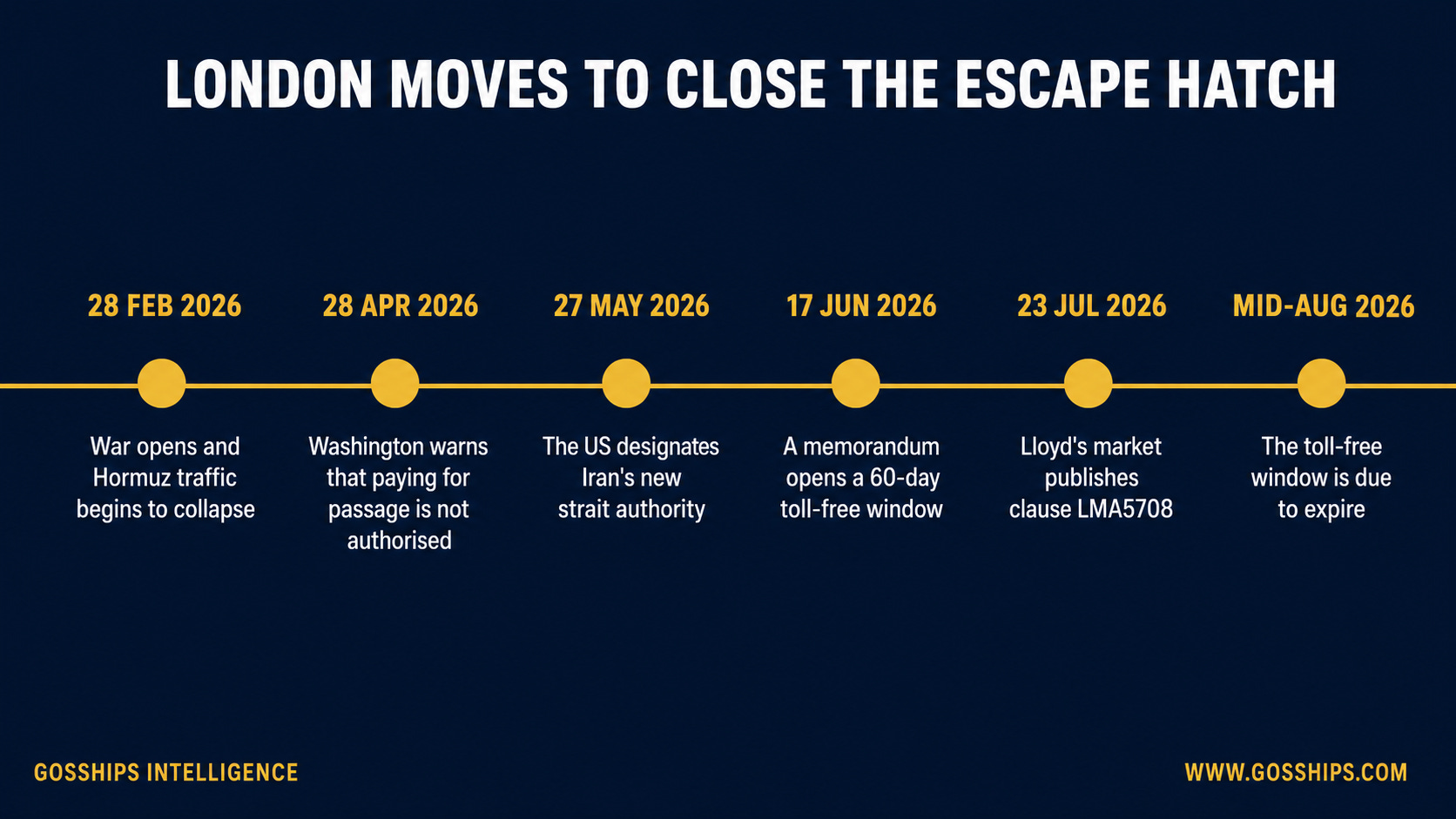
February 28, 2026: The United States and Israel open an air war on Iran, beginning the Strait of Hormuz crisis and the collapse in transits (Britannica; Al Jazeera)
April 28, 2026: The US Treasury issues FAQ 1249, warning that payments for safe passage through the strait are not authorised and create sanctions exposure for non-US persons (OFAC)
May 27, 2026: OFAC designates Iran’s Persian Gulf Strait Authority, the body it says was created to collect tolls and extort transiting vessels, under counterterrorism authorities (OFAC)
June 17, 2026: Trump and Iran’s President Pezeshkian sign a memorandum granting a 60-day window for ships to transit Hormuz free of charge (NBC News; CNBC)
July 23, 2026: The Lloyd’s Market Association publishes model clause LMA5708, the Strait of Hormuz Transit Fee Condition, for hull and war underwriters (Lloyd’s Market Association)
Mid-August 2026: The 60-day toll-free window is due to expire, with Iran’s negotiator on record that Iran will charge for services (computed from the June 17 signature; Iranian state media)
Sources: Britannica and Al Jazeera (war timeline); OFAC FAQ 1249 and the OFAC designation of the PGSA; NBC News and CNBC (June 17 memorandum); Lloyd’s Market Association bulletin LMA26-025-AR, the clause text and the accompanying guidance note (23 July 2026); Iranian state media via Al Jazeera and The National (Ghalibaf on fees); Splash247 and Argus (July traffic); Marsh via S&P Global Platts (war risk premiums); UN Office of the High Commissioner for Human Rights and UN News, citing IMO (seafarers).
🛢️ The Story
Every sanctions regime eventually meets the same question, which is not whether a rule exists but what happens to the person caught between the rule and a gun. This clause is the moment that question arrived in the Strait of Hormuz, and the answer the London market has given is colder than most of the trade has noticed.
