
⚓ Gosships Intelligence
Gosships Intelligence Is Published At Gosships.com
For Sponsorship And Partnership Inquiries Contact intelligence@gosships.com
|⚓ About Us | 🛢️ Exclusive Report | 📋 SwiftAction Training |
🏅Black Gold Membership (*53 Slots Left)
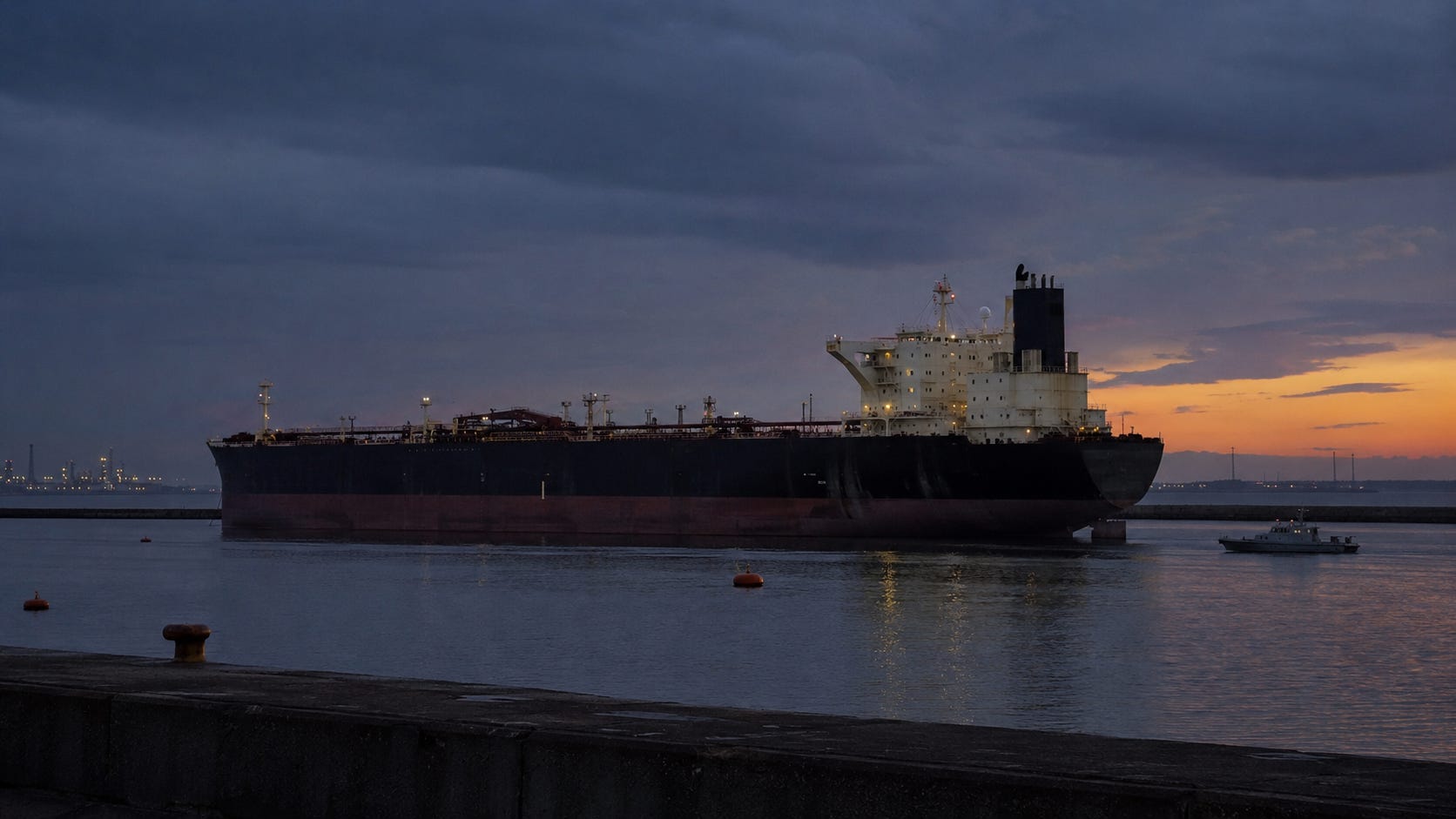
Selling the oil turns a detained tanker from a cost into a payday, and every EU coastal state now has a reason to stop one. There is one catch: the only country that tried to sell the crude was stopped by its own court.
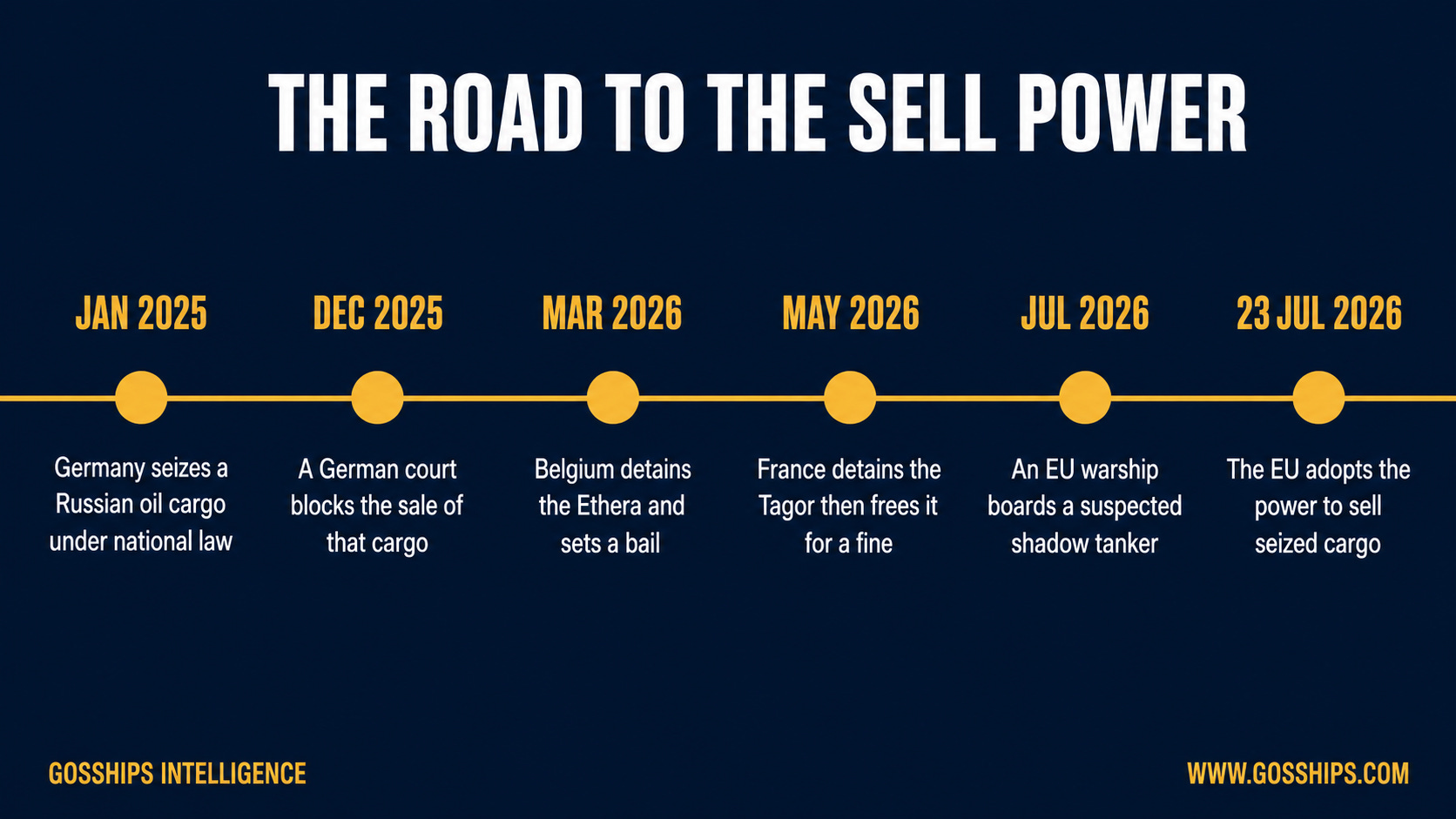
On 23 July 2026 the European Union adopted its 21st sanctions package against Russia, and buried inside it is the measure that changes the economics of the whole shadow fleet fight. Until now, stopping a sanctioned tanker meant holding a ship you could not use and a cargo that only lost value while the lawyers argued. Selling the oil turns that detention into money, and it hands every EU coastal state a direct reason to stop a tanker it used to wave through. There is one problem. The only country that has tried to sell seized Russian crude was stopped by its own courts, and no European state has yet auctioned a single barrel.
📋 In This Issue:
🛢️ The Story
How a single clause in the 21st package turned tanker detention from a cost into a revenue line, and why no one has used it yet
📊 By The Numbers
The figures behind Europe’s new sell power, and the one court date that undercuts it
🔍 Why It Matters
What it changes for the tanker owner, the trader, compliance, the P&I underwriter and the operator
👀 What To Watch
Six signals that decide whether the first cargo ever actually sells
🚨 Gosships Signal
Why a licence to sell is not the same as a sale
🔔 Not Subscribed?
Gosships Intelligence Delivers Oil Shipping Intelligence. Subscribe Here!
📊 Order Our Exclusive Report
→ Global Tanker Market Outlook Q3 2026 Edition
📋 Competency-Based Maritime Training
→ SwiftAction
Related Coverage


📌 Gosships Data Card