


⚓ Gosships Intelligence
Gosships Intelligence Is Published At Gosships.com
For Sponsorship And Partnership Inquiries Contact intelligence@gosships.com
|⚓ About Us | 🛢️ Exclusive Report | 📋 SwiftAction Training |
🏅Black Gold Membership (*53 Slots Left)
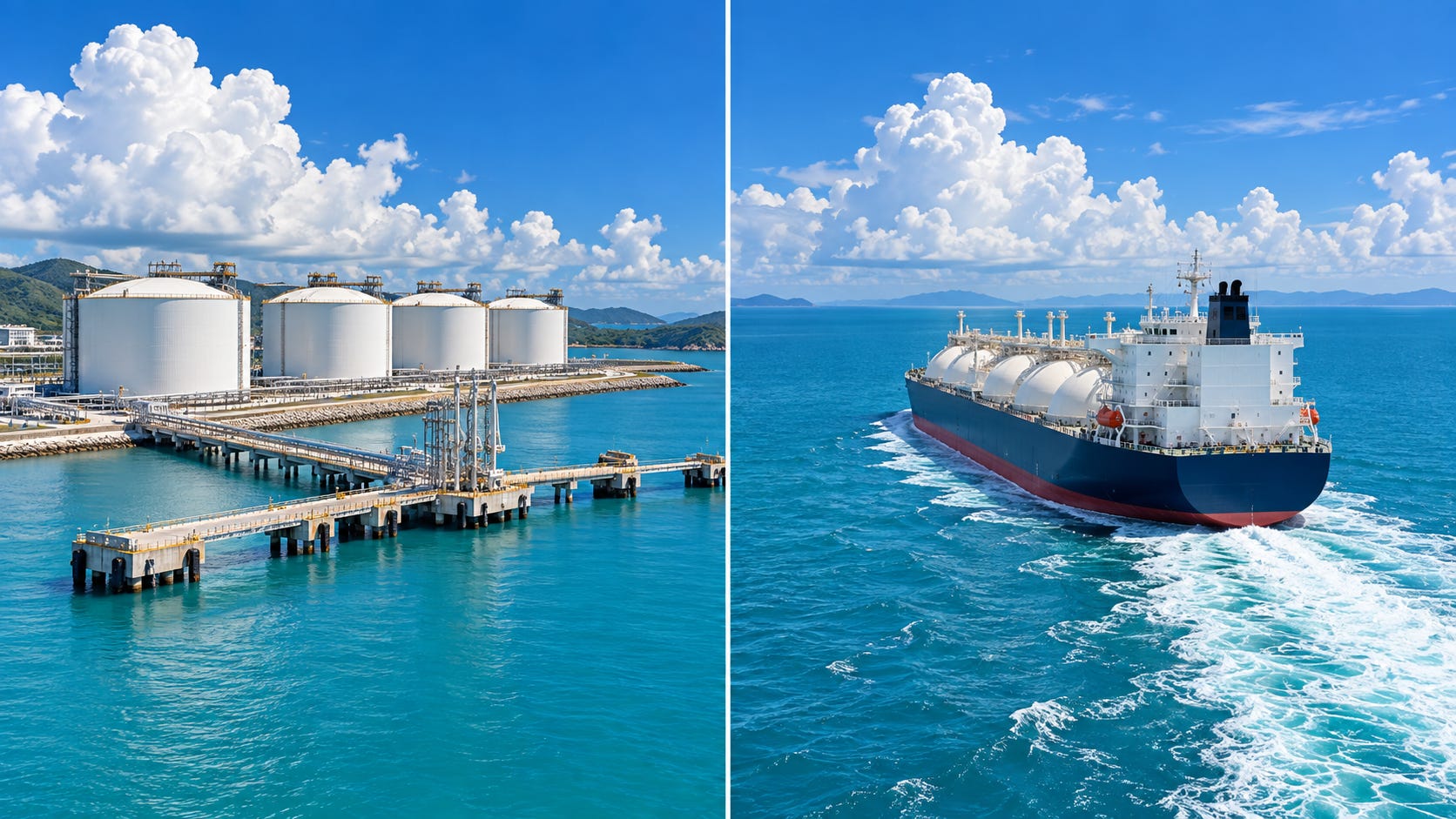
China’s 15 percent tariff on US liquefied natural gas (LNG) took effect on February 10, 2025. Within weeks, US cargoes had all but vanished from Chinese customs data. Chinese buyers kept lifting them anyway. Bloomberg reported on September 21 that they were still honoring their US contracts and selling the cargoes on in Europe and Asia, beyond the reach of China’s tariff. On September 24 the Institute for Energy Economics and Financial Analysis (IEEFA) estimated what reselling US and Australian LNG has been worth to Chinese companies since 2021: $4.6 billion in profit through June 2026. Two state companies, CNOOC and PetroChina, accounted for 64 percent of the resales made by Chinese charterers in 2025, it said. Before Xi Jinping’s state visit to Washington, Reuters reported, citing two people briefed on the discussions, that lower or zero Chinese tariffs on US LNG were on the table, together with a framework of reciprocal tariff cuts covering roughly $30 billion of goods each way. The framework arrived. On September 28 China’s commerce ministry said it would lower tariffs on some $30 billion of US goods, a list of 1,619 items. Coal is on it. Liquefied natural gas and crude oil are not. On IEEFA’s figures, China imported 66 million tonnes of LNG in 2025, against 79 million tonnes at the 2021 peak, yet the report sees its contracted volumes climbing to 114 million tonnes by 2028. It puts 2025’s resales at 17 million to 19 million tonnes. On this desk’s arithmetic, that is equal to 26 to 29 percent of what China imported. The cargoes China does not need still have to sail somewhere. Of those resold by Chinese charterers last year, 42 percent went to Northeast Asia and 32 percent to Europe, and the largest destinations were South Korea, Japan and the Netherlands, IEEFA’s analysis of vessel-tracking data shows. US LNG still faces a combined Chinese tariff of 25 percent, according to ICIS and Forbes, and the trade truce between Washington and Beijing now runs to January 10, 2027.
📋 In This Issue:
⚖️ The Story:
What IEEFA found, the two companies behind most of the tracked resales, the US cargoes China stopped importing, the summit that left LNG off the list, who takes the surplus, the contracts still to come, the case against this brief and what the record supports
📊 By The Numbers:
The $4.6 billion, the 17 million to 19 million tonnes, the 64 percent, the roughly 260,000 tonnes, the 114 million tonnes and the 25 percent tariff
🌍 Why It Matters:
What it changes for the LNG carrier owner and charterer, the LNG trader and portfolio seller, the US exporter and project lender and the utility buyer in Seoul and Tokyo
👀 What To Watch:
China’s September trade data, PetroChina’s third-quarter results, the bonded terminals, the January 10 deadline, new contracts and the falsifier that would overturn this brief’s main finding
🚨 Gosships Signal:
Where the LNG China does not need went in 2025 and what would bring it home


