


⚓ Gosships Intelligence
Gosships Intelligence Is Published At Gosships.com
For Sponsorship And Partnership Inquiries Contact intelligence@gosships.com
|⚓ About Us | 🛢️ Exclusive Report | 📋 SwiftAction Training |
🏅Black Gold Membership (*53 Slots Left)
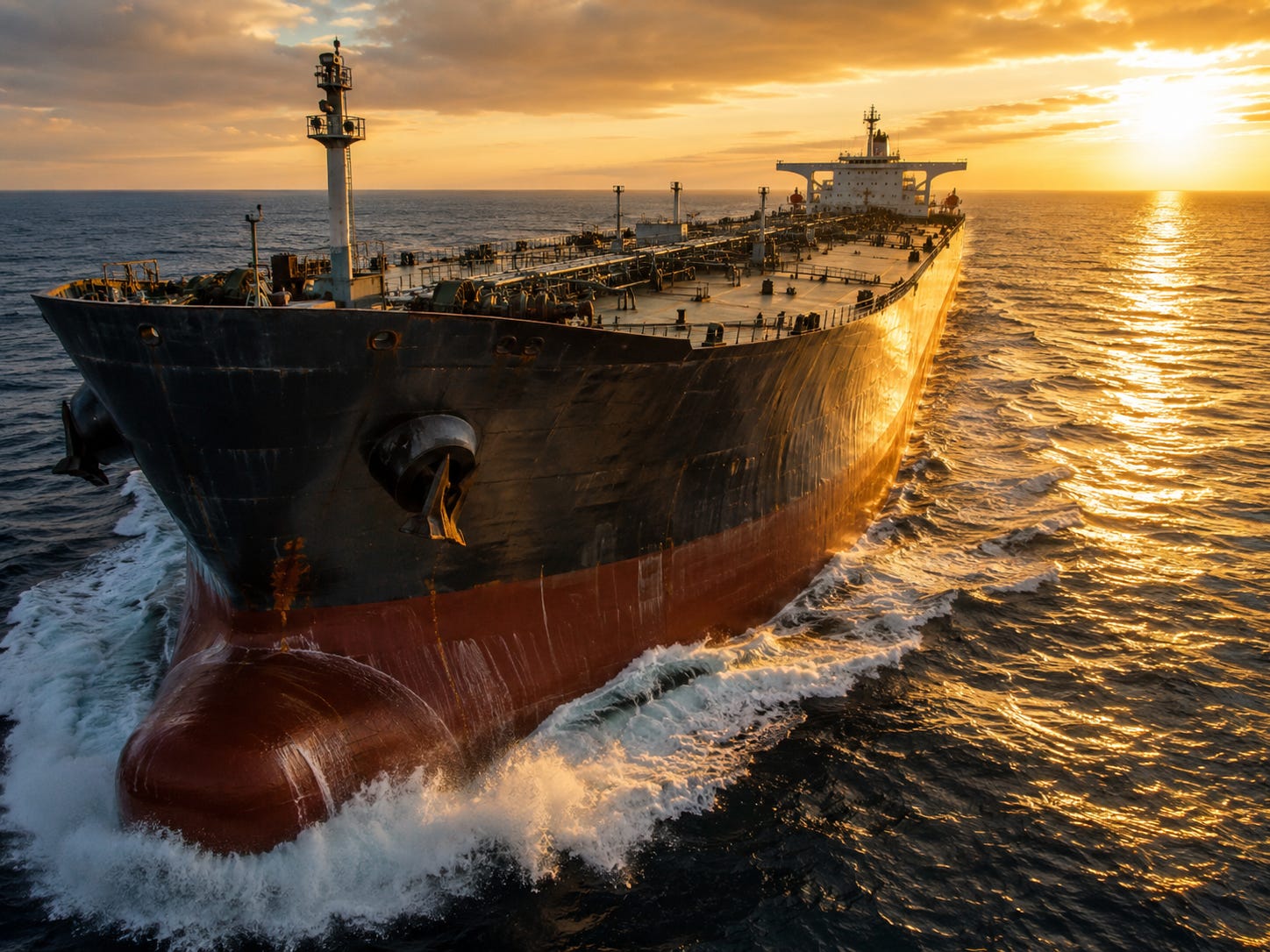
The biggest trading houses had their war. They made their money on barrels, not on ships, and the operator who positioned for the freight spike before the shooting started was not a trading house at all.
Glencore told the market on Wednesday morning that its trading arm expects to report about $3.3 billion of adjusted operating profit for the first six months of 2026. That would be more than the arm earned in the whole of last year, and it covers four months of a crisis in which the Strait of Hormuz was shut, briefly reopened, shut again, and reopened. The obvious reading is that a commodity trader got rich on a shipping crisis. Read the report itself and something stranger turns up. In the only place freight appears, it is a cost, not revenue. The report does not say which segment it sits in, and the items beside it are mine inputs. What is not in doubt is what Glencore paid for ships. Who collected instead is a matter of public record, and it is below.
📋 In This Issue:
🛢️ The Story
What Glencore actually said, what it paid to move the barrels, and who collected instead
📊 By The Numbers
The trading profit, the fixtures, and the owners’ quarter
🔍 Why It Matters
What it changes for the owner, the charterer, the broker, the analyst and the trader
👀 What To Watch
Six signals between now and the results on August 5
🚨 Gosships Signal
Why the ships beat the traders at their own crisis
🔔 Not Subscribed?
Gosships Intelligence Delivers Oil Shipping Intelligence
📊 Order Our Exclusive Report
→ Global Tanker Market Outlook Q3 2026 Edition
📋 Competency-Based Maritime Training
→ SwiftAction
Related Coverage


📌 Gosships Data Card
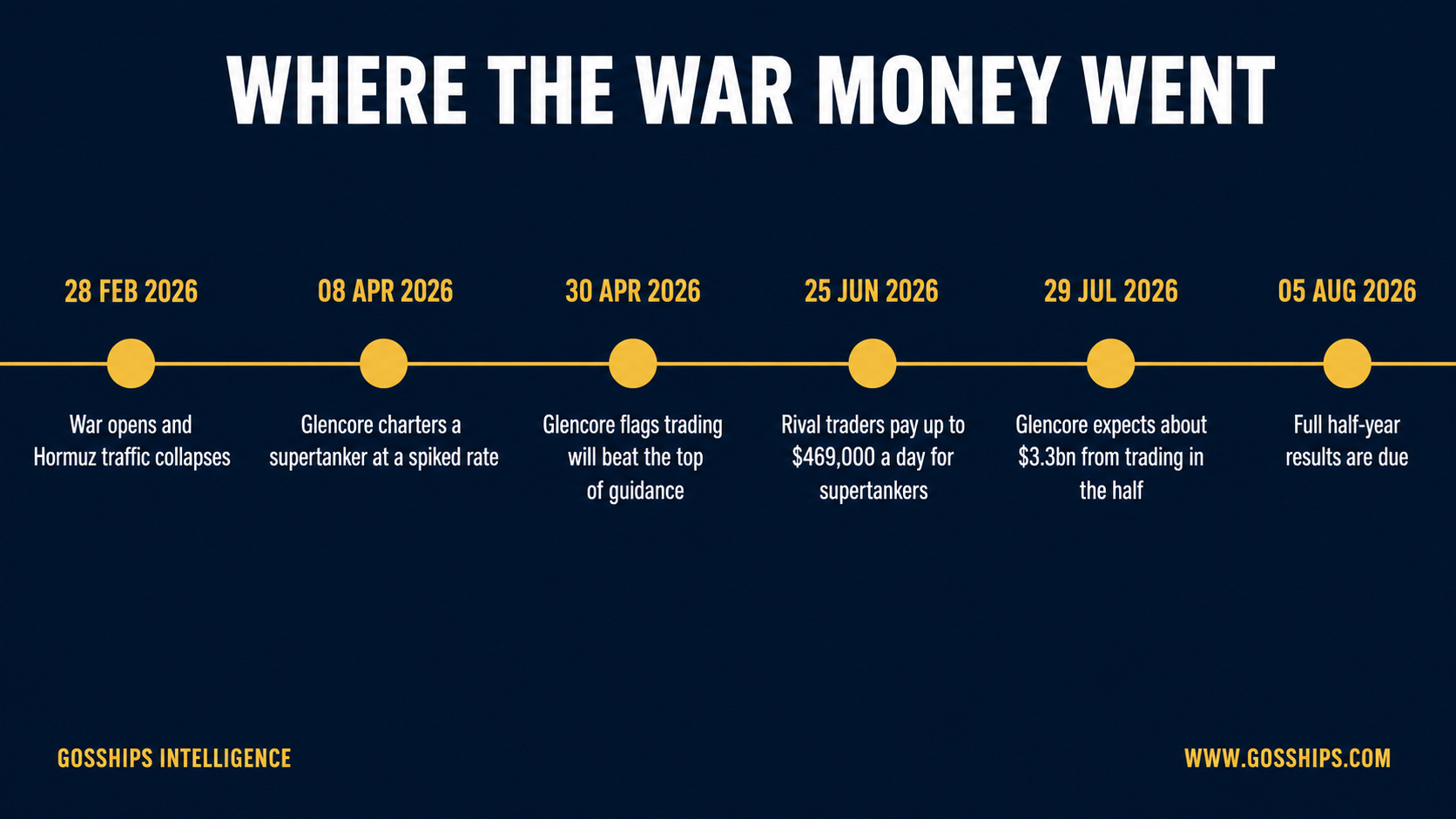
February 28, 2026: The United States and Israel open an air war on Iran, beginning the Strait of Hormuz crisis and the collapse in tanker transits (Britannica; Al Jazeera)
April 8, 2026: Glencore charters the VLCC Asian Lion for a Middle East crude cargo at Worldscale 580, against Worldscale 230 on the same route on February 27 (Reuters; LSEG)
April 30, 2026: Chief executive Gary Nagle tells investors that extrapolating first-quarter trading would see full-year Marketing EBIT comfortably exceed the top of the $2.3 billion to $3.5 billion guidance range (Glencore Q1 production report)
June 25, 2026: Mercuria fixes the VLCC Delos at about $469,000 a day and Vitol fixes the Nissos Kea at about $439,000 a day, with the shipowners collecting (TradeWinds)
July 29, 2026: Glencore says it expects to report first-half Marketing adjusted EBIT of about $3.3 billion, and lists freight among the input costs that rose (Glencore half-year production report)
August 5, 2026: Glencore’s full half-year results are due, including the split between metals and energy trading (Glencore investor calendar)
Sources: Glencore plc half-year production report and RNS (29 July 2026); Glencore Q1 2026 production report (30 April 2026); Glencore preliminary results 2025 (18 February 2026) and half-year report 2025 (6 August 2025); Glencore 2025 annual report; Reuters and LSEG (the Asian Lion fixture and Worldscale rates); TradeWinds (the Delos and Nissos Kea fixtures); Bloomberg (Sinokor and the first-half trading result); company results for Frontline, International Seaways and CMB.TECH; Britannica and Al Jazeera (war timeline).
🛢️ The Story
There is a lazy version of this story in which a commodity trader profiteers from a war, and it is not quite what the numbers say. The money was real. Where the money came from, and who took the maritime slice of it, are the parts worth an hour of a broker’s attention.
