


⚓ Gosships Intelligence
Gosships Intelligence Is Published At Gosships.com
For Sponsorship And Partnership Inquiries Contact intelligence@gosships.com
|⚓ About Us | 🛢️ Exclusive Report | 📋 SwiftAction Training |
🏅Black Gold Membership (*53 Slots Left)
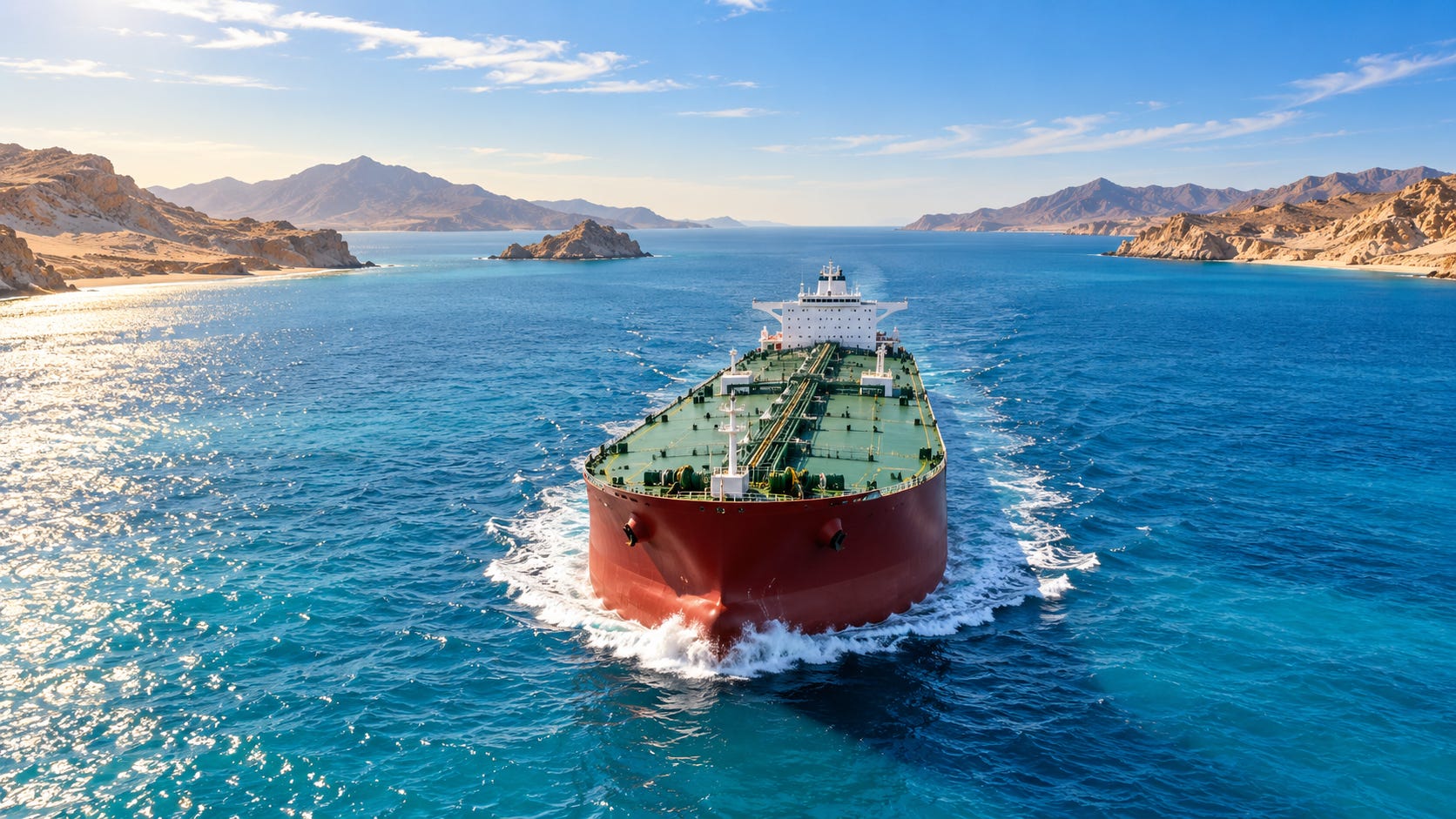
The Houthis now tell shipping that the Red Sea is safe for every vessel except Saudi ones, and the strait at its southern end has lost more than half of its tracked tanker cargo since June. IMF PortWatch, which builds its counts from vessels’ tracking signals, estimates that tankers carried 765,150 tonnes a day through Bab el-Mandeb in June and 342,751 tonnes a day in August, a fall of 55.2 percent to the lowest monthly average since at least January 2019. From September 11 to 20 it tracked 66 tanker transits of the strait, against 123 in the same days of 2025. At the other end of the Red Sea, the Suez Canal did not empty: tracked tanker cargo through the canal from June to August was 2.5 percent above the same months of 2025. On this desk’s reading, most of that difference is Saudi. With Hormuz closed, Saudi crude has crossed the kingdom by pipeline to Yanbu, and before July 20 the Yanbu cargoes bound for Asia sailed south through the strait. That day the Houthis declared a naval blockade of Saudi Arabia. Since then Saudi tankers have been attacked, tankers carrying Saudi crude have crossed with their transponders switched off and more Saudi crude has been sent north toward Suez and the SUMED pipeline instead. Earlier this month drone attacks shut Aramco’s East-West pipeline, which feeds Yanbu. On September 22 it partly restarted, and President Trump, speaking at the UN General Assembly, said he believed a deal with Iran would come right after the November 3 midterm elections, Reuters reported. Kyodo News and Reuters reported the same day a conditional Iranian offer to reopen Hormuz within seven days, and Iran’s semi-official Fars News agency carried a denial. A deal could reopen Hormuz. Reopening Hormuz would not, by itself, lift a ban the Houthis tie to Saudi Arabia’s actions in Yemen rather than to Hormuz. On the Houthis’ current terms, the tankers that could come back to Bab el-Mandeb carry everyone’s oil but Aramco’s, and how far that exception reaches depends on whom the Houthis decide to call Saudi.
📋 In This Issue:
⚖️ The Story:
What the strait lost, why the count understates what crosses, whose barrels made June, a ban with a nationality, why Suez did not empty, what a deal would change, where Aramco loses and the case against this brief
📊 By The Numbers:
The strait’s tracked tanker cargo before the war, at its wartime peak and after the Houthi blockade, the transit counts, the canal’s figures, the toll and the dates that test the outlook
🌍 Why It Matters:
What it changes for the crude trader, the tanker owner and broker, the war risk underwriter and the flag registry
👀 What To Watch:
The Houthis’ wording, the pipeline’s recovery, the tracked count, November 3, the American red line and the falsifier that would overturn this brief’s answer
🚨 Gosships Signal:
Why a deal in Washington decides Hormuz while the Houthis decide Bab el-Mandeb


